admin
admin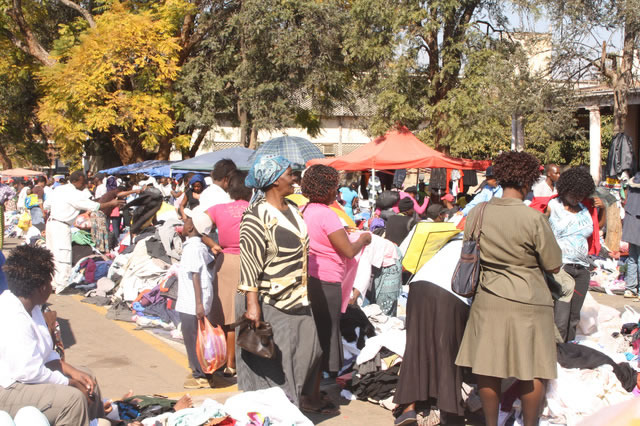
 Martin Stobart
Before the coming into office of the so-called government of national unity, Zimbabwe was awash with imported consumer goods, with sugar being one of those commodities topping the list of imports.Then the Ministry of Finance had a new incumbent, who appeared to me to be Yuri Gagarin flying the vostok. The new Finance Minister quickly banned the importation of sugar into Zimbabwe claiming that by his action he was saving jobs in the sugar manufacturing industry.
Looking at it, one sees a vain-glorious attempt at protectionism by the minister. Saving jobs is plain nonsense, quite frankly. You don’t save jobs that are not there in the first place, rather you create jobs.
And you do not have consumptive capacity, which can only come or happen where there is disposable income or money in circulation. We know that the disposable income does not grow on trees and then drop down like leaves from a deciduous tree neither does it come gratis.
Ask workers how they earn their incomes. Without exception they will tell you that they work hard. Lest the foregoing be misconstrued by some readers as self-discovery, let me put it this way – in a developing country like Zimbabwe, along with many others in Africa – there are more people who are working than they are who are gainfully employed.
Take note that the adverbial phrase “gainfully employed” finds itself fittingly reposing in the domain of statistical data. Convince me otherwise if you will, and you can only do that successfully if you prove to me as false the statistics which say that only between 15 percent and 20 percent of the Zimbabwean workforce is (gainfully) employed (in the formal sector, that is) as opposed to between 50 percent and 85 percent who earn their keep as self-employed in the informal sector.
What this picture portrays to us therefore is basically that the informal sector in this country, in the collective sense, is the breadwinner of the nation.
Well let me be evidential if only to highlight the point I am making here; when this country was gripped by an unprecedented economic melt–down in the mid 2000s, it was the informal sector that came to the rescue as from time to time, the Reserve Bank turned to the enterprising and intrepid entrepreneurs for help.
This therefore gives a picture of the role which the informal sector plays in the economies of the development of the world. I am endeavouring to give an in depth, comparative analysis of how pivotal the informal sector is really to the economy of Zimbabwe especially in times of sanctions at the present time.
Instead of being vilified and criminalised by the formal sector and some in high places of government, the informal sector should be lauded and credited for its resilience. It has to be remembered that Zimbabwe has no national health insurance for its lower income; you can even call it zero income population. So the informal business sector satisfies that basic need.
Informal traders contribute significantly more revenue to the exchequer than the “gainfully” employed in the formal sector by way of value added tax. I hereby unequivocally declare that the gripe about the informal traders not paying tax to the Treasury is old hat. The informal sector countrywide in the cities, towns, and growth points, is the cash cow of the local authorities in terms of daily and monthly revenue collection.
Informal traders are made of sterner stuff. They are a hard community in their own right. Informal traders are always on the road, sleeping on buses, on the train and now and again at border posts. There is no trader in the informal sector who does not spend at least seven days on the road travelling, no.
Their goods are impounded at the borders and more often than not the goods auctioned on behalf of the State thereby contributing financially to the national fiscus.
As far as the informal traders are concerned, life goes on the humiliation, harassment and forfeiture of goods (resulting in financial loss) they are subjected to at the borders by officials, by the police and even by local authority officials. On the mines and at growth points it is informal sector which provides goods to the workers.
Nowadays, due to the economic hard times, even the “gainfully” employed are informal traders in some way. In fact, they are more into vending and hawking than into trading (please note that the terms are not the same although they may be synonymous).
It is the informal sector that creates employment by virtue of its monetary power and consumptive capacity. It contributes significantly to the salaries that civil servants earn. It is the informal sector, by virtue of its financial muscle in the marketplace, which pays the factory worker his or her wages.
Informal traders will tell you that life is not all moonshine and roses! It is not romance. It is a real life struggle but is driving this economy.



 Online Reporter