Moffat Mungazi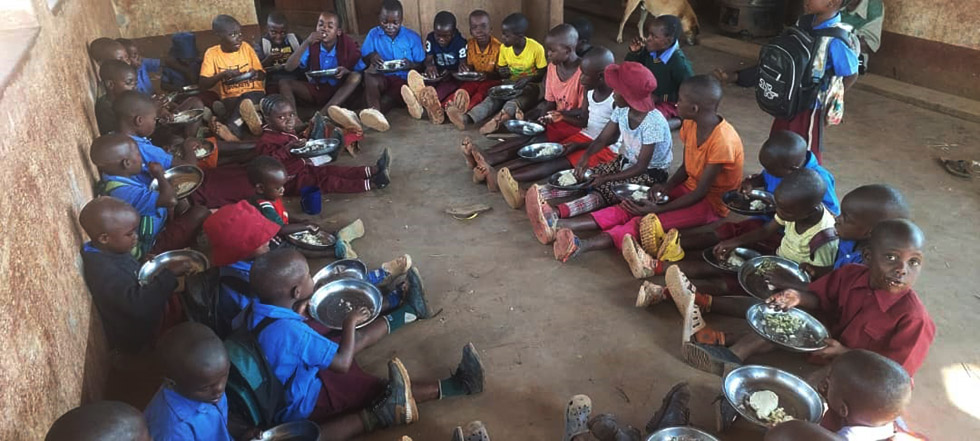
Tendai Gukutikwa
Health Reporter
IN response to alarming reports highlighting the disproportionately high prevalence of stunted children in Manicaland, particularly in Honde Valley, a community-led initiative was launched to address this pressing issue.
Pimai Christian Care Trust, in collaboration with the Ministry of Public Service, Labour and Social Welfare, is driving a food nutrition programme that is currently benefiting 600 children in the area.
The children, mostly orphans and vulnerable youngsters, receive one meal daily at five care point centres.
In an interview, the director of Pimai Christian Care Trust, Mr Farai Gunhe expressed the organisation’s commitment to reduce child malnutrition in the area.
“We have partnered with Government and other church organisations to tackle the issue of stunted growth in Honde Valley. Having grown up in this area as a vulnerable child myself, I understand the challenges these children face. Our aim is to combat malnutrition and provide these children with a better chance in life,” he said.
The organisation operates feeding programmes at Pimai Primary School, Matondora Business Centre, Muterere Village, Makwara, and Chikwe Business Centre, benefiting 600 children, most of whom are orphans and vulnerable.
They receive one hot meal per day.
Mr Gunhe said while the programme initially provided daily meals, funding constraints have reduced the feeding schedule to three days per week.
“We focus on orphans and vulnerable children who are below 18 years. We used to give them food every day, but now we can only manage three days a week, which makes a difference in these children’s lives. It is heart-breaking to cut back, but we are doing what we can with the resources available,” he said.
Beyond food, the programme also prioritises healthcare, and offers health services through 69 voluntary care workers at the five different care points.
“The area is prone to malaria, so we have adopted a ‘zero tolerance to malaria and sickness’ approach. At the care points, we have health officials and our voluntary care workers. We also teach primary caregivers how to prevent malaria and ensure that the children stay safe from the disease. We take every ill child to the clinic and cover the costs because we truly care about their health. For girls who have survived child marriages, we also provide psychosocial support to help them heal and rebuild their lives,” he said.
Mr Gunhe called on local churches and organisations to join hands with Pimai Christian Care Trust to keep the programme running.
“We live by faith and trust in the Lord, but we also recognise that practical assistance is essential. We appeal to local churches, businesses, and well-wishers to partner with us. The need is overwhelming, but together, we can make a lasting impact on these children’s lives,” he said.
A study published in the journal Public Health Nutrition in 2023 identified Manicaland as most affected by various forms of childhood malnutrition, including the highest prevalence of stunting at 31,2 percent, acute malnutrition, 0,53 percent, severe acute malnutrition 0,5 percent, and overweight cases 4,5 percent in the country.
“Four of the seven districts in Manicaland are among the top 10 districts with the highest prevalence of stunted children in Zimbabwe, with Mutasa District being the most affected,” the study reads.
Further research consistently reports that factors contributing to stunting in Manicaland include poverty, limited access to nutritious food, frequent infectious diseases, poor sanitation, and inadequate knowledge about child nutrition.
Stunting can have long-term negative effects on a child’s cognitive development, physical health, and overall wellbeing.
The programme has already made a noticeable difference in the children’s lives. Mrs Martha Gwara, a grandmother caring for her three orphaned grandchildren in Pimai, said the feeding programme has been a lifeline to them.
“My grandchildren used to go to school on empty stomachs, and they would come back weak and tired. Now, they get a hot meal at the care point, and their health has improved. They are more active, they play, and have improved in their school performances,” she said.
Another caregiver, Ms Patricia Manyika said her son used to suffer from constant infections, but the health support provided at the care points has helped him stay healthy.
“He was always ill, and I could not afford to take him to the clinic all the time. Now, if he falls ill, they take him to the clinic and cover all the expenses. He is healthier now, and I have peace of mind knowing that he is being looked after,” she said.



 Online Reporter