Online Reporter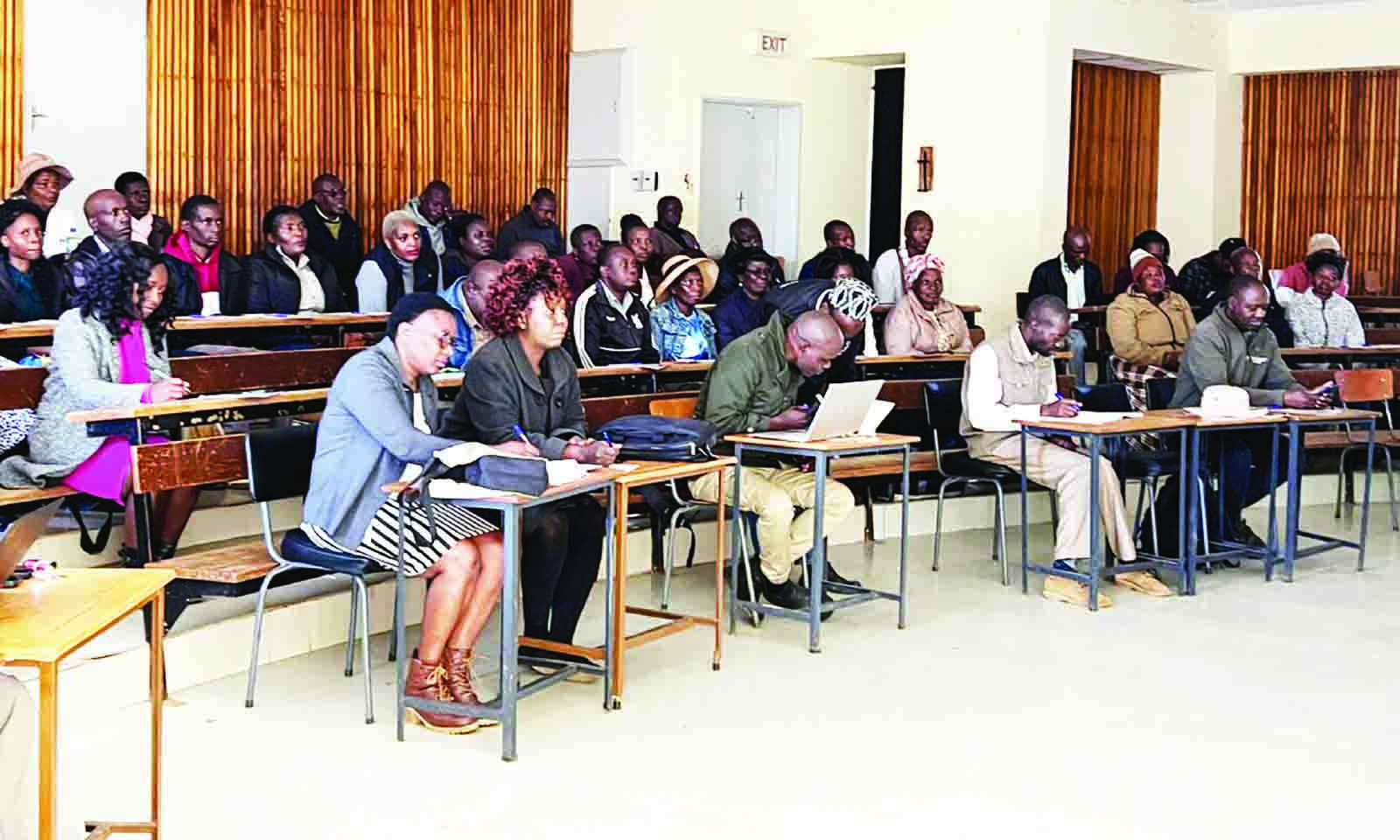
Gibson Mhaka
Zimpapers Poltics Hub
ALTHOUGH Ms Proper Nkomo (52), of Sigodini Village under Chief Fuyane in Ward 10 of Matobo District, Matabeleland South Province, has empowered her community to build more resilient and sustainable livelihoods in the face of changing climatic conditions, they are still facing some challenges.
These challenges include transforming subsistence farming into a more commercially oriented model.
This is primarily because, as smallholder rural farmers, they have limited access to crucial resources.
These include input suppliers, commodity buyers, financial institutions, and service providers, all of which are essential to unlocking opportunities for contract farming, aggregation, input supply agreements and public-private partnerships.
As Zimbabwe continues to face the impact of climate change, access to these crucial resources represents a timely and strategic effort to unlock the full potential of smallholder agriculture.
Ms Nkomo, who is a lead farmer of the Divine Hope Farmer Field School, said: “While my capacity-building efforts as a lead farmer have been instrumental in helping fellow farmers, particularly women in my area, to build more resilient and sustainable livelihoods in the face of changing climatic conditions, we are still facing some challenges, such as engaging the private sector in groundbreaking market dialogues.
“The engagements with input suppliers, commodity buyers, financial institutions, and service providers, I believe, will help us transform our subsistence farming into a more commercially oriented model.”
She added, “So, one of the challenges that we have identified as farmers is the limited access to markets after harvesting our crops. We would, of course, need to address the challenge of farmers failing to access markets.”
A lead farmer is an individual who has been elected by a village to voluntarily assist in the delivery of a maximum of three good agricultural practices or technologies that are enterprise-specific. They are trained in these technologies.
Their role is primarily to disseminate farming-related information to farmers, educate fellow farmers, follow up on the progress that farmers have made and encourage those lagging behind.
In a bid to address Ms Nkomo’s plight and the challenges faced by other lead and follower farmers, the Climate Resilient Livelihoods (CRL) Project, supported by the Government of Zimbabwe, the Green Climate Fund (GCF), and the United Nations Development Programme (UNDP), recently convened a series of Innovation Platform (IP) Market Dialogue Workshops with smallholder farmers in the southern part of Zimbabwe.
The IP dialogues, held at Chisumbanje Research Station, Chiredzi Research Station, Makoholi Research Station, Esigodini Agricultural College, and Matopos Research Institute, aimed to promote inclusive, structured market systems by connecting climate-resilient smallholder farmers with input suppliers, commodity buyers, financial institutions, and service providers. These interactions unlocked opportunities for contract farming, aggregation, input supply agreements, and public-private partnerships.
“These dialogues are designed to catalyse direct and practical linkages between smallholder producers and the private sector.
“They allowed farmers to negotiate better prices, explore market opportunities, and engage in production agreements that support climate-smart, market-led agriculture,” said CRL project manager Mr Rungano Benza.
Addressing farmers at Matopos Research Institute, Dr Nelson Chanza, a Climate Smart Agriculture expert for the GCF project, also stressed the importance of innovation platform dialogues, stating that they want farmers to be equal business players in the agricultural value chain.
“Today, we call it the Matopos Innovation Platform. So, through its support, we have brought in all the key value chain actors across the value chain spectrum, from input suppliers and service providers in the chain, all the way to off-takers.
“We have five of them dotted around the project areas. We need our farmers to be equal business players in the agricultural value chain.
“To achieve this, we have appropriately designed these as market dialogues, because we needed to have a conversation between the farmer, the producer, the input supplier, those providing services to support production, and our off-takers.
“So, we have barriers related to institutional support. That’s why, through the project, innovation platforms are bringing in various institutions so that we can collectively identify the problems farmers are experiencing.
“And we also collectively identify appropriate solutions to address these challenges. One of the challenges we have identified, which has brought us together here, is the limited market access for our farmers. We need, of course, to address this challenge of farmers failing to access markets,” said Dr Chanza.
He said innovation platforms are designed to be transformative, specifically by bringing together a collection of different stakeholders.
Deputy director for markets and trade in the Business Development, Markets and Trade Directorate of the Ministry of Lands, Agriculture, Fisheries, Water and Rural Development, Mr Simba Mupodyi highlighted that these dialogue platforms present immense opportunities for smallholder farmers, the private sector, and the Government to co-create market-based solutions.
“The private sector engagement within all our innovation platforms, which are typically research institutes, is designed to foster a meeting of minds among all agricultural value chain stakeholders. This particularly applies to the key value chains covered by these platforms.
“Furthermore, each innovation platform is tailored to the capabilities of its respective region. This ensures that research-based knowledge products, aligned with farmers’ current practices, are effectively addressing their daily challenges.
“The dialogues we are now undertaking are intended to accelerate and scale up farmers’ efforts by integrating the private sector, allowing them to demonstrate their services, goods, and even their demands from farmers.
“Concurrently, farmers are also expected to share areas where they believe the private sector could better assist in resolving their needs. In short, these market dialogues are designed to empower farmers to secure better deals that will ultimately improve their livelihoods,” said Mr Mupodyi.
He emphasised that such collaborations are expected to foster strong partnerships capable of transforming subsistence farming into a more commercially oriented model.
Mr Givious Sisito, the chief research officer in the Department of Livestock Research at Matopos Research Institute, highlighted the crucial role of innovation platforms as hosting places for farmers.
“For us, as an innovation platform, we are providing space for farmers to engage with us regarding the way we develop technologies. We work together with farmers to develop farmer-specific technologies or innovations.
“You will realise that in the past, farmers would simply receive a technology without understanding its origins or development process.
“Now, however, we collaborate with extension services, the private sector, development partners, NGOs, academia (universities and agricultural colleges), and farmer representatives, such as farmers’ unions. Together, we gather and say, ‘Let’s develop innovation and technologies,” said Mr Sisito.
As they research and develop further, they also test other technologies for upscaling.
“Farmers here benefit in terms of what they can adopt as a technology or innovation. They also benefit from accessing certain inputs, such as seed.
“We are multiplying seeds together with the farmers in their farmer field schools. We have, in a way, developed a number of traditional grain varieties that research has produced over the years.
“In terms of breeding, breeders can work to a certain extent, but there’s another section where we engage in participatory variety selection,” he said.