Online Reporter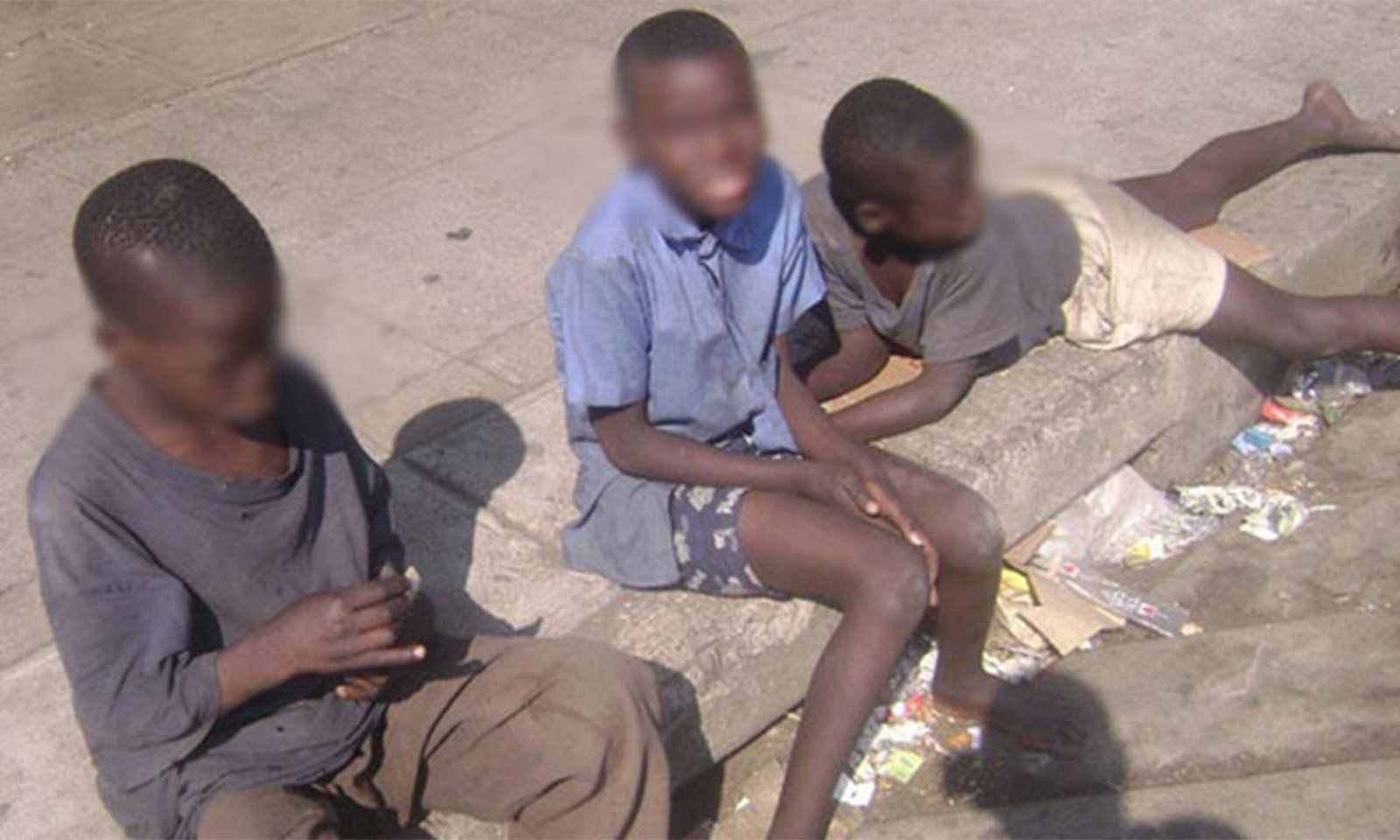
Emmanuel Kafe and Nokuthula Dube
BENEATH the vibrant hustle of Harare’s streets — where the noise of traffic and the pulse of city life fade into distant echoes — lies a hidden world few dare to explore.
A vast network of storm water drains and tunnels, originally designed to channel rain water away from the city, has become a makeshift shelter for hundreds of Zimbabwe’s most vulnerable.
Men, women and children — many of them barely teenagers — have retreated underground, carving out a life in the depths of Harare’s urban sprawl.
They call it Gehena — a word borrowed from the Bible, evoking a place of torment and suffering.
It is at once a sanctuary, a prison, and for some, the only home they have ever known.
Shadowy kingdom of the forgotten
Our investigation began at an unassuming tunnel near a flyover connecting Julius Nyerere Way to the road leading to Chitungwiza.
Guided by a former tunnel dweller, we cautiously observed from a distance.
He warned that venturing inside was too risky and dangerous.
From where we stood, a slender beam of sunlight filtered through a manhole, illuminating walls scribbled with graffiti, makeshift beds fashioned from cardboard and plastic, and the hollow-eyed stares of those who call this place home. Here, in the cold, dark underbelly of Harare, an underground society has taken root — hidden from the city’s authorities and public gaze.
For many, life in the tunnels began as a desperate last resort.
“I ran away from home when I was 12,” says Memory, a young girl living in one of the central business district tunnels. “There was no food, no safety. The streets outside were even worse, so I came down here.”
These tunnels stretch for miles beneath Harare’s CBD, forming a web of concrete and earth where entire families and groups of street children have carved out fragile living spaces.
“Here, we look out for each other,” says Tendai, 16, who has lived underground for over three years. “Outside, no one cares. But down here, we have our own family.”
Despite the hardships, the resilience of this community is remarkable.
“We are not just victims,” Tendai insists. “We have dreams. We want to go to school, to live differently. But for now, this is home.”
The “Fiefdoms”
Life underground is not without structure.
Instead, they are divided into “fiefdoms,” each controlled by a leader — often an older teen or a seasoned vagabond — who enforces rules about who can stay and how resources are shared.
Order is maintained in a world otherwise marked by desperation.
Food, scavenged from dumpsters or begged from street vendors, is pooled and shared.
Blankets, clothes and other essentials are traded like currency. But this hidden society is also rife with danger. Violence is common, and disputes are often settled with fists or crude weapons.
“If you steal, they beat you. If you betray the group, they throw you out,” Memory explained, recalling her escape from an abusive uncle two years ago.
Now, she lives on the streets but remains connected to the tunnel community.
The glue that binds — and destroys
To numb the cold and hunger, many tunnel dwellers turn to glue sniffing—the drug of choice in this underground world. The chemical haze dulls the pain of their harsh reality.
“Glue keeps me warm,” Tendai admitted, clutching a small plastic bag. “Without it, the cold is unbearable and it eats your bones.”
Solvent abuse is rampant, dulling pain but stealing futures. Alongside it, prostitution and petty crime take root — driven not by choice, but desperation.
Young girls sell themselves for food or protection. Older teens run small drug operations to support their groups. What starts as survival slowly becomes a way of life, trapping children in cycles of addiction, violence, and exploitation.
The tunnels themselves are far from safe. Cramped and damp, they breed illness and disease.
Respiratory problems, skin infections, and malnutrition are common. Without access to clean water or medical care, even minor ailments can become life-threatening.
Voices from above
Harare Mayor Cllr Jacob Mafume conceded that the crisis is worsening — calling the situation of street children and vagrants “a thorn in the city’s flesh.”
He attributed the problem to parental neglect and the erosion of social support systems. “We are aware that many children affected by drug abuse are abandoned by their families and forced to sleep in the open due to poverty,” he said.
The local authority is collaborating with the Ministry of Social Welfare to address these complex challenges.
“We are creating platforms to care for and rehabilitate drug addicts and to find places where children can continue their schooling,” Mayor Mafume explained.
But for now, these efforts remain limited. With thousands of vulnerable children scattered across Harare’s streets — and hundreds burrowed beneath them — the scale of the crisis far outpaces the response.
Call for urgent intervention
The existence of Harare’s underground society exposes a glaring social crisis — a generation of children and adults abandoned by the system, forced to live in squalor beneath the city’s streets.
Social worker Professor Arnold Mutigwa emphasised the urgent need for comprehensive social support and policy interventions.
“As Harare grows above ground, the tunnels remain a stark reminder of the inequalities and vulnerabilities that lie just beneath the surface,” he said. “Their plight calls for urgent intervention to address homelessness, poverty, and addiction.”
He called for a multi-pronged strategy: expanded shelter services, substance abuse rehabilitation, accessible education, and community-based prevention programs. “This is not someone else’s problem. These are everyone’s children. And they are suffering in silence.”
According to the latest data released by the Ministry of Social Welfare in 2017, over five thousand children live in the streets of Zimbabwe’s major cities.
Despite numerous interventions by the Government to keep these children away from the streets where they are often abused, the children often return.
In 2020, thousands of homeless children who were taken into shelters by the Government, at the start of the Covid-19 lockdown but sneaked back into the streets from Mt Hampden Vocational Training Centre.
Beneath the surface
As dusk settles over Harare, the city’s street lights flicker on — illuminating only what lies above.
Below, in the shadows of concrete and neglect, a parallel society awakens.
Children huddle in the dark. Plastic bags rustle. A flame flickers in a tin can, casting dancing shadows against a graffitied wall. Here, in the depths, hope is dim but not extinguished.