Chronicle Editor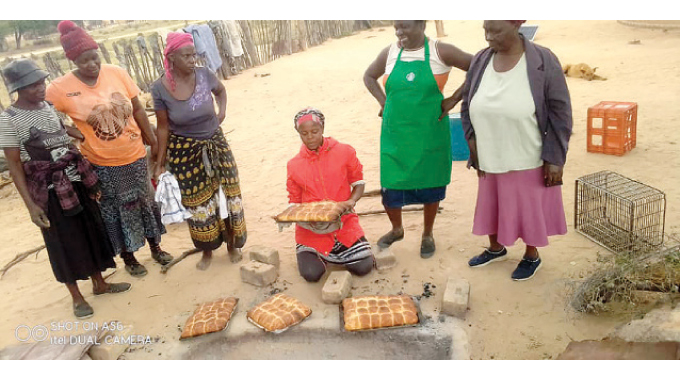
Yoliswa Dube-Moyo, Matabeleland South Bureau Chief
Each member of Siyanqoba, a grouping of enterprising women in Insiza District’s Ward 1, expects to purchase a cow at the end of this year.
Through funds generated from their detergent making business, group members say they’re also saving so that they can invest in something tangible at the end of the year.
Siyanqoba, which started off as an entity focusing on nutritional gardening, has since branched out to explore other business opportunities through support from the Smallholder Irrigation Revitilisation Programme (SIRP).
SIRP and its partners through the Rural Poor Stimulus Fund (RPSF) has been assisting rural women to improve food security and resilience by supporting production, market access and employment.
The ultimate goal of the RPSF is to accelerate the recovery of vulnerable rural communities from the impacts of the Covid-19 crisis.
This will be achieved through target groups having the capacity, assets and overall resilience to cope with shocks.
Ms Seluleke Mdali of Siyanqoba said SIRP assisted the group with training workshops and raw materials to manufacture detergents.
“The soap making business has been very useful to us.
As a group, we also have a stokvel where we pool funds into one basket. We hope to share the money at the end of the year so that we’re able to make tangible investments.
There’s 16 of us and each of us is expecting to purchase a cow,” said Ms Mdali.
She said through the detergent making business, members are able to provide for their children’s needs.
“We can afford to buy food, school uniforms and books for our children.
Aside from the soap making business, we’re also into vegetable gardening where we also get additional funds,” said Ms Mdali.
Another member of Siyanqoba, Ms Olipa Paradza said she was grateful for the knowledge received through SIRP.
“We’ve done workshops on farming, how to manage a business and the importance of keeping records.
We were also trained in manufacturing green bar, petroleum jelly, dish washing liquid, laundry liquid and sanitisers.
After the training, we were given all of the required raw materials to make the products,” said Ms Paradza.
“We’re always busy and don’t have time for gossip and chit chat.
We sell our products to the community and we’ve now branched into poultry farming through the money we’ve been getting from our detergents.
We also manufacture floor polish and bake plain buns.”
Covid-19 poses considerable risks to people in rural areas, who may be particularly vulnerable to its effects – in terms of both the spread of the virus and its economic and social consequences.
Ms Sihle Sibanda of Fresh Foods, a group born out of Silalatshani irrigation scheme in Insiza District said the fund had brought meaningful gains to their business.
“As Fresh Foods, we’ve gained knowledge through training such that we’re able to work for our families.
We can sell our produce and with the money, we’re able to take care of our children.
We manufacture laundry detergents, sanitisers and dish washing liquids.
We also produce pine gel and foam bath.
The sanitisers don’t sell as fast as the laundry detergents and dish washing liquids.
Those are our cash cows; they make us a lot of money.
The pine gel and foam bath are also highly sought after,” said Ms Sibanda.
She said she no longer struggles to meet her family’s needs.
“It is empowering for us, especially as women who in the past would not contribute to the family financially.
Fresh Foods has 20 members and when the group started, we used to produce lemon marmalade.
There’s an orchard at Silalatshani irrigation scheme. We would make the marmalade and sell it.
SIRP then helped us to diversify into detergent making but we have maintained the name Fresh Foods.
This is because we hope to get more space to continue producing marmalade and other foods.
At Silalatshani, there is usually a surplus of produce such that some of it ends up going bad due to the unavailability of markets.
To avoid that, we want to process tomatoes for example. We want to be able to produce tomato sauce, juice and jam.
We wish to do this but haven’t found someone who can train us on how it’s done.
Even when we were producing the lemon marmalade, we couldn’t get preservatives for it to last longer,” said Ms Sibanda.
“We’re part of the Silalatshani irrigation scheme but have also branched out as women to venture into other business opportunities.
Our challenge is that we don’t have our own space.
We’ve asked to use one of the offices at the irrigation scheme.
We are also struggling with packaging.
Once we have produced our detergents, it’s difficult to take them to shops without proper packaging.”
Ms Sibanda said Silalatshani Business Centre offers a lucrative market for their detergents.
“There’s high demand at the business centre. Once we manufacture our products, we sell them from the business centre.
We also want to continue training to enhance our knowledge,” said Ms Sibanda. – @Yolisswa



 Online Reporter