


 Vusumuzi Dube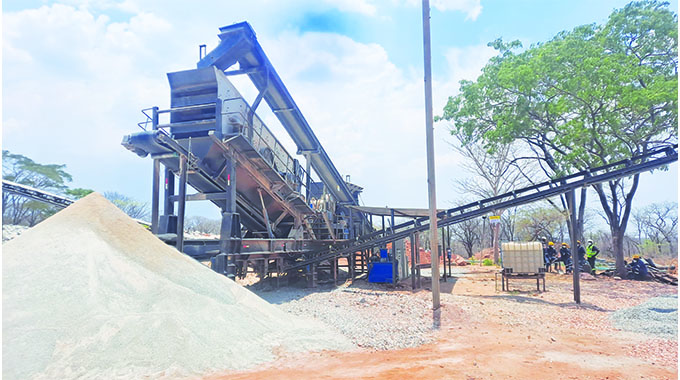
A JOURNEY of a thousand miles begins with one simple step, so says this ancient axiom, which originated from a Chinese proverb. The adage aptly sums up the entrepreneurial journeys of women-led companies under the Local Enterprise Development (LED) programme, which is being spearheaded by Zimbabwe Platinum Mines (Private) Limited (Zimplats) to empower women.
The LEDs programme, which started in 2013, has changed the fortunes of the founding women entrepreneurs that are part of the initiative, their families and their communities through the job opportunities they have created, and the various corporate social initiatives (CSI) they have been undertaking to deal with some of the challenges in their host communities.
Dostaro Investments (Private) Limited is one of the thriving women-led enterprises, which has been part of Zimplats’ LED programme since 2013. Fascinated by their humble beginnings, Zimpapers’ news crew travelled all the way to the mining village of Chakari, about 33 kilometres west of Chegutu, and 38km north of Kadoma, to see firsthand how an unassuming Mrs Sipiwe Makororo was able to transform herself from being a housewife to an influential businesswoman who commands respect and influence in Mashonaland West province.
The story of Dostaro Investments.
It is said that dreams are only made, if you try. Mrs Makororo’s journey of a thousand miles started when she successfully sought the support of her husband and family to allow her to start mining silica on part of their Chadshunt Farm in Chakari, which was lying idle due to its terrain that made it unsuitable for cropping. With her husband and the Makororo family throwing their full weight behind her project, Mrs Makororo had to move outside her comfort zone as a housewife and started laying the groundwork for Dostaro Investments to extract silica from the farm using rudimentary methods to extract the metalloid.
Her next struggle became that of finding a market for her product, which is used in the purification process of minerals, including platinum. The hunt for buyers of the product took her to Zimplats, where she was initiated into the LED programme after Zimplats saw the potential in her. The rest is history.
From supplying silica, Dostaro expanded its product range to include river sand as well as quarry stones to the various construction projects being undertaken by Zimplats. Their clientele has also grown in leaps and bounds, with some of their biggest being Oracle, Evernote and Ensequre Incorporation. Dostaro is now a thriving mining and mineral products support company offering both surface and underground mining solutions at scale. They have also gone into construction where Dostaro offers seamless integration between design, pre-construction and construction. Over the years, the company has also expanded into transport, and is counted as a significant third party logistics company in Kadoma and in Zimbabwe.
Having started with less than 10 employees, Dostaro now employs 62 workers and all of them are residents of Chakari. Dostaro has offices in Kadoma, while the mining activities take place in Chakari. It is Dostaro’s policy to give preference to people from the area they operate in when it comes to employment. Chadshunt Farm from where Dostaro mines silica and quarry stone has 70 hectares of silica deposits and 13 hectares of quarry stone deposits. What our crew found fascinating was that Dostaro has grown from a company that used to just manually crush silica, to a giant that now operates tipper trucks and is involved in construction. Speaking during a tour of their quarry and silica mine at Chakari, Mrs Makororo who is the founder and chief executive officer of Dostaro Investments, expressed gratitude for the role played by Zimplats in ensuring the viability of their business enterprise.
“When we started in 2013, we were using manual methods of extracting silica and quarry, but with funding support that was availed by Zimplats, we were able to buy a four-in-one Vanguard quarry machine that can crush up to 300 000 tonnes and we are able to generate above US$100 000 in profits per annum. We were also able to acquire a front-end-loader and eight tipper trucks,” said Mrs Makororo.
Dostaro Investments has also plucked a leaf from off Zimplats. Corporate social initiatives are already embedded in Dostaro Investments’ DNA.
“We also plough back into the community from where we are mining river sand. We assisted Rockbar Primary School with fencing of the school yard, paying of school fees for 10 selected orphans, roofing a classroom block, putting floors in some classroom blocks and constructing teachers’ houses,” she said.
The headmaster of Rockbar Primary School, Mr Sense Mushonga, lauded the gesture by Dostaro Investments in resuscitating their school through developmental programmes and paying of school fees.
“We were so humbled with the help that we got from Dostaro Investments. The donations go a long way in improving our school infrastructure and quality of education at our school,” he said.
Through capacitation by Zimplats, Dostaro Investments was also able to drill boreholes and rehabilitate small dams as well as roads in the community. Rockbar Village Development Community officer Mr Vengai Sibanda said assistance by Dostaro Investments in their area has helped in alleviating water problems as people and livestock now have easy access to clean water. With the availability of water, villagers have embarked on gardening projects from where they are also getting revenue to sustain their livelihoods.
Telstone Trading
A fair distance from mining activities, another company that is speaking highly of Zimplats’ role in shaping them is Telstone Trading, which is into manufacturing of protective clothing and is the sole supplier of all protective clothing needed by Zimplats for all its over 9 000 employees, including contractors.
“I started operating in 1987 and in that period I was operating below expected capacity, coincidentally looking for a market for my products. I approached Zimplats and they asked me how many work suits I was making per day. Then I was only making 20 but that was way too little for their requirements. Having been persuaded to give me a chance, they took me on under a programme to capacitate women driven enterprises,” said Mrs Edith Dube, the executive director.
“We were given soft loans which were to be repaid over a generous grace period and at very affordable rates. With the loans we have been able to grow our capacity, purchase more sewing machines and vehicles. The business was now able to realise more profits and with the profits we managed to purchase a 7-tonne truck to the tune of US$86 000. Telstone Trading employs 100 workers with 90 percent of them being women and 10 percent men,” added Mrs Dube.
Mrs Dube also said she had plans to expand to other parts of the country. Plans are underway to open a sales shop in Harare which will service Harare province and its surroundings.
The corporate social responsibility mentality is also grounded in Telstone Trading.
“So far we have managed to donate computer gadgets to rural schools and we pay for five children who are at different boarding schools,” she said.
“We also make sure that we have affordable quality uniforms for the rural set up so that every parent can afford a school uniform for their child,” she added.
Turf Brick Moulding

Zimplats did not end by capacitating Dostaro investments and Telstone companies alone, it went another mile by giving professional expertise and grants to Turf Brick Moulding Company. Turf Brick Moulding Company, wholly owned by women directors from rural Mhondoro- Ngezi, the company specialises in moulding spiral pillars, black bricks, sinks and air vents.
The company’s chairperson Mrs Onai Manjengwa said the company came into existence when Zimplats engaged single mothers and widows in the community to form a company. The company is assisted by Zimplats through loans and technical knowledge on how to run a company.
“Zimplats is more of a mother to us, at first we did not manage our funds properly but with business training and consistent support we realised we needed to complement their efforts. We were given technocrats to help us run and manage our business. Zimplats also facilitated for us to purchase a state of art QT6 automated plant that mass produces bricks in a short period of time and as of today we are now a professional company,” she said.
“Using the new plant, we are able to produce 2 800 000 bricks per annum which translates to $US1 800 000 in revenue per year. We were able to purchase a front –end- loader, a 40 tonne haulage truck and a trailer from profits that were realised,” said Mrs. Manjengwa
“Our company employs 150 workers, the majority of them locals from Ngezi.
Mrs Manjengwa also said as individual shareholders, Turf Brick Moulding Company helped them to transform their lives as they were able to send their children to boarding schools and to build their own houses, a thing that was far beyond their dreams before the coming on board of Zimplats in the resuscitation of their business. As the country pushes for the promotion of gender equality, such approaches by Zimplats feed into the national vision of inclusive development.



 Bongani Ndlovu
 Online Reporter