

 admin
admin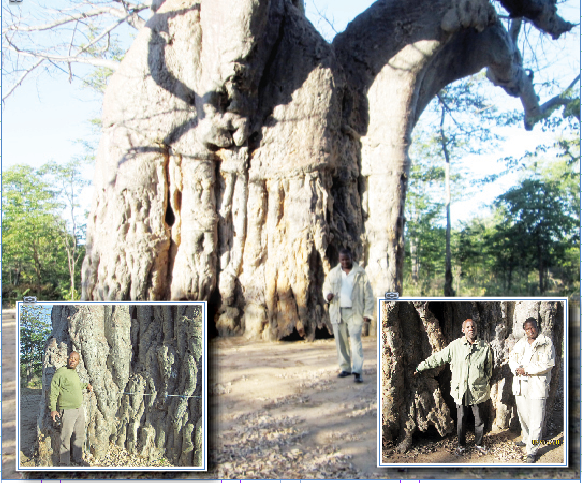

Msilisi Dube
EACH and every tribe has its own culture and traditions which sets it apart from others. Culture is defined as the shared knowledge and schemes created by a set of people for perceiving, interpreting, expressing, and responding to the social realities around them. Recent research however shows that many tribes, particularly the demographically smaller ones, have now lost some aspects of their cultures due to economic and social issues.
The culture of the San people in Tsholotsho, reputed to be the first humans to inhabit southern Africa, has markedly changed because of a number of factors, among them intermarriages between them and nearby Ndebele and Kalanga people.
One symbol of the ancient San culture is a large, old baobab tree that stands in a dense forest near Hwange National Park. It was a shrine where they used to perform rituals, but has now become “one of those trees.”
An elderly San woman Anna Ndlovu, 84, said: “Our daughters are married to non-San tribes, which has made it difficult for them to follow our culture. We had our shrine, the Mbu-u-Dema tree, where we used to dance and perform rituals like rain-making.
“Ever since we started intermarriages our gods never answered our prayers. We used to bring the sick to the shrine. After performing our rituals the diseases would be cured,” said Gogo MaNdlovu.
She lives in a village that lies on the eastern side of Hwange National Park.
The Mbu-u-Dema shrine is thought to be the biggest tree in Zimbabwe and is about 25 metres in circumference. There are many stories about this giant tree, which is thought to be over 100 years old.
According to James Dube, a member of the neighbourhood watch committee, whose family was one of the first to settle in the area, his father used to tell them that when they first came into the area they found the tree as it is today.
The tree was discovered by the San people as they moved about in search of food during the 1900s after the fall of the Ndebele kingdom in 1894.
“There is a legend which says that our great god climbed the shrine to get its fruits. As he went up, the tree lifted up its branches higher and higher, keeping the fruits out of reach. In anger, the god ripped the tree from the soil and threw it skywards. It landed back upside down, exposing all the roots. From there we started performing our rituals because it was a mysterious tree,” he said.
Gogo Motshwa Moyo, also from the San community, born in 1917 at a time when the San were still practising their unspoilt nomadic life, said they also used the tree as a directional beacon when they got lost in the jungle.
“Since we were hunters and gatherers sometimes we would get lost in the jungle. There were no roads at that time hence we would go straight to that tree since it was big and visible. From there we knew our way back home,” she said.
She further pointed out that the tree provided a spiritual connection between humans and the spiritual world. Many healing activities and festivities took place at the shrine throughout the year.
Director of the Tsoro-o-tso-San Development Trust, an organisation which spearheads the preservation of Khoisan culture in Zimbabwe, Davy Ndlovu, said the shrine had lost its influence. He blames this to intermarriages.
“According to our culture we are not allowed to practise intermarriages but due to economic hardships we have no option since we are no more hunters and gatherers. Our shrine has became mum and no longer communicates with us,” he said.
A few years ago, his organisation unsuccessfully pushed for the baobab tree to be declared a heritage site.
Ndlovu said the Mbu-u-Dema has a circumference of 25m and is largely unknown outside the local San community. The more popular Big Tree, also a baobab tree in Victoria Falls is only 17m in circumference.
“We approached the Department of Museums and Monuments to have the baobab tree declared a heritage site, but they said trees have a problem because they grow old and eventually die,” he said.
In Tsholotsho San families are found in wards 1, 2, 7 8 and 10. For thousands of years San people have lived on hunting and gathering. Game meat and fruits were their staple food.
As a result of the creation of the Hwange National Park in 1928, a majority of them was forced to give up on their hunting and gathering lifestyle and became subsistence farmers.
Another villager Blessing Ndlovu said long back the San were a very aloof community that shunned strangers.
However, this has changed. They have developed a good rapport with the Ndebele communities in Tsholotsho, although they live in separate villages.
Economic problems, population growth in adjoining areas as well as legal realities have forced them to settle down with other communities.
“The cattle that I rear belong to a person who is not a San. I got them through the system of kuronzerwa/ukusisela from some of the Ndebele villagers.
“We now share virtually everything. There is a need for us to live peacefully and work together with other communities because we are not hunters and gatherers anymore,” he said.



 Online Reporter