Chronicle Editor
Sunday News Correspondent
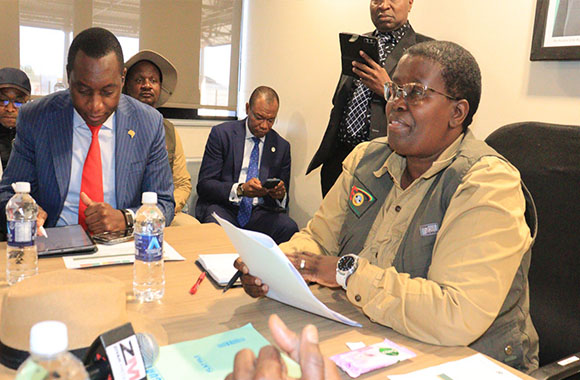
PUBLIC Health practitioners are worried that gains made in the fight against the prevention of HIV might be reversed if new funding for condoms is not found quickly. This was revealed by the National HIV Prevention Coordinator in the Ministry of Health and Child Care Ms Gertrude Ncube at the second quarter HIV Prevention Partnership Forum organised by Safaids in Harare.
Ms Ncube said international funding for condoms in Zimbabwe is coming to an end next year. “There is actually donor fatigue for the condom funding, so as a country, we are saying should we risk all the gains made through our condom programming because there is no funding. We need to look at how best we mobilise even our domestic funding to support condom procurement,” said Ms Ncube.
Ms Ncube said condom programming remains a key pillar in the fight against HIV. She said the country has been heavily relying on condom support from partners such as PEPFAR through USAID for both the Zimbabwe National Family Planning Council and the public sector.
“PEPFAR has already told us that from 2026, there will not be any condom funding,” said Ms Ncube.
Deputy Director HIV and STI Programme Dr Tsitsi Apollo said condom programming was one of the early HIV prevention interventions that the country adopted.
“Certainly we need to be committed to ensure that we sustain the availability and access of this commodity. It will be very sad if we regress on some of the gains we have made as a country. Even as the country progresses and aspires to become an upper-middle-income economy it is very important to rethink how we are going to fund condom programming and ARVs for treatment. We need to look at our interventions to make sure that all the progress we have made as a country is not eroded overnight,” said Dr Apollo. Dr Apollo said the Global Fund’s current grant ends in 2026.
“Do we know what will happen from 2027 and beyond after the funding expires considering what is happening globally and the funding being given to countries. If Zimbabwe gets to that upper-middle income bracket we are less likely to receive external funding because Global Fund uses a certain allocation formula to fund countries based on their economies,” said Dr Apollo.
Dr Apollo said the country has to look for alternative funding sources for programs. She said the Government is currently looking at health insurance and there is also need to explore Public Private Partnerships.
National Aids Council Director Programmes Mr Raymond Yekeye said the whole HIV response programme is facing challenges.
“It’s the whole HIV response program that is at a critical stage on how it is going to be sustained and how it is going to be funded, there is need to develop a sustainability roadmap for the HIV response. The levy is probably 25 to 30 percent of our requirements for the HIV response and that is why we are discussing other financing mechanisms such as the National Health Insurance Scheme because the levy on its own will not be able to sustain,” said Mr Yekeye.



 Online Reporter