Gabriel Manyeruke
THERE was a time when learning depended largely on what could be found on a school library shelf.
For many of us, textbooks were treasured possessions and the library was the gateway to knowledge.
As students, we spent hours reading novels, newspapers and academic texts.
We debated concepts with teachers, attended inter-school seminars and eagerly participated in Zimbabwe School Examinations Council (Zimsec) examination conferences organised by examiners.
The internet was virtually unknown to most learners.
Mobile phones and laptops were luxuries reserved for working adults.
Yet, despite our determination and a strong belief that education could transform lives, national Ordinary Level examination pass rates often remained low because many schools lacked adequate textbooks, science laboratories and computer facilities.
Today, the learning landscape has changed dramatically.
A library in every pocket
The modern learner carries something more powerful than the libraries many of us grew up relying on — a smartphone connected to the internet.
Within seconds, a student can access past examination papers, educational videos, digital textbooks, scientific journals and interactive learning platforms.
A difficult Mathematics problem can be explained by a tutor on YouTube, a challenging Geography concept can be demonstrated through an animation and an English Literature text can be downloaded instantly.
Never before has information been so readily available.
Yet a thought-provoking question remains: if knowledge is now at our fingertips, why are national pass rates still a concern?
Rural learner’s disadvantage
Part of the answer lies in inequality.
Zimbabwe’s educational outcomes are often shaped by the gap between urban and rural learning environments.
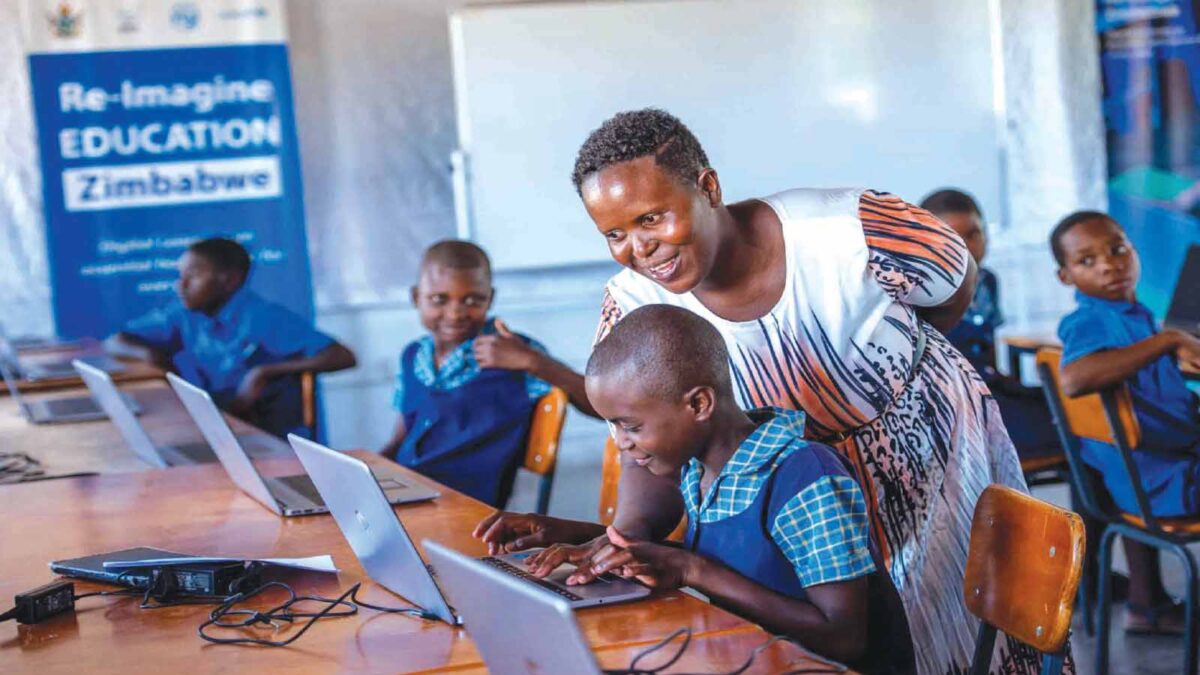
While some learners enjoy reliable internet connectivity, computer laboratories and digital learning tools, many schools in remote areas continue to struggle with limited technological infrastructure.
The tragedy is that intelligence is evenly distributed across Zimbabwe, but opportunities are not.
A gifted learner in Binga, Mbire or Gokwe deserves the same access to learning resources as a learner in Harare or Mutare.
Yet the digital divide continues to separate learners not by ability, but by circumstance.
As a nation, we cannot expect dramatically improved pass rates while thousands of learners remain disconnected from the world’s largest digital classroom.
When data becomes the barrier
One of the greatest obstacles is the high cost of internet data.
Owning a smartphone or tablet is only part of the equation; the device must be connected to affordable internet services for meaningful educational use.
For many low-income families, purchasing data regularly is a struggle.
Yet these are often the learners whose academic performance needs the greatest support.
Educational videos, revision materials, digital textbooks and past examination papers are increasingly hosted online.
Without affordable connectivity, many pupils remain excluded from these valuable learning opportunities.
A national investment in education
If Zimbabwe is serious about raising national pass rates and competing with global educational standards, affordable internet access must be treated as an educational necessity rather than a luxury.
Government, telecommunications companies and other stakeholders should work together to establish zero-rated or low-cost educational data packages, expand connectivity in rural schools and increase access to digital learning devices.
Such investments would help bridge the gap between urban and rural learners while strengthening overall academic performance.
Of course, technology alone will not guarantee success.
Discipline, parental guidance and responsible monitoring remain essential.
Without proper supervision, social media platforms can easily distract learners from their academic goals.
However, when used responsibly, the internet is no longer merely a communication tool.
It is a modern classroom, a virtual library and an academic equaliser.
If Zimbabwe is determined to improve its national pass rates, expanding affordable access to educational internet services may be one of the most powerful investments the nation can make in its future.
Gabriel Manyeruke is an author and educator at Wise Owl High School in Marondera. Feedback manyeruke4@ gmail.com