Vusumuzi Dube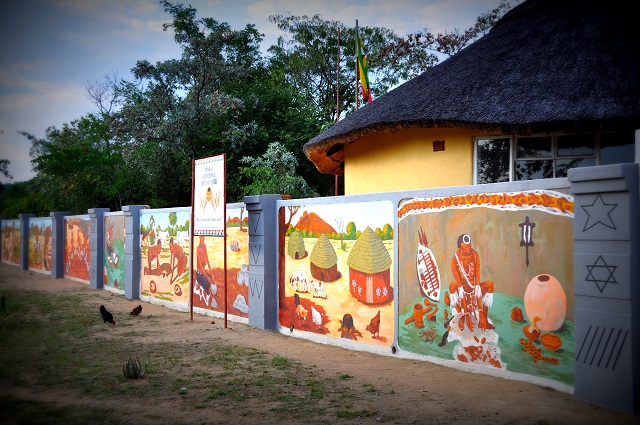
ISIGOMBOLOZI! One of the pupils enthusiastically proffers this answer to a question that I had posed.
There are about 50 pupils all packed in a kitchen hut, umkulu, at Amagugu International Heritage Centre at Whitewater, Matobo District.
These days, following some lull in the devastating Covid-19 pandemic that had brought our cultural centre to its knees, schools have begun coming to Amagugu to learn about their culture, our culture.
Yesterday it was St Patrick’s Primary School from Makokoba Township in Bulawayo. Today it is a different class from St Patrick’s again and the Pillar Primary School also from Bulawayo join them.
Tomorrow it will be Emganwinini Secondary School.
This is a development that pleases my heart and my soul when the young come to imbibe their culture so that they are rooted in their past. It is a source of pride and it enhances their self-images and egos.
Generally, I have observed that towns and cities are cemeteries of African culture.
Urbanites tend to despise their ancestral backgrounds including indigenous languages. However, this is slowly changing. Last week we hosted Girls College. Next month it will be Convent High School, together with Coghlan Primary School, inter alia.
A slogan goes, “Catch them young.” This is what we endeavour to do at Amagugu International Heritage Centre. We introduce pupils and their teachers to African culture and Ndebele culture in particular.
However, we seek to inculcate in their minds the fact that African culture shares some common elements. This is what is sorely missing cultural approaches. Our pupils grow up thinking their cultures are different from each other. In terms of essence, this may not be entirely correct.
Pupils from the Catholic Church-run St Patrick’s Primary School are beginning to see what I am here referring to. An “O” Level pupil will grasp new concepts more readily than a primary school pupil will. It is easy for one who is not a trained teacher to teach above the heads of pupils whose cognitive development is not advanced. Teaching methods may not be suited to pupils’ cognitive levels. Being a trained teacher myself, I know this too well.
The pupil who answered the question and gave the answer as, “isigombolozi,” appreciated that a circular design in an African cultural world is pervasive. One only requires to appreciate that pupils are at different stages of cognitive development. They will not grasp new concepts with equal ease. In the kitchen hut, umkulu, we had a wide array of artifacts that we were introducing to the pupils.
Systematically, in typical teacher style, I assisted them to see something common to items before them.
The artifacts were many. We had previously travelled to eMkambo in Bulawayo to purchase some more, following wastage. I categorized the items for ease of understanding and appreciation: items made out of grass (izilulu, grass grain bins), baskets (ingcebethu, isitsha,” among others. Other items were made out of metal, clay, horn, gourd, and stone. Largely, most pupils were quite au fait with various artifacts.
This was the first level of understanding. Identification of items and categorizing them based on materials out of which they are made. In some cases, we did differentiate gender issues in terms of who made these items. It was division of labour as I overheard a teacher from Pillars exclaim to one of their classes. Pupils had seen various types of spears: Ijozi, inzala, and usiba. The latter was the spear that Ndebele soldiers used in an effort to dislodge the Afrikaners out of a secured laager. Spears belonged to males, the people who went to war. Wood, horn and stone were in the men’s domain.
On the other hand, they knew that women were associated with grass and clay. We took a close look at the hut, identified the super structure, which they knew as uphahla. We proceeded to identify the component parts of uphahla, the roof: intungo, imithando and grass.
I proceeded with utmost care, moving from the known and the familiar to the unknown and unfamiliar.
The key concepts that I wished to introduce were intungo and imithando. What I really intended was that pupils appreciate that nouns come from actions expressed by verbs. I knew this was not easy to them. In the kitchen hut were two spears, one known as usiba, which has aerodynamic properties. The Ndebele used these to hurl into a laager. The other one is isijula that was popular during the reign of King Tshaka of the Zulus. This one was used I, close combat. It was not thrown at an. All soldiers were expected, upon return from war, to bring these assegais. Ukuthunga was the concept that I wanted to unpack with clarity and lucidity. In pupils’ minds, mothers “thunga” torn shirts and dresses. I explained to them that “ukuthunga” means to use a pointed object to pierce an object. The object used may be wood or metal. So, when a mother sews a garment, how is the concept of “ukuthunga evident? I asked them. They knew mothers used needles. I was not content with one example to illustrate the concept of “ukuthunga.”
There were two baskets in the hut. I established ho mothers produced these. My objective was to demonstrate to them that here too; something sharp was used to “thunga” ingcebethu, the basket. They knew its name as usungulo. They seemed to have grasped the concept from the two examples presented to them.
That was progress. I picked up a broad-bladed isijula and sought to drive the same concept of “ukuthunga.” A spear stabs someone and goes through to the other side. A spear was therefore comparable to a needle. Both of them, “thunga.” In the case of a dress, it is cloth that is pierced and the needle goes through to the other side. During war, it is a spear that goes through the body of an enemy.
As I was leading pupils through the maze of concepts, I could not stop marveling where I had all these ideas and concepts. I did not do isiNdebele at secondary school. I went to Mazowe Secondary School where I did Shona for four years. I had passed the subject at Junior Certificate level and at “O” Level. I had a flare for languages. After that, I trained as a science teacher. That science is proving handy now and will even be more so next year when I commence the, “Journey to Ancient African Science.”
I was ready to have a go at the second concept, “ukuthanda.” This is yet another concept that is misunderstood. I tested the waters and asked pupils to give me the English equivalent of “thanda.” A litany of hands shot up. I picked on one, as I do not allow a chorus response. “Love!” That was exactly what I had bargained for.
The concept had come up when we looked at the roof. In fact, both concepts related to the roof that was above our heads. “Intungo” led to “ukuthunga” while “imithando” led to “thanda”, the verb. Of course, they had to be assisted to see the concept among lovers and also in a broader concept with nothing to do with lovers or loving.
I asked them to look at the arrangement of “intungo” and” imithando.” To “thanda” means to hold with both arms almost or even meeting on the other side. We looked up to see imithando holding “intungo” together. If I simply say demonstrate to us ukuthanda, almost in all cases the individuals embrace each other. “No, I never said thandanani! Just follow instructions!” After many trials and errors, they finally get it right. Only one of them “thandas.” The next command comes, “Thandanani!” Now the instruction is different and they get it right. At secondary school they understand impambosi better. Of course, I never did it in isiNdebele. We did it in Shona and the concept was the same. Impambosi yokuthandana, impambosi yokuthandisisa. Pupils will love impambosi and will pass examinations when teaching is presented in this exhilarating manner.
However, one of my major objectives in teaching the artifacts was to establish that they were characterized by a circular design. Isigombolozi. I still wanted them to know another Ndebele word for isigombolozi. The alternative was quick in coming. Indingilizi! This is a concept that binds us together as Africans. Whether one is Kalanga, Tonga, Nambya, Shona, Ndebele, Xhosa, Birwa/Sotho, they embrace circularity in architecture, sculpture, and indeed, in performances.
It was not enough for me to end at establishing the primacy and pervasiveness of the circular design in the African cultural context. I was now leading pupils towards understanding and appreciating what I had not understood, let alone appreciated even at university. It took me several years out of formal school. I was then attending the School of Observation with nature as my teacher. I hold that teacher in high esteem.
There is no teacher who is better than nature, provided we understand her language and attend her lessons all the time.
“When we look up in the heavens, what do we see, both at night and also during day? “The sun.” The answer came swiftly. “The moon and the stars.”
At night what do we see in the sky? Have you seen the sun when it is rising and setting? What shape is it? “Isigombolozi!” “Indingilizi!” I considered myself having succeeded in introducing the easy way what some people may regard as difficult concepts. Thunga, thanda. More importantly, pupil had some smattering knowledge of astronomy, that the sun and the moon are circular in design Isigombolozi, indingilizi!


 Online Reporter