admin
admin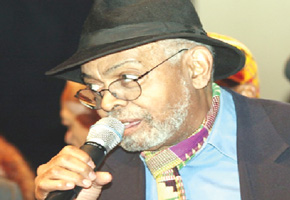
Leading black American writer Imamu Baraka who has brought me here from New York City on a conducted tour of the centre, pauses and turns round to steal a glance at me and my marvel is recorded in his eyes.
“I can’t believe what I see,” I say, my eyes transfixed on Baraka’s own smiling eyes.
“You had better believe what you are seeing and hearing brother Steve,” Baraka says emphatically.
“You are at home here, away from sweet home Africa.”
These people are descendants of blacks abducted centuries ago from different African countries, chained, crated and shipped away into slavery in the West, I tell myself.
They are busy founding a new African nation in absentia with Swahili as its national language and in hopes of returning to the land of their ancestors one day, I conclude and a warm sensation touches my heart.
The year is 1974, and I am in the United States from exile in Zambia on a sponsored study of newspaper production in that country where computerisation of the media has just begun.
Back home the winds of change are buffeting and roaring across Africa, felling dysfunctional racist political systems and leaving behind in their wake fledgling democratic institutions popping up to give freed natives a brave new future.
However, some more deeply-rooted regimes, especially in Southern Africa merely sway or just bow down a little but remain firmly entrenched but not for long as armed fighters get the AKs to work to complete the unfinished job to bring Uhuru to the rest of the continent.
In retrospect, I wonder now if those African-Americans working on a universal language to unite themselves as a nation scarcely peeped over the lattices of time to see that today, nearly 40 decades on, their brothers and sisters back home in Africa would still languish under a linguistic imperialism so debilitating it has kept Africans divided and weakened just as the colonial conquerors had always wanted.
A biblical example will perhaps explain more succinctly why Africa continues to be divided along pervasive linguistic barriers which make it difficult for quick-fix political and economic solutions to be implemented for speeded-up development across the continent with African policy makers and technocrats pooling their resources as a team to redeem the continent of its underdevelopment status.
After the Israelites, freed from long years of slavery in Egypt had crossed their own Rubicon and were poised to enter the Promised Land of milk and honey, God instructed them to destroy every idol and any other ungodly paraphernalia in sight.
But depravity got the better of some of them and they kept some of the idols to themselves. The failure to observe God’s order demonstrated a level of acceptance and appreciation of their deliverance and freedom which was lamentably low.
Similarly, on entering their own “Canaan”, African countries embraced and continue to worship a linguistic idol that has become synonymous with their divided countries.
Take, for instance, a country previously colonised by the French and where their language is the official medium. The name of the country is Francophone, Anglophone where the idol English reigns supreme, and is known as Lusophone in countries formerly colonised by the Portuguese.
Now imagine this. Four men embark on a journey into an opaque future in pairs. At the point of departure the pairs must define their relationship to one another. The first pair comprises a white man and Blackman.
“I am; you are,” the white man tells his companion.
“I am because you are,” the two blacks reciprocated the definition of their relationship.
It is clear that the Blackman and white man are setting out on a non-believers’ journey. On the other hand, the two blacks share the same social circumstances and are likely to fall, rise and again walk together through to their destination.
Today because African countries are divided by different languages and cultures, they scarcely boast similar social circumstances and this makes it difficult for the countries to enter a state of inter-subjectivity and walk the same road as one black people, particularly in the spheres of political and economic development — witness cases of insularity in some cases of trade and aid between African countries that have and those that have not much to offer.
You also find that African leaders speaking different languages have to resort to the technology of their former oppressors and dividers, microphones, in order to understand one another.
And tempus fugiti, indeed “time flies” as they say in Latin and time lost in decision making processes to quicken the pace of Africa’s development is surely lost, and done so for good, while the speaker pauses to have his rhetoric interpreted in a different language and the audiences prick their ears mulling over the gist of the speaker’s message.
The above scenario questions the level of Africa’s acceptance of independence and freedom which has left the continent’s people as virtual strangers to one another.
This is because the linguistic idol worshipped has such a firm hold on the minds of the people, reducing their indigenous languages and cultures to pale shadows of their otherwise African royalty. Even closer to home, the power of the foreign linguistic goddess remains manifest in the inability of leaders from some ethnic groups to speak the language of different groups in order to instantly reach common ground on what needs to be done to overcome social, economic and political challenges to speed up the emancipation of our people, hence the microphone also continues to link people’s ears — and this in legislative chambers where laws must be enacted without Shakespeare’s much ado about nothing.
It is, however, not too late to deconstruct the foreign languages imposed by colonisers of Africa as official communication superstructures, and a good start has already been made with the introduction of Swahili as one of the official languages of the Pan-African Parliament, along with English.
That move is particularly significant as Swahili is the official language of legislative assemblies of the huge East African bloc whose law makers are members of the Pan-African Parliament based in South Africa.
Swahili contains many words from Shona, Ndebele or Zulu as well as from other Bantu languages and this makes it a typically African language with the potential for being as much as continental lingua franca as it is universally used and understood in East Africa.
Swahili is also already being taught at the University of Namibia and indeed, in other Sadc universities as well as in West and North Africa.
This will prepare young graduates so that when they grow and become members of Africa’s legislative and various international institutions, they will join other cadres already articulate in Swahili to transact business at speed.
But any adoption of Swahili as a universal language to mediate international relations in political, economic and social spheres does not reduce the significance of indigenous languages as also repositories of African culture, robust or eroded here or there though it might be a superimposition of decadent foreign, cultural values.
This long overdue move should instead be embraced with much enthusiasm as Africa’s redefinition of its identity in the world community of nations and as a continent that has come of age, can speak with one voice on continental matters of mutual benefit and join hands and shoulders together to uproot any imposing impediments standing in their way.


 Online Reporter