Chronicle Editor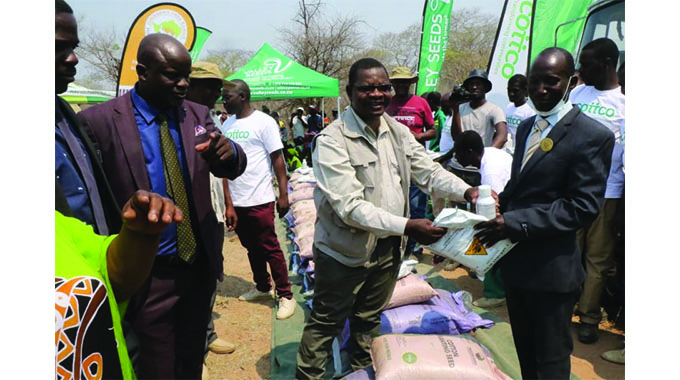
Nqobile Tshili, Chronicle Reporter
GOVERNMENT yesterday launched three farmer support programmes in Binga District, Matabeleland North to guarantee food security while castigating the abuse of the presidential inputs scheme by communities.
The Ministry of Lands, Agriculture, Fisheries, Water and Rural Development launched the Matabeleland North Presidential Rural Poultry Scheme, Pfumvudza/Intwasa Input Scheme and Cotton Inputs for the 2022/23 farming season.
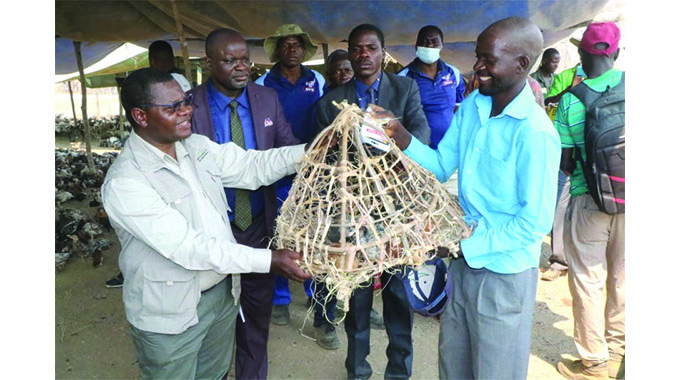
The Presidential Rural Poultry Scheme, which was being initiated in Matabeleland North is set to benefit 262 000 households in the province and 39 495 households in Binga District.
Each household is getting 10 free-range chicks which in the long run are expected to improve household nutrition while plans are on course to commercialise the sector.
Lusulu area, being one of the best farming areas in the Matabeleland region is expected to receive more maize seeds compared to other areas which are being encouraged to plant traditional grains like pearl millet and sorghum.
The Grain Marketing Board (GMB) depot in Lusulu is still receiving grain from farmers from the 2021/22 summer farming season.
Lusulu is also a cotton farming zone and farmers in the area will be getting cotton inputs.
The government views cotton as white gold and wants farmers to maximise on its production to improve household income.
Speaking during the launch of the three farming programmes in Lusulu yesterday, Lands, Agriculture, Fisheries and Rural Development Chief Director, Professor Obert Jiri, representing Deputy Minister in the Ministry Vangelis Haritatos, said the poultry scheme will spread across Matabeleland North with 260 000 households benefiting.
“Today the province is receiving the first batch of 32 000 four-week-old chicks to 3 200 households. Subsequent deliveries will be made until all the 39 495 households in Binga and 262 000 in the whole province have been covered,” he said.
Deputy Minister Haritatos said the programme is in fulfilment of President Mnangagwa’s development agenda and that no one and no place should be left behind.
He said if well managed, the poultry project will improve household nutrition and incomes.
“The poultry scheme is part of other Government initiatives meant to rebuild rural livelihoods and build resilience in the advent of climate change. The interventions will have a significant impact on the sustenance of livelihoods, food security and broad economic development,” he said.
Turning to the distribution of the Pfumvudza/Intwasa climate proofing method, Deputy Minister Haritatos said Lusulu which is in agroecological region three, plays an important role in national food security.
He said the GMB depot in Lusulu has an annual intake of between 5 000 and 7 000 metric tonnes of maize and traditional grains.
The Deputy Minister said Government must provide farmers in the area with all the necessary inputs.
“The Pfumvudza/Intwasa scheme is premised on distributing inputs based on the agroecological region in which the farmer is located. Higher rainfall areas have a higher potential to grow maize and will receive more maize seed as well as traditional grains,” he said.
“Farmers in low rainfall areas will receive more traditional grains than maize. Crops like sorghum and pearl millet are better suited to low rainfall as they can tolerate mid-season dry spells and low rainfall amounts as compared to maize.”
Most areas in the Matabeleland region fall in regions four and five and will be expected to grow more traditional grains.
Deputy Minister Haritatos said while farmers in dry areas are encouraged to plant traditional grains, they can swop their crops for maize at the GMB.
He said Government is also addressing farmers’ concerns with regards to migratory pests and quelea birds that are destroying crops.
Deputy Minister Haritatos urged farmers to conduct soil testing and get the nutritional value of soils before planting while following the best agronomic practices.
“Every farmer must stand up and be counted. All the farmers ought to join the cash economy through sufficient use of these interventions by His Excellency, the President of Zimbabwe Dr E.D Mnangagwa,” he said.
On its part, Deputy Minister Haritatos said, the Government will through GMB ensure timeous distribution of inputs and timeous payment of farmers at a viable producer price.
He said Government is also targeting to support 14 000 households involved in cotton farming in the district.
Deputy Minister Haritatos said Binga is expected to put 10 000 hectares of land under cotton farming.
He also noted a worrying trend where beneficiaries of farming inputs are abusing the facility.
Free Range Poultry Association of Zimbabwe secretary-general Ms Beauty Jiji said the Presidential Rural Poultry Scheme is critical as it promotes the growth of indigenous chickens countrywide.
She said the traditional chicks are easy to keep and have the potential to economically transform villages.
“So, we are very grateful, this is a programme that is not only going to impact individual households but also impacts on the economy of Zimbabwe. If all the farmers who are receiving these birds take it seriously and look after these birds and multiply them, we are going to have a different picture in the next few years,” said Ms Jiji.
She said trained farmers will be able to increase their production.
“As an association since 2015 we have been advocating for this and we are very thankful to the Government and President Mnangagwa for empowering ordinary Zimbabweans through this project.”
She said if well kept, the chicks will contribute to improved nutrition at the household level while contributing to national food security.
“We believe that in the next six months we will begin to see the multiplication of these birds. People can then harvest the eggs and take them to an incubator and multiply their stock,” said Ms Jiji.
“As an organisation, we are also targeting to market the birds in the next six months. If each household that benefits from this programme can sell one bird per month, it means we will be having 30 million birds, and if each bird weighs 1kg it means we will be able to produce 300 000 metric tonnes of meat.”
Ms Jiji said they are working with the Ministry of Lands, Agriculture, Fisheries and Rural Development, ZimTrade and the Agricultural Marketing Authority to create markets for free-range chickens.
One of the beneficiaries, Mr Munyaradzi Ngwenya said he expects to improve his family’s livelihood by keeping chickens.
He commended Government for the support it is giving to rural communities to improve their livelihoods.–@nqotshili


 Online Reporter