

 admin
admin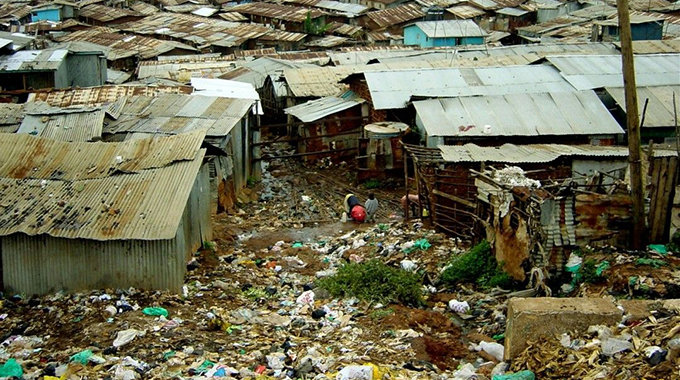
Pardon Gotora Urban Scape
Urbanisation is inevitable. The challenges associated with this geographic phenomenon are insurmountable for developing countries like Zimbabwe.
Research reveals that Rome was the first city to reach a total population of one million in 133BC. London was the second in the early 1800s.
Most countries from the Global South, particularly in Latin America and Africa, experienced rapid urbanisation in the 1950s and 1960s. Most of these countries were still under colonial rule, although others like Ghana got independence at almost the same period when urbanisation was at its peak.
The most outstanding stimulus for urbanisation is rural-to-urban migration. There are perceived better prospects in urban areas compared to the ru-ral hinterland. Rural areas are predominantly hinged on rain-fed agro-based economic activities.
With the advent of climate change due to the effects of industrial revolution, rural areas have been hit hardest by intermittent natural disasters such as drought, floods and some new animal diseases.
This has caused the gradual dwindling of available livelihood alternatives over the years. Coincidentally, industrialisation in urban areas has been availing better opportunities for income diversification to the urbanites, which is not available in rural areas.
Consequently, the “ruralites” have failed to resist the temptation to flock to urban areas. Cities and towns are now magnets of hope, hence the rapid urbanisation.
Just like any other country in the global south, Zimbabwe also experienced urbanisation in the 1950s-60s and 70s due to various factors such as in-dustrial development and the liberation struggle.
The phenomenon became more pronounced and visible from the 1980s after independence with the free movement of people.
However, urbanisation brings with it a lot of challenges. It depends on which angle one might wish to treat it, the process might be a nightmare for others while it can be a prospect for some.
Even when Rome and Britain were urbanising around 133BC and the 1800s respectively, they faced similar challenges associated with the process of urbanisation.
The major challenge comes from the sudden surge in demand for housing. All those migrants would want accommodation and/or shelter and ancil-lary services such as schools, clinics, water, sewer and recreation, among others.
More often than not, the authorities might be ill-prepared to adequately deal with the rate of rural-urban migration and promptly meet the housing demand. Urban land is zoned, where you have the central business district (CBD), industrial, residential, transportation, open spaces, health and edu-cational facilities.
Not every individual affords a house upon arrival from the rural areas, some might be fortunate enough to stay with relatives, but not for eternity.
History has it that most people resort to unlawful occupation of the available open spaces, be it along road and rail servitudes or buffer zones, or they occupy the periphery of the CBD where they pay no rent to the authorities.
Because the houses are temporary, mostly built of plastic, pole and dagga, thatch and timber, and they lack basic urban infrastructure such as sewer, water, roads and both solid and liquid waste management, health and education facilities and have no title to the land, they are regarded as slums or squatters.
There has been debate on whether slums are distinct from squatters.
International agencies such as UN Habitat feel that the terms slums or squatters are derogatory and may lead to discrimination and exclusion. There is an attempt to identify “eco-friendly” names such as informal settlements.
From far back, Zimbabwe has had cases of slums and/or squatters (informal settlements), though arguably not of the same magnitude as Kibera in Kenya or Old Fadama in Ghana or Kilikiliki in Zambia or Mumbai in India or Sao Paulo in Brazil. The likes of Chirambahuyo (now St Mary’s), Ep-worth, Porta and Churu farms, Dzivaresekwa Extension and Hatcliffe Extension holding camps come to mind.
Now we have the likes of Gunhill. Land barons have created other squatter settlements around the country.
I attended a workshop sometime in 2019 at the University of Zimbabwe, where there was conversation around informal settlements, and one member from Dialogue on Shelter raised an interesting point for debate when she said, “Harare is now an informal settlement”, in view of incessant water and power cuts as well as overcrowding.
The irony of the matter is, informal settlements lack the entire basic urban infrastructure, therefore, juxtapose that against Harare, there are more similarities than differences.
Of course, it was a matter of opinion and scholars or writers can debate about that till the cows come home.
The UN Habitat (2008) posits that there are over one billion slum dwellers globally. Now, the elephant in the room is, out of the over one billion, how many are from Zimbabwe?
According to Kaur and Kaur (2014), in 2001, Mumbai in India, had 1 959 slum pockets which housed about 6,25 million people. How many in-formal settlement pockets do we have in Zimbabwe, and housing how many people? What is the geographical spread of such settlements?
It is high time Zimbabwe takes inventory of all informal settlements as a baseline for future planning and interventions. Currently, the Zimbabwe Statistical Agency (Zimstats) is on a mapping exercise in preparation for the 2022 national population census.
What are the possibilities to leverage on such critical exercises, and devise key indicators that extract the exact kind of information required to carry out extensive informal settlement inventory? Resources may be a constraint, but is there no instrument which can be used to mobilise funding from the private sector, civil society, international development agencies and other like-minded institutions?



 Online Reporter