admin
adminKudzanai Gerede
GOVERNMENT’S efforts to lure investment into the country is now paying off as the past few months have witnessed foreign investment missions trickling into the country on fact finding missions on the opportunities available in various sectors of the economy. The country is still recovering from the ravages of Western imposed economic sanctions which resulted in over a decade of economic decline and deindustrialisation in all key sectors and the recovery course has been gradual as most sectors are in need of massive capital injection.
Last year, Government set up Special Economic Zones (SEZs) with the aim to attract Foreign Direct Investment into critical sectors with a host of incentives expected for prospective investors in the SEZs.
Government has already identified Mutare, Harare’s Sunway City, Bulawayo, Victoria Falls and Lupane for SEZs development.
There has been tremendous efforts to simplify and clarifying the framework, procedures and guidelines for complying with the country’s Indigenisation and Economic Empowerment laws espoused in the Indigenisation and Economic Empowerment Act [Chapter 14:33].
This among other reforms can be easily attributed to renewed interest by investors in the country.
Last year, Chinese President XI led a huge business delegation that signed mega deals which the Chinese government in a statement last week reinforced its commitment to the agreed deals.
The same year also witnessed Nigerian business tycoon, Mr Aliko Dangote landing into the country on an investment fact finding mission and expressed interests in asbestos mining and cement production.
During the same period, a Japanese exploration company JOGMEC signed an MOU with Government to embark on an exploration exercise on behalf of Japanese companies and the exploration corporation was recently in the country to start preparations for exploring minerals which is expected to lure more Japanese mining firms.
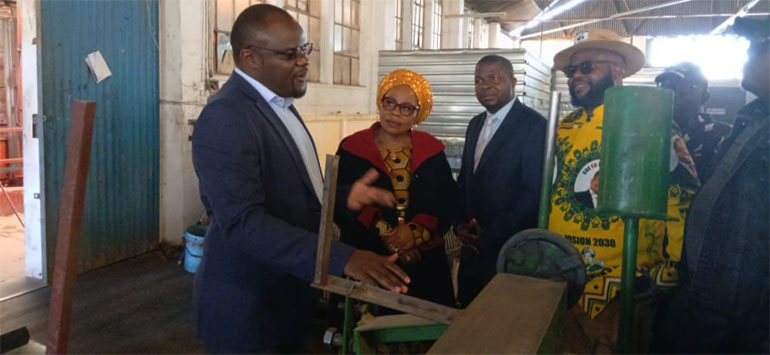
This week, a 33 member South African business delegation arrived in the country and held an investment conference in Harare and was expected to proceed to Bulawayo, Gweru and Mutare to assess the opportunities in various sectors among them agro processing, mining, tourism, electro technical and manufacturing.
Economic analysts have commended Government for its continued efforts in reforming the investment environment which were starting to pay dividend.
South Africa is Zimbabwe’s biggest trading partner and cooperation between the two neighbours has seen over R20 billion worth of trade since 2005.
However, the southern neighbour has gained much from the trade due to low industrial output by Zimbabwe which was creating a ready market for South African goods.
“I am of the view that the South African business representatives accompanying me today also have a crucial role to play in growing not only our trade volumes, but also investments into Zimbabwe that would yield a multiplier effect as it relates to job creation, poverty alleviation and ultimately economic emancipation of our people,” said South African Trade and Industry Deputy Minister, Mzwandile Masina.
According to World Bank, between 2005 and 2014, South Africa exported goods and services worth R24.8 billion whilst Zimbabwe exported only R2 billion during the same period.
South Africans have made their position clear that they are in the country to reverse the imbalance between the two trading partners by seeking best ways and opportunities to invest locally so that exports increase.
“It is refreshing to see a renewed interest to invest in the country,” notes Mr Pepukai Chivore, a competitiveness expert.
“This is probably coming as a result of several programmes rolled out by the government aimed at attracting investors.
These include the ease of doing business reforms being spearheaded by the office of the President and Cabinet which are aimed at making the business environment conducive and attractive to investors by removing unnecessary legislative and administrative bottlenecks; improving efficiency and timeliness in the approval or issuing of licenses and permits,”
“Government is also addressing the policy challenges that increase the cost of doing business in Zimbabwe through the drafting of new policies such as the Investment Policy; Diaspora Policy and Special Economic Zones Policies. Furthermore, Government has placed the issue of competitiveness high on the policy agenda as evidenced by the production of the inaugural Zimbabwe National Competitiveness Report (NCR) under the auspices of the National Economic Consultative Forum (NECF) which is providing guidance in further areas for reform,” said Mr Chivore.



 Online Reporter