shloboe boe
The electoral positioning for the International Olympic Committees’ highest seat went through a decisive phase on Thursday in Lausanne as the seven candidates vying to replace Thomas Bach presented their programmes with Sebastian Coe, Kirsty Coventry and Juan Antonio Samaranch Jr leading the way in their media interactions.
The event functioned as an oral exam of sorts in which each of the aspirants had 15 minutes to differentiate themselves from their rivals and hopefully convince the audience in what might be the most stealthy and opaque election the organisation has ever staged in its history.
This was the only campaign event held before the final decision in Greece, the speeches were not broadcast, and all attendees were prohibited from bringing phones or electronic devices into the room.
These were not the only restrictions: voters could not ask questions to their seven colleagues competing for the position. At the very least, a peculiar process.
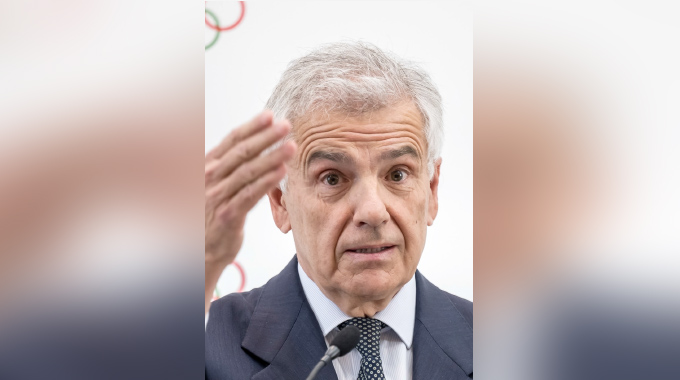
The rigidity eased during the next stage of the morning in the press room of the Olympic House, where the candidates then publicly presented their main objectives in individual 10-minute turns and in front of about 60 journalists with the option to ask questions.
Although there were no major revelations, the staging served as a thermometer to take the temperature of an electoral pulse in which the first favourites are beginning to be defined.
The assembly was composed of about 100 IOC members.
In the struggle for the throne are two Olympic gold medallists, Coe and Coventry; Samaranch Jr, son of a former IOC president; and Prince Feisal al Hussein, a member of the Jordanian royalty.
Four candidates currently lead Olympic sports organisations: Johan Eliasch (skiing), David Lappartient (cycling) and Morinari Watanabe (gymnastics). Coe, who leads World Athletics, organised the London 2012 Olympic Games and is widely considered the most qualified rival.
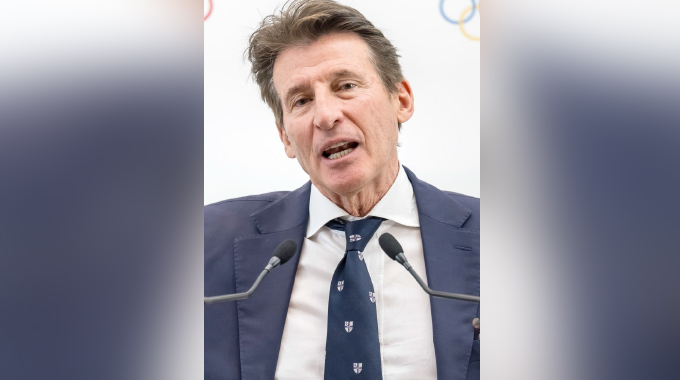
Additionally, it should be noted that three members of the IOC executive board led by Bach are Samaranch Jr, Prince Feisal and Coventry. The latter, Zimbabwe’s 41-year-old Sports Minister, would make history as the first woman to lead the Olympic movement in its 130 years of existence. She is considered by many as Bach’s favourite successor.
The programmes of the seven candidates present similarities on basic issues such as the need to maintain the neutrality and independence of the Olympic Movement, the convenience of giving more of a voice to athletes, the commitment to the fight against doping and in favour of equality, sustainability, Olympic values and the need to increase revenue.
Challenges also include the impact of climate change on the sports calendar, gender issues or the full reintegration of Russia into the Games. From these co-ordinates, the meeting confirmed that the podium with the most options in the forecasts is occupied by Coe, Coventry and Samaranch Jr.
The Spaniard, a 65-year-old banker from Barcelona who has been an IOC member for a quarter of a century, more than any other candidate, represented in his speech the traditional Olympism mannerisms: impeccable and calm oratory, an ability to relate and effectiveness in thesis exposition.
Samaranch Jr showcased his experience in diplomacy, finance and management, fully aware that this trajectory is one of his great attractions and, more needed than ever in these complex moments in world sport, in which a healthy relationship with money and business seems essential to finance Olympism.
It is here where his capabilities shined, independently of Coe and Coventry’s special aura thanks to their respective successes as former athletes.
The Catalan presented himself to the media sure-handed yet apparently devoid of the ego that seemed to permeate from some rivals. In terms of leadership, he argued that IOC members must be empowered so that decisions are not made by only a few chosen ones, hoping to distance himself from the structure drawn by Bach.
His interest in the reshaping of old organisations was already a characteristic associated with his father, the ground-breaking IOC leader that preceded the former German fencer.
Whenever asked about Samaranch Senior, far from showing fatigue, he used his answers to mark distance and as a springboard to elevate his programme.
He did so, arguing that old formulas are no longer valid, that the obligation now is to accelerate changes.
According to some Olympic sages, his profile, which combines tradition, experience and boldness, could benefit from the fierce struggle between frontrunners Coe and Coventry.
At 68 years old, Coe, the oldest, displayed the confidence of someone who perceives himself a winner, mixing flattery with irony throughout his interaction and promising a new glorious era, maybe steering in that direction to counteract his reputation as a sometimes too ambitious figure, bordering on arrogant.
Olympic champion, organiser of excellent Games in London 2012 and president of World Athletics, the strongest federation that exists, enhance his curriculum, a firm background that could be winning over the assembly’s voters. — Agencies/Sports Reporter.


 Online Reporter