Communion with Bishop Lazarus
Besides the recent limited and sporadic exchanges of fire between Iran and the United States — the latest being Friday’s tit-for-tat attacks — a resumption of full-scale hostilities between these age-old rivals is now inconceivable.
For all his petulance and hard-headedness, Donald Trump has bitterly learnt why all his predecessors, despite commanding arguably the strongest military on earth, did not even dare to take on Iran.
After nearly four months of war against the mighty US and Israel (a nuclear-armed regional nemesis), Tehran has emerged undefeated.
Washington and Tel Aviv seriously miscalculated.
They thought the vicious decapitation strikes launched on February 28 that targeted a Defence Council meeting, which managed to kill Iran’s Supreme Leader Ayatollah Ali Khamenei, among other key figures, would force Iran to capitulate.
It, however, did anything but.
After rehearsing a possible attack from its adversaries for decades, Tehran’s mosaic defence strategy, through which the country’s 31 regional commanders had the carte blanche to continue fighting even in the event of elimination of its top leadership and collapse of its central command, underpinned its resilience.
Iran gave as much as it got, destroying US defence installations and bases in neighbouring Gulf countries and imposing a steep price on Israel through a barrage of missile and drone strikes.
Iran’s “axis of resistance” — the Houthis in Yemen, Hezbollah in Lebanon, Hamas in Gaza and Shia militias in Iraq — gave it strategic depth and a layer of asymmetric deterrence.
And while Washington deployed its sophisticated stealth B-2 bombers against targets deep in Iran, the missile cities — subterranean fortress complexes built up to 500 metres beneath mountainous terrain and shielded by massive layers of bedrock — proved unbreachable and impenetrable.
But Iran also introduced a new dimension in modern warfare that is now being studied in military academies around the world.
Its relatively cheap missile, rocket and drone arsenal, often pitted against multi-million and multi-billion-dollar defence shields, dramatically and literally upped the costs for both the US and Israel.
All this meant when hostilities morphed into a war of attrition, the odds were heavily staked against Washington and Tel Aviv.
But there are also internal dynamics in America that make resumption of hostilities in the near and immediate term remote, if not impossible.
Discontinuing the war, which would herald the reopening of the Strait of Hormuz, through which almost a quarter of the world’s fuel supplies transits, will naturally tame raging fuel prices that were making American voters fretful, disillusioned and irate.
An enraged voting base would have almost certainly assured Trump and the Republications of losing the House of Representatives, a serious handicap that would make him a lame duck president for the remainder of his term.
Be that as it may, another major constraint is Tuesday’s US Senate vote that approved a war powers resolution preventing Trump from continuing hostilities against Iran.
The resolution passed by a 50-48 vote, with four Republicans — Susan Collins of Maine, Lisa Murkowski of Alaska, Bill Cassidy of Louisiana and Rand Paul of Kentucky — breaking with their party to support its adoption.
In essence, the measure would require Trump to seek Congress’ authorisation to use military force against Iran.
New era of pragmatism
So, from where Bishop Lazi stands, this war, which was wrecking lives around the world through increasing the cost of living, is gradually grinding to a halt.
Encouragingly, fuel prices in our teapot-shaped Republic have dived below US$2 per litre for both diesel and petrol in sympathy with retreating global prices as geopolitical tensions in the Middle East ease.
There is, however, a remarkable development that took place in the past four months that will surely assure Zimbabweans that the dark days are well and truly behind us and the country is now on an irrepressible growth path.
In the old days, even the slightest movement in oil prices would translate into volatile commodity prices and runaway inflation.
Not now.
Despite the global tumult, President ED’s administration proved to be unflappable, clear-eyed, nimble and bold.
Whereas the temptation would have been to pander to populism through subsidies, policymakers decided to adjust fuel prices in line with developments on the international market, giving the Government the wherewithal to restock and prevent stockouts.
It, however, circumspectly slashed fuel taxes and increased ethanol blending ratios to insulate the population from steep increases.
Meanwhile, monetary authorities stuck to their prudential measures that guaranteed stability of the fledgling Zimbabwe Gold (ZiG) currency. The result was an exchange rate that behaved, a ZiG currency that held steady and relatively stable prices of goods and services.
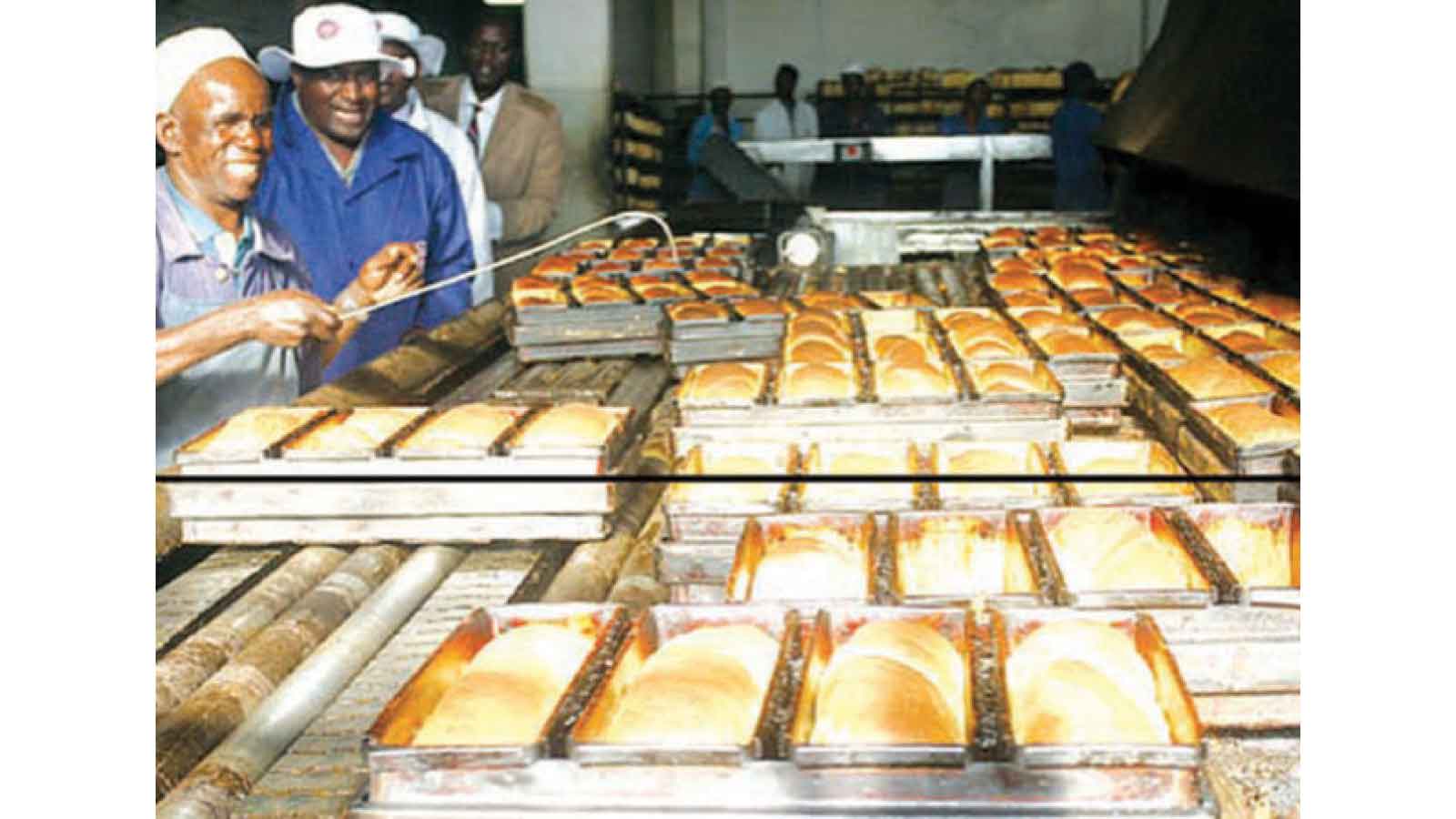
You might not have noticed this, but throughout the turbulent four-month period, local bread prices did not move even an inch.
They remained stuck between US$1 and US$1,10 per loaf.
This is hugely significant.
You see, bread prices are far more than just a label on a supermarket shelf.
They act like a sensitive economic thermometer, reflecting multiple underlying issues — inflation, fiscal health, import dependence, supply-chain stability, and more.
When this thermometer reads abnormally high, it often signals that the economy as a whole is “running a fever”, which can trigger strong social reactions.
That is precisely why governments across the world view stabilising bread prices as a key defence line for protecting livelihoods, maintaining social order and insulating themselves in power. Kikikiki.
Bread prices can enthrone and dethrone regimes.
When Egypt decided to end subsidies on flour and other basics in 1977, for example, it led to deadly bread riots that resulted in 79 deaths before subsidies were reinstated.
But the outcome was catastrophic in 2011, when soaring food prices ignited a chain of events that culminated in the ouster of President Hosni Mubarak.
And in March this year, faced with global grain price hikes and regional conflicts, the Egyptian government swiftly stepped in to impose price caps on unsubsidised bread sold in private bakeries, promising to cover the difference to protect basic social stability.
Price gougers were even warned against manipulating bread prices.
History, drawing on lessons in countries such as Tunisia, Morocco, Sudan, Jordan and Mexico, has taught us that indeed bread can be a kingmaker.
Wisdom
Zimbabwe’s stable bread prices are not by accident.
They reflect the painstaking work over the past eight years to make the land we repossessed from white settlers productive.
They reflect the supporting policy framework that provisions for a changing climate and make it easier for farmers to return to the field.
Our farmers have worked miracles, breaking records with each passing season.
This year, they have put more than 120 000 hectares under wheat with the hope of producing a record 662 500 tonnes.
The country’s annual formal wheat requirement for the commercial milling and baking industry is officially estimated at 360 000 tonnes.
Rapidly expanding irrigation schemes, especially in the wake of climate change, early announcement of producer prices, a stable macro-economic environment and improved agronomic practices as a result of efficient and effective extension services have all restored the viability and sustainability of farming.
Overall, this year’s surplus is sure to cushion us in the event the super El Niño that is being projected materialises.
Proverbs 20:4 tells us, “A farmer too lazy to plow his fields at the right time will have nothing to harvest”, while Proverbs 21:5 adds: “Good planning and hard work lead to prosperity, but hasty shortcuts lead to poverty.”
If the fallout from the US and Israel war of aggression was a test, then Zimbabwe has demonstrated, in more ways than one, that its economy is now resilient and its growth irrepressible.
Our gaze should, therefore, be on 2030, by which time we should have developed a modern, highly industrial and prosperous country.
This means modern infrastructure and high standards of living for all our people.
The goal is within sight.
It is possible.
Bishop out!