

 Online Reporter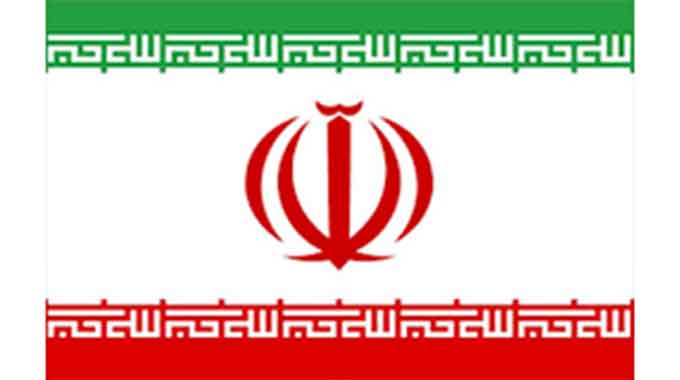
Gibson Nyikadzino
Zimpapers Politics Hub
The Islamic Republic of Iran, regarded as a chief foe and archenemy of the United States in western Asia.
Its willingness to engage the US has not been necessitated by the current situation in that country, where external forces have engineered social unrest and orchestrated riots to soil the country’s image.
Continuing the path of negotiating to establish cooperation in areas that need to be resolved means both Iranian and American negotiators, if agreeable, will approach negotiations weighed down by years of grievances and mutual suspicions.
History has footprints that present contexts that each side will be careful as there are deep-seated mistrusts between the two as they view each other, likely, as integrally unfriendly, hostile and deceptive.
This hostility, in Iran’s view, is historically framed since 1979 when the Islamic Revolution came to power, ousting a Western-controlled puppet government. To the US, Iran is a stumbling block to its interests in western Asia; hence, there are mythological views that have been framed to depict Iran as a pariah, hence it should surrender to pave the way for cooperation to advance and protect US interests.
Despite the challenges and discomfort that may arise from negotiating with Iran or the US, engaging in dialogue is crucial. That remains the only pathway for both countries to unlock shared interests that may exist beneath the layers of perceived animosity and skepticism.
On the contrary, it appears impossible for Iran to reach that end as it believes the US does not want to negotiate with respect to principles enshrined in the United Nations (UN) Charter. Based on the principle of state sovereignty as enshrined in the UN Charter, Iran is convinced the US is not keen on recognising its sovereignty, but wants it to capitulate and play to its whims.
To force Iran to surrender, the US has, since 1979 through use of sanctions, force and instigation of internally orchestrated violent protests, as a strategy of maximum pressure, which has only been responded to with maximum resistance. No one can ask a sovereign nation to surrender to another. That objective, to Iran, hinges on the US accepting that a negotiation is different from dictating the terms of a capitulation.
Give dialogue a chance
Iran, accused of plans to develop nuclear weapons, has in the past negotiated with the P5+1, a group of six world powers – the five permanent members of the UN Security Council (China, France, Russia, the UK, and the US) plus Germany – that negotiated with Iran on its nuclear program.
The negotiations culminated in the 2015 Joint Comprehensive Plan of Action (JCPOA) meant to “limit Iran’s nuclear activities” in exchange for sanctions relief. Unfortunately, the deal was dismantled by the US unilaterally in 2018, despite Iran having implemented it in good faith. Additionally, it was attacked last June by the US and Israel.
As a signatory to the Non-Proliferation Treaty and a member of the International Atomic Energy Agency (IAEA), Iran will not develop nuclear weapons as it upholds the principles of the regulating bodies. If Iran wanted to develop nuclear weapons, it would have. For 30 years, the West has raised those allegations without proof, yet Iran’s scientists and physicists, since then, could have done so.
It is also imperative for the world to know that Iranians are never going to abandon their rights nor give up their rights enjoyed by all signatories to the many treaties, including the nuclear Non-Proliferation Treaty. Such rights open the way for access to all aspects of peaceful nuclear technology.
Destroying the international order
The way the US is dealing with friends and foes alike shows signs that it is destroying the international order. It is often said, “It may be dangerous to be America’s enemy, but to be America’s friend is fatal”. The disruptive approach or strategy being deployed to resolve issues is not saving the world.
As reverberations of Venezuela’s invasion and abduction of its President Nicolas Maduro are felt across the globe, new uncertainties and a great unease are now creeping into the European Union’s sphere and NATO alliance. Recently, the US also fired missiles into Nigeria from the Gulf of Guinea.
Thus, the operation in Venezuela has raised anxieties in Africa, Denmark and the European union (EU) as the US signals strong intentions to annex Greenland, a semi-autonomous territory of the Danish kingdom. Seven EU leaders in a joint statement have already come to Denmark’s defence.
The way the US is negotiating with other countries, including Iran, will likely destroy the international order. It is contrary to the doctrine of the sovereign equality of states. For Greenland, Denmark is showing signals that it may cooperate with the US, make concessions, as Venezuela has also done the same, itself a form of placation.
There is a need for global states, despite different civilisational, political and historical beliefs, to balance their interests for the sake of mutual interests and humanity. Struggles will be in existence forever. However, the best way to overcome them is when global leaders go beyond personal interest as they look for solutions.
For feedback: [email protected]



