Online Reporter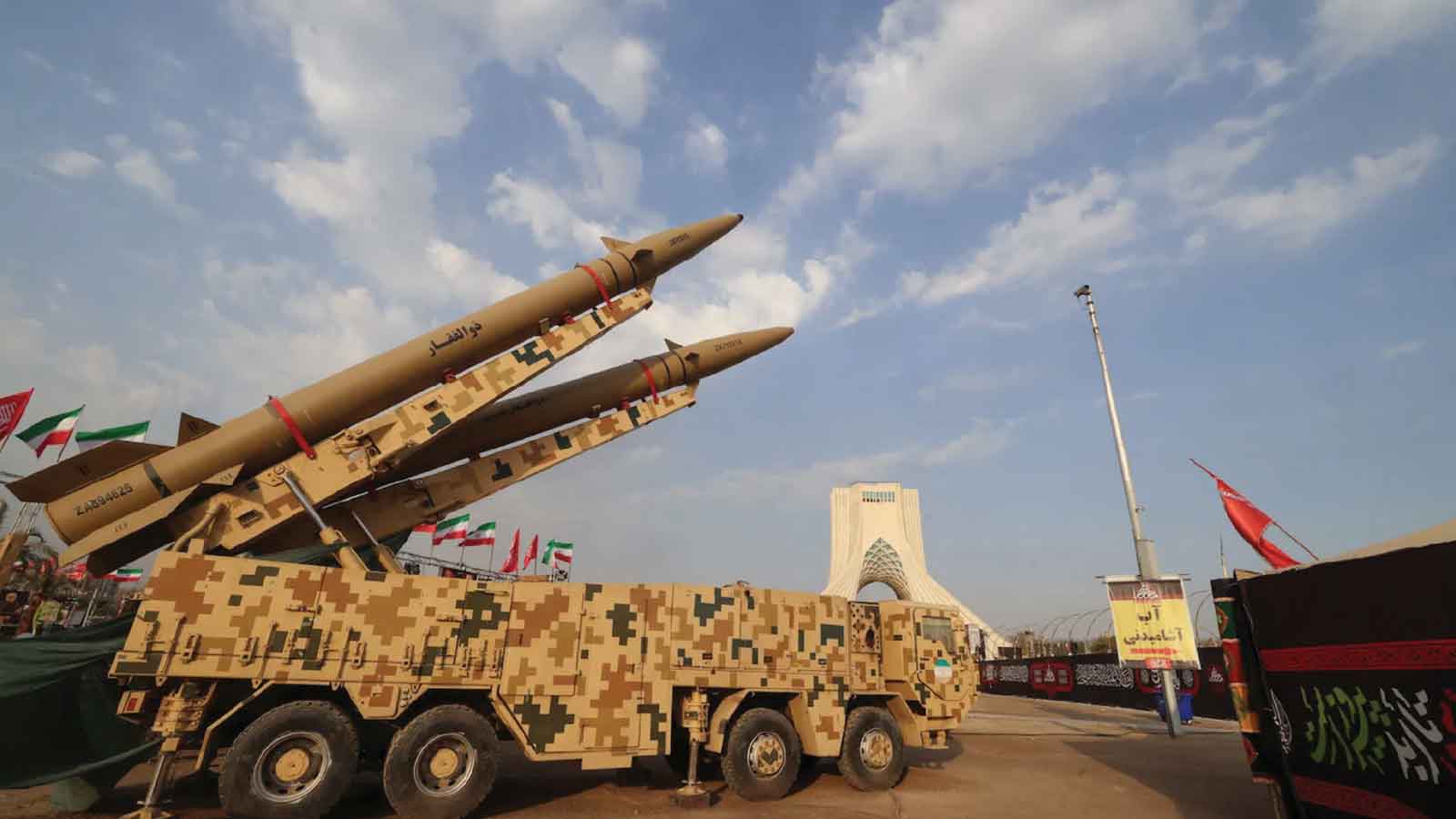
Dr Brian Tawanda Marwenze
For 35 years, the world lived inside a single sentence: Washington writes the rules, but in 2025 that sentence was crossed out in the Persian Gulf.
The US-Israel war on Iran marked a major miscalculation that hastened the erosion of American hegemony, by joining the conflict, the United States forfeited much of its credibility in West Asia and Gulf states no longer view Washington as the indispensable guarantor of their security, they are actively seeking alternative security arrangements beyond dependence on the US military.
Consequently, American military bases, once seen as a shield, are now perceived by many in the region as a source of instability.
“You don’t have to be stronger than the hegemon. You only have to be harder to kill than the hegemon is willing to pay for.”
The US could still strike in 2025 and it did but graciously Iran absorbed the blows, answered against US-Israeli bases and regional assets, and kept functioning and that refusal broke the aura.
For a generation, deterrence worked because resistance looked futile.
Tehran proved it wasn’t each escalation was meant to restore credibility, each one deepened what strategists now call strategic paralysis: Washington could start a war, but not dictate how it ended.
Costs boomeranged home — higher oil risk, fractured alliances, and the exposure of force without an exit.
Then came the inventory audit according to the New York Times, five months of war drained US stockpiles to their lowest levels more than 1 500 Patriot interceptors and thousands of cruise and ballistic missiles were expended and replenishment will take at least two years with shelves already thin from Ukraine, the war turned a shortage into a crisis.
That matters beyond the Gulf, when the world’s security guarantor runs low on munitions, adversaries do the math.
Moscow is watching, Beijing is watching, Taiwan and Eastern Europe just became riskier not because war is imminent, but because deterrence is now measured in inventory.
Sanctions used to freeze behaviour, they no longer do. Iran had 40 years to adapt and built defensive mechanisms, sold oil in yuan and rupees, and plugged into BRICS+ settlement networks and did not thrive but survived, and survival is teachable.
Once other sanctioned states see you can live outside the dollar-SWIFT system, the threat loses its power.
Coalitions used to follow. In 1991, forty states lined up with Washington.
In 2003, there was a “coalition of the willing.” In 2025, America fought largely alone. Saudi Arabia and the UAE hedged, Turkey stood aside, China, Russia, and India refused new sanctions and deepened trade with Tehran.
“Leadership that cannot bring others with it is not leadership, it is loneliness with aircraft carriers.”
Hegemony is not the ability to act alone, it is the ability to make others act with you. When that goes, you are not leading, you are just spending.
Prof Robert Pape’s warning now frames the decade: when the enforcer steps back and no one replaces him, predictability disappears risk begins.
In the Gulf, Turkey, Egypt, and Israel are accelerating missiles, drones, and air defences.
Nuclear options once dismissed are now in planning documents, because trust in the US guarantee is no longer absolute.
In Yemen, Iraq, Syria, Lebanon, and the Red Sea, the cost of testing boundaries has fallen.
China is buying into Gulf energy and ports.
Russia is selling weapons and nuclear technology. No one is writing a single rulebook as everyone is writing their own.
Financially, the dollar remains first but not dominant. Regional trade deals and local-currency settlements are rising.
Markets must now price a world of multiple blocs. This is not Pax Sinica. It is multipolar globally, regionalised locally.
The US will remain pre-eminent in the Americas. China will shape the Asia-Pacific.
Russia will contest Eurasia. In the Middle East, power has diffused into four centers that must bargain: a US-Israel alignment, an Iran-led Resistance network, a Turkey-Qatar axis, and a Saudi-UAE bloc, none can impose its will. By GDP or carriers, Iran is not a superpower, by the metrics of 2026, it is a VETO power — defined by the capacity to deny and the capacity to outlast.
The proof is the Strait of Hormuz: 21 miles wide, 20 percent of oil, 30 percent of LNG.
Iran doesn’t need a large navy. Mines, missiles, drones, and fast boats can spike insurance and freeze traffic.
That creates three levers: it deters strikes because retaliation is global, it provides bargaining power, and it proves asymmetric tools can neutralize conventional superiority.
For 70 years the US controlled chokepoints by presence, now control requires consent and consent must be negotiated, that is the burial.
The next 10-15 years will not be stable, expect more Libya and Syria-style fragmentation, shipping disruptions, expect a single incident in Hormuz to move markets more than a UN resolution, but also expect agency, for the first time in a generation, middle powers can shape energy routes, security pacts, and payment systems.
The 20th century bought order with hierarchy. The 21st will buy choice with chaos.
“The Iran war did not create multipolarity. It closed unipolarity.”
The burial is complete.
What we build on the grave will decide whether this century becomes managed multipolarity — or a long interregnum of miscalculation.