Online Reporter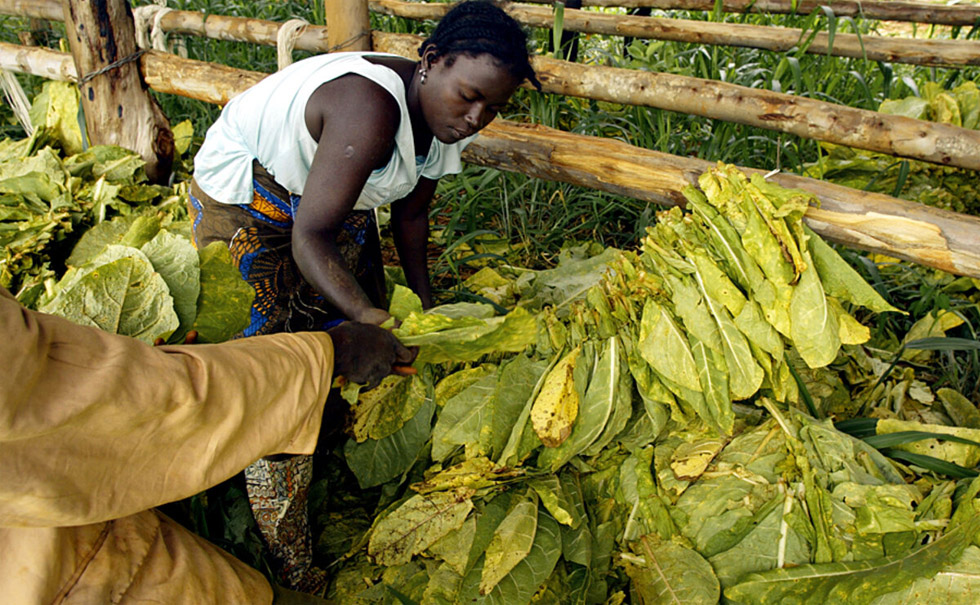
Lovemore Kadzura
Post Reporter
HARVESTING of early-planted irrigated tobacco has commenced in Manicaland, while planting of the rain-fed crop is now fully underway, as the country gears up for what promises to be another successful tobacco season.
Irrigated tobacco is legally planted from September 1 of each year, and is mainly grown by large-scale farmers, who have the capacity to run irrigation operations, which require significant capital investment in equipment such as pumps, pipes, and pivots.
A check by The Manica Post revealed that most farmers started reaping and curing their crop at the end of November, amid optimism that the golden leaf will fetch lucrative prices on the market.
At Linderspool Farm, outside Rusape, they started harvesting tobacco on Tuesday, and the farm manager, Mr Francis Chisindi, said despite depleted water levels in their dam, they managed to pull through and were relieved by the early rains.
“We have 38 hectares of tobacco under irrigation. We planted on September 1, 2025, and started harvesting last Tuesday. The major challenge we encountered was depleted water levels in the dam, which disrupted our irrigation schedules. However, the leaf is of high quality as we did not experience any leaching from the rainfall – our crop utilised all the nutrients. We expect to fetch better prices when the marketing season opens.
“Everything went well because we are contracted by Zimbabwe Leaf Tobacco (ZLT), and adequate inputs were provided on time. There is labour challenge this time of the season, as there are increased activities on the farms. Employers are competing for labour to meet targets. We have on-farm curing barns and use wood and coal as sources of energy. To supplement our irrigated crop, we have planted seven hectares of dryland tobacco, which is coming along well due to the good rains,” he said.
Mr Tapiwa Mashiri, a farmer from Chinyika West in Headlands, opted to self-finance his 10 hectares of tobacco this year, citing steep prices of contract system inputs.
“This season, I plan to plant 10 hectares of tobacco, and I have already planted six hectares. The rains have been good so far, and we hope it remains that way for a successful season. I am self-financing, as I have discovered that there are more profits in doing so than being contracted. From the proceeds I got last year, I managed to save enough to finance myself.
“The contract system was a stepping stone to independence for me. Prices of inputs under the contract system leave a farmer with a small profit. You just need to be financially disciplined to stand alone,” said Mr Mashiri.
Since the inception of the land reform programme, tobacco production has been on an upward trend, with farmers hitting a new record of 355 million kilogrammes during the past season.
Prospects are bright that farmers can achieve the newly set target of 500 million kilogrammes by 2028.