Online Reporter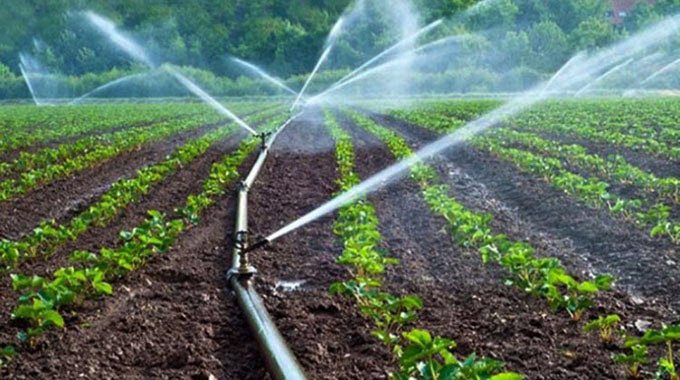
Ray Bande
Senior Reporter
ELEMENTARY studies of commerce teach us that needs are essential for survival and basic functioning – for example, food, shelter and healthcare – while wants are desires that improve quality of life, but are not necessary for survival, for example, entertainment and dining out.
Distinguishing between the two helps manage finances by prioritising essential expenditure.
In the same vein, the country has seen climate change affecting agricultural production over the years, with droughts becoming a recurrent phenomenon; the installation and expansion of irrigation facilities have therefore become a need. While conservation farming methods such as Pfumvudza have helped climate-proof agricultural activities, irrigation remains essential to ensure full potential is exploited.
It is no surprise that data from the relevant ministry indicate irrigation development has reached 256 598 hectares, an increase of 85 000ha since 2019, representing a 32-fold increase in the pace of development compared with the period 1980–2019.
However, it still lags behind the pace required to achieve 496 000ha by 2030, necessitating further incentives for private sector participation, as 82 percent of the area developed since 2020 was funded by the private sector.
There are 460 smallholder irrigation schemes, of which 256 are fully functional, 25 are partially functional and 95 are non-functional.
The first Crops Livestock and Fisheries Assessment report noted that during the 2025-2026 season, a total of 3 911ha was planted under various horticulture crops under smallholder irrigation schemes 2025 with green mealies dominating at 2 508ha followed by tomato 415ha and onion 180ha.
The same report noted that there are currently 233 008ha of irrigated national area available for cropping, with an estimated 80 000ha of maize, 20 000ha of tobacco, 10 000ha of soybeans, and 1 000ha of potatoes. The total area of tobacco cultivated under irrigation to date is 26 415ha. The breakdown has sugarcane (73 868ha), coffee (715ha), oranges (4 724ha), lemons (1 772ha), bananas and apples (233ha), peaches (360ha), avocados (2 745ha), blueberries (660ha), and pecan nuts (923ha) are among the 86 000ha of perennial horticulture crops.
In addition, 23 000ha are used for irrigation.
While these figures show marginal improvement from independence in 1980, what is beyond reproach is the need to expedite the expansion to ensure improved production and food security in the country.
Given that water harvesting and storage has greatly improved over the years, harnessing the water for fruitful production remains a priority for resource allocation.
“As of February 5, 2025, national storage levels were at 90 percent, significantly higher than the normal levels of 66,6 percent expected for this period, compared to 75,4 percent previously. However, significant provincial disparities exist in farm dams,” reads the CLAFA 1 in part.
During some farming seasons, including the current 2025–26 season, which is now at the harvesting stage, mid-season dry spells have regularly affected what could otherwise be good harvests.
In fact, the CLAFA Report 1 under the season quality topic reads: “The onset of effective rainfall was in mid-November. Rainfall covered the entire country by the end of November. The south-eastern regions generally receive early rains, whereas the north-eastern and south-western areas generally experience the most delayed commencement. Following the onset of rains in November, precipitation remained predominantly steady, with minimal notable dry intervals in most regions. Nevertheless, some areas in Mashonaland Central, southern parts of Manicaland and parts of Masvingo received rains late. The isolated dry spells in November were insignificant, except in northern parts of Mashonaland Central, which received rainfall late.”
Notably, dry spells do occur and persist.
Mr Stewart Shumba, a local agricultural expert, said: “We had rainfall well above normal – plus or minus 1 000mm compared with the yearly average of 850mm. This was an exceptional year for the past 30 years or more. Let us summarise this through the perspective of a hydrologist versus an agronomist. The hydrologist is very happy about the season because all rivers are flowing, all dams are 100 percent full, the groundwater table has risen, and to him there is no problem whatsoever.
“By contrast, the agronomist is troubled by the outcome of his crops, which were initially affected by excessive rain in January and then by the dry spell in February. This reduced yields from 100 percent to almost zero. So the agronomist wanted the rains to be evenly distributed throughout the season, which is naturally impossible. Considering the discussion above, we are saying let us use summer supplementary irrigation to mitigate these dry spell periods. Otherwise, we will keep on gambling each season about our harvests. So we are saying that for those near water bodies, let us adopt irrigation, and for small-scale farmers away from dams, let us sink boreholes to provide supplementary water during dry spells. That is my experience even here in Nyazura on my plot. White commercial farmers had long recognised this trend before land reform, and that is why there was a proliferation of dam construction on farms.