

 admin
admin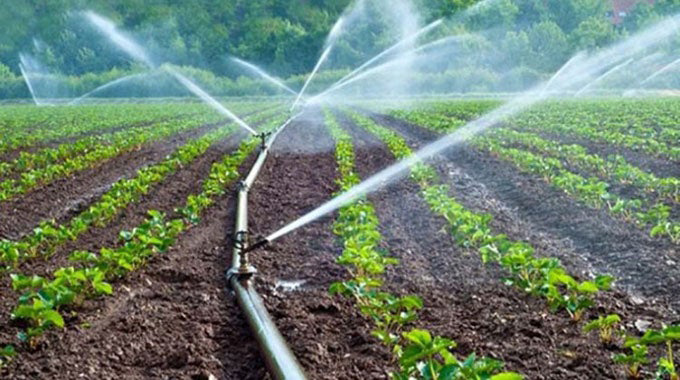
Jacqueline Ntaka
Correspondent
ZIMBABWE, like many other nations, is working on increasing agricultural productivity while combating the effects of climate change.
Advancements in technology offer an answer, providing innovative solutions that can enhance irrigation efficiency and foster resilience against climate variability.
The Government initiated the Accelerated Irrigation Rehabilitation and Development Plan which is targeted at rehabilitating and developing a cumulative 400 000 hectares to be put under irrigation.
This included revitalising over 450 irrigation schemes in communal areas and on A1 and A2 farms. Such efforts are crucial as most farmers in Zimbabwe rely on rain-fed agriculture, which is highly susceptible to climate change.
Some developed nations have long been at the forefront of irrigation technology.
For instance, KickStart International focuses on small-scale irrigation technologies that are efficient, sustainable, and low-cost, catering specifically to the needs of African farmers.
Moreover, technologies that tackle irrigation inefficiencies are also being developed in areas where irrigation represents a significant portion of water diversions.
In Asia, innovative technologies in irrigation are shaping the future of water management.
Smart irrigation controllers, soil moisture sensors, and micro-irrigation systems are among the advancements that increase water-use efficiency and reduce consumption.
Remote sensing technology is also being used to improve the efficiency of irrigation systems providing farmers with data to optimise water usage.
The Middle East, despite its arid climate, has been a hub for agricultural innovation.
Israel, for example, is a world leader in farming and irrigation practices, having developed technologies like drip irrigation to address water scarcity challenges. Similarly, ancient water systems in Mesopotamia have inspired modern gravity-fed irrigation canals, demonstrating the region’s long-standing expertise in water management.
In Africa, small-scale irrigation is being promoted as a game-changer for farmers.
It allows for quick scaling without large public investments and contributes to national agricultural and development goals.
The Malabo Montpellier Panel’s report highlights smart irrigation strategies from countries like Ethiopia, Kenya and Morocco, which have made significant progress in irrigation.
For Zimbabwe, embracing these technological advancements means not only improving irrigation efficiency, but also building a sustainable and climate-resilient agricultural sector. By learning from global examples and tailoring solutions to local contexts, Zimbabwe can pave the way for a future where technology and tradition work hand in hand to secure food and water for all.
Jacqueline Ntaka is the CEO of Mviyo Technologies. Feedback: [email protected].



 Online Reporter