
Theseus Mauruki Shambare
FOUR years ago, Zimbabwe celebrated a historic breakthrough insofar as wheat production was concerned.
The country had produced enough wheat to meet national demand for the first time in more than half a century.
Today, the country is aiming even higher.
The 2026 winter wheat season has surpassed its planting target, with farmers putting 126 394 hectares (ha) under the cereal against a national goal of 125 000ha.
While the excess amounts to just 1 394ha, the achievement is the latest milestone in a remarkable growth story that has transformed Zimbabwe from a chronic wheat importer into a nation increasingly confident in its ability to feed itself.
The numbers tell the story.
In 2022, Zimbabwe planted 78 063ha of wheat and harvested 375 000 tonnes, enough to achieve national self-sufficiency and end decades of reliance on imports.
It was a watershed moment.
For years, local wheat production had fallen short of national requirements, forcing the country to spend millions of dollars importing the grain to meet demand from millers and bakers.
The 2022 harvest changed that narrative.
Rather than retreating after reaching the milestone, farmers expanded production further.
In 2023, the planted area increased to 90 186ha, resulting in a harvest of 467 905 tonnes.
A year later, the area under wheat climbed again to 106 238ha, producing 518 502 tonnes.
The upward trajectory continued in 2025 when farmers planted 122 146ha and harvested a record 640 195 tonnes.
Now, in 2026, the country has extended the trend even further, planting 126 394ha and setting its sights on a harvest of 662 500 tonnes.
Viewed over five seasons, the transformation is striking.
Between 2022 and 2026, the area under wheat increased by more than 48 000ha, while production grew from 375 000 tonnes to 662 500 tonnes — an increase of nearly 77 percent.
At a time when climate shocks, supply chain disruptions and geopolitical tensions continue to unsettle global grain markets, Zimbabwe’s wheat production curve has moved steadily in the opposite direction.
What began as a quest for self-sufficiency has evolved into a drive for surplus production and strategic grain reserves.
The significance of that growth becomes clearer when measured against national consumption.
Zimbabwe consumes approximately 360 000 tonnes of wheat annually.
For policymakers, the conversation has shifted. The question is no longer whether Zimbabwe can produce enough wheat. The focus is now on sustaining production, improving yields and building resilience against future shocks.
Permanent Secretary in the Ministry of Agriculture, Mechanisation and Water Resources Professor Obert Jiri said attention has now moved from planting targets to crop management.
“We have surpassed the target already, way past the 125 000ha. Now we are focusing on agronomic interventions — hardening, fertiliser regimes, weed and pest control, irrigation application,” he said.
His remarks reflect the evolution of Zimbabwe’s wheat programme.
In the early years, success was measured largely by how many hectares were planted.
Today, the emphasis is increasingly on productivity, crop management and maximising yields from existing land.
Agricultural and Rural Development Advisory Services (ARDAS) chief director Mrs Medlinah Magwenzi said wheat has become a cornerstone of national food security.
“We are happy that we have planted 126 394ha, above our target of 125 000ha.
“Wheat production in Zimbabwe is no longer just for bread, buns and scones. It is now part of our staple food and a key pillar of food security,” she said.
Experts say the average Zimbabwean diet has evolved significantly over the years, particularly in urban areas.
Wheat-based products that include bread, pasta, biscuits and spaghetti have transitioned from luxury items to daily staples.
The growth of the wheat sector has also strengthened efforts to build the Strategic Grain Reserve (SGR), a critical national buffer against droughts and food shortages.
The Government’s long-term strategy is to maintain substantial grain reserves through coordinated production of wheat and summer cereals, ensuring that the country remains protected during adverse seasons.
Farmers themselves view the programme as a national responsibility.
SGR 200ha+ Club chairperson Mr Tichaona Mapfoche said large-scale producers remain committed to supporting the Government’s food security objectives.
“As the SGR 200-plus Club, our ambition is to fully support all Government programmes aimed at achieving national food security.
“We are aligned to the national vision and remain committed to strengthening the Strategic Grain Reserve,” he said.
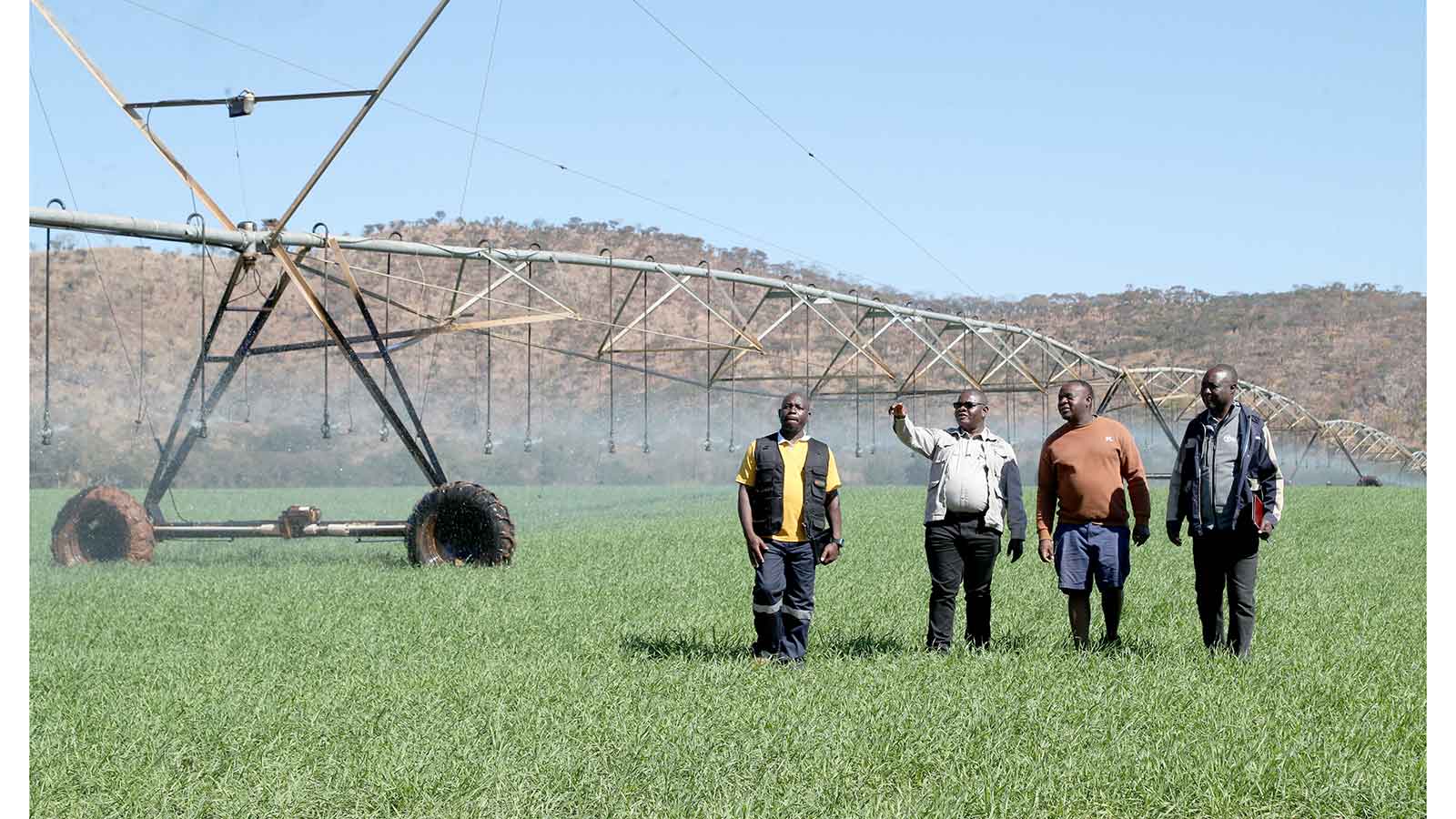
Behind the growth in wheat production lies another important transformation, which is the expansion of irrigation.
Unlike rain-fed summer crops, winter wheat depends entirely on irrigation.
Zimbabwe currently has about 257 000ha under irrigation, with plans to expand that figure to nearly 496 000ha by 2030.
The expansion is helping reduce dependence on rainfall and giving farmers greater control over production. Policy support has also played a role.
Statutory Instrument 87 of 2025 is designed to increase local grain utilisation by requiring processors to progressively source more raw materials from domestic producers.
The policy seeks to strengthen local agricultural value chains while reducing reliance on imports.
Taken individually, the figures may appear ordinary — hectares planted, tonnes harvested and percentages achieved.
Together, however, they tell a bigger story.
They tell the story of a country that has steadily rebuilt its wheat industry, moving from chronic shortages and dependence on imports to sustained growth, self-sufficiency and the prospect of long-term food security.
The 2026 season represents the latest chapter in Zimbabwe’s wheat transformation, a journey measured in hectares, harvests and the confidence of a nation learning to feed itself.