admin
admin
Dr Kenneth Kaunda
The Herald, in memory of one of Africa’s foremost and charismatic Pan African legend. Kenneth Kaunda, the founding president of Zambia and one of the founding fathers of the Organisation of African Unity (OAU), now African Union captures excerpts from a report published in the Africa Today journal in 1961.
******
Is Africa ready for independence? The answer is an emphatic yes. I would be very much surprised if anyone in the 20th century could serious challenge the readiness of Africans to rule themselves in their own countries at this time.
This is no longer the hypothetical question it was, say, about 30 years ago. It is today a glowing reality, visible to anyone who has eyes to see.
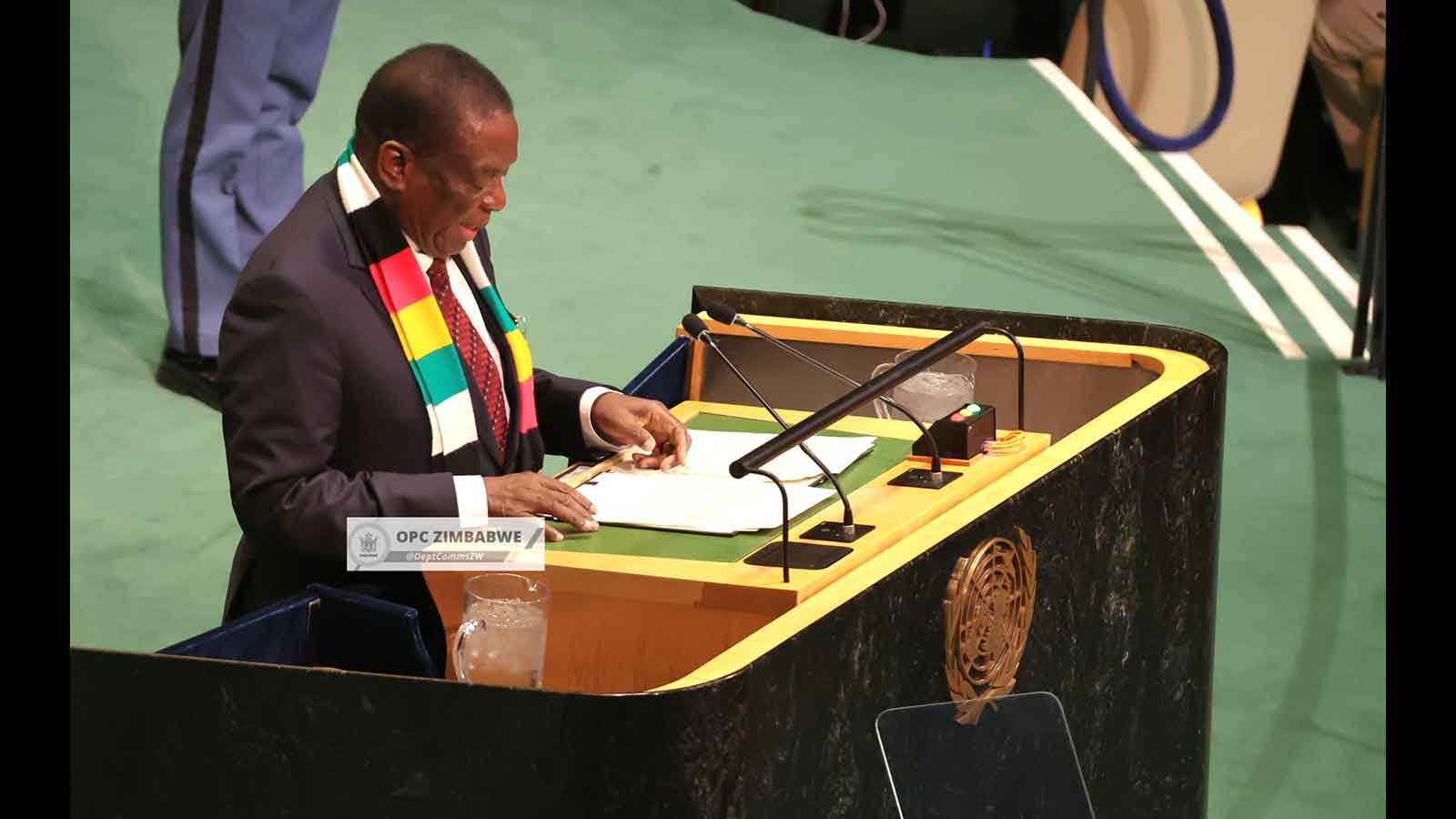
Several times New York, as the site of the UN has been privileged to welcome rulers of all shades of colour, among them black prime ministers, presidents, and emperors.
No doubt some of them are more capable than others. But surely, incapacity is not a monopoly of any one race.
Hitler, by the way, and Mussolini were Europeans. The dictators Salazar and Franco are Europeans in our own time. In short, each racial group and each nation, like an individual, has its own skeletons in its closet.
With one or two exceptions, those parts of Africa which are now shaping their own destinies are enjoying a higher standard of living than when they were occupied by foreign powers. There are more schools, more hospitals, and capital investment is sound. There is hope; indeed, there is progress.
Let us now compare progress in independent Africa with those areas still being treated as if they were extensions of Europe. Well, take Northern Rhodesia, my own country, to begin with.
In the last 70 years the British managed to train only one African lawyer, and only in September this year are we having our first African engineer. Do you call that progress? There are only two African doctors in a population of 3 000 000 Africans.
Shall we call this progress? By the way, only by 1959 did we see Belgians manage to produce only 16 college graduates in a population of 13 000 000 Africans.
By 1957 the Portuguese in Mozambique had managed to produce only one African college graduate out of a population of 6 000 000 Africans. Today capital is flowing out very quickly from those countries which are still under foreign rule.
I have in mind the Federation of Rhodesia and Nyasaland, Mozambique, Angola, and indeed, the Union of South Africa.
If I may touch on racial relations, history shows quite clearly that before independence, racial mistrust, suspicion, and hatred are sharp. And again, with one or two exceptions, after independence we find better racial relations almost invariably prevailing.
More Europeans got settled on the basis of all men are fellow human beings and they accept for the first time that they are equals of the people whom they had looked down upon with contempt before independence.
I agree with anyone who says that some good has been done by colonial powers, especially by missionaries who in some colonies are today suspected so much that they are put in colonial prisons. I am now thinking of Portuguese Angola where shortly before I left home over 400 Protestant missionaries, both bIack and white, were thrown in jails, suspected of subversive activities. Do we call this progress?
In my own country, Northern Rhodesia, over 300 of my followers are in jails for simply shouting political slogans. To shout the word freedom has now become a crime. In any colonial system it is clear the bad transcends the good.
In any case, no matter how good a foreign power may be, it can never be a substitute for a national government of the people, by the people, and for the people.
If the people are not ready educationally the answer is not to occupy their country through the use of guns; but the answer lies in the words of Thomas Jefferson when he said: “I know no self-depository of the ultimate powers of society but the people themselves. And if we think them not enlightened enough to exercise their control with a wholesome discretion, the remedy is not to take it from them, but to inform their discretion by education.”
I repeat, African governments have shown that they always do better than colonial governments. Having quoted one of the United States’ foremost thinkers, I would like to appeal to all Americans not to be misled by those who are thought to be America’s traditional friends.
Who, by the way, are true traditional allies of America? Those who are oppressing others? Didn’t the American founding fathers make their now famous Declaration of Independence in opposition to colonialism? The true traditional allies of the American people are those who are fighting oppression. Africa is more than ready for independence. — Africa Today, Vol. 8, No. 4 (April, 1961)


 Online Reporter