Online Reporter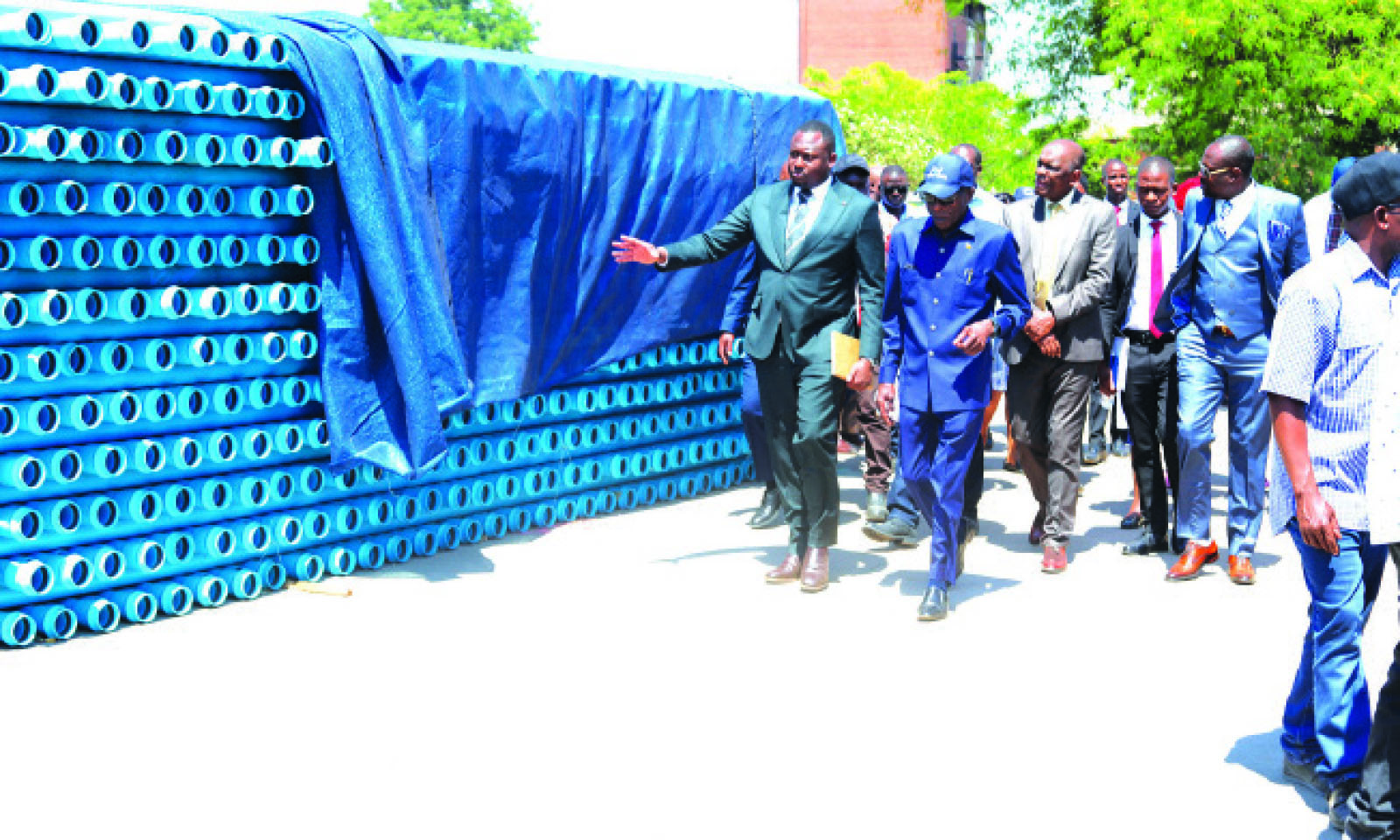
Remember Deketeke
FOR decades, Harare has lived under the shadow of an unrelenting water crisis.
From burst pipes to erratic supply, contaminated dams and unpaid bills, Harare’s water woes have become as predictable as sunrise — a crisis so chronic that running taps in many suburbs now feel like a luxury.
But could that be about to change?
A sweeping series of interventions — involving new infrastructure, high-tech prepaid meters, private partnerships and the long-awaited completion of Kunzvi Dam — are now converging into what could be a turning point for water provision in Harare.
A leaking system
Harare currently loses an estimated 60 percent of treated water before it ever reaches consumers — a staggering figure that translates to more than US$3 million in monthly losses.
Non-revenue water (NRW) — the one that is produced but lost through leaks, faulty meters or theft — has crippled the city’s finances, undermined service delivery and forced some residents to rely on unsafe alternative sources.
“Currently, our non-revenue water stands at about 60 percent,” said Mayor Councillor Jacob Mafume.
“That means for every dollar we spend on water, we only recoup 40 cents.
“This loss comes from leakages, illegal connections, unmetered use and theft.
“The aim is to change that, to make sure water reaches its intended destination and that every litre is accounted for.”
He added: “A 60 percent rate of non-revenue water is extremely bad for big or even small cities and it signals severe systemic problems with profound financial, operational, environmental and public health consequences, which the city wants to eradicate.”
To plug the leaks and restore efficiency, the city has partnered with Helcraw Electrical under a public-private partnership agreement, initiated by the Government.
The company has already acquired more than 1 090 kilometres of new pipes to replace the crumbling network, part of a multi-phase rehabilitation drive targeting a reduction in water losses from 60 percent to just 5 percent.
“For the first month, we are going to replace the first 500 kilometres of pipes, with another 500 kilometres to be replaced the following month,” said Helcraw managing director Brendon Jere.
“This will be augmented by the procurement of 20 000 prepaid water meters monthly.”
The goal, he said, is to modernise the city’s ageing infrastructure, curb leakages and ensure that every drop of treated water generates revenue.
Prepaid accountability
At the centre of the city’s water management overhaul is the introduction of prepaid water meters — a move modelled on the success of prepaid electricity.
The first 20 000 meters will be installed in the central business district by the end of the year, with the broader target of 500 000 units across Harare and surrounding towns.
The roll-out, backed by the Government’s water sector reform drive, is part of a build-transfer-operate agreement between the Government, the City of Harare, Helcraw Electrical and China’s Hangzhou Liaison Technology Company.
Local Government and Public Works Minister Daniel Garwe told The Sunday Mail that the shift to prepaid metering would “plug revenue leakages and instil accountability” across the system.
“Government is committed to ensuring that residents receive reliable water services, and the introduction of prepaid water meters will plug
revenue leakages and instil accountability.”
“This approach eliminates ballooning debts and illegal use, while providing the city with the resources it requires to repair infrastructure, replace pipes and guarantee consistent water supplies.”
Cllr Mafume described the development as “a significant milestone”, noting that prepaid technology will help combat non-payment, illegal connections and billing disputes that have long crippled the city’s finances.
Boosting supply
While the city works to control losses, the central Government has moved to expand supply capacity.
A recent US$9,8 million injection by the Government saw the purchase of 19 high-capacity pumps — 14 for the Warren Control Pump Station and five for the Morton Jaffray Water Works.
“We were given US$9,8 million by the central Government, which covered the purchase of 14 pumps for Warren control and five pumps for Morton Jaffray,” said Mayor Mafume.
“This will greatly improve reliability and allow us to distribute water more efficiently.”
These new pumps, each capable of delivering over 1 000 litres of water per second, will significantly enhance the city’s pumping and delivery capacity, said Mayor Mafume.
The city has also begun drawing much of its water from Darwendale Dam and Lake Manyame, which are currently healthier than Lake Chivero, Harare’s main supply source that has suffered heavy pollution over the years.
Blending water from multiple dams, city officials say, will improve both quantity and quality.
Added Mr Jere: “To make sure NRW is lowered to the intended 5 percent, we are going to rehabilitate the Morton Jaffray water treatment plant and also develop the Donnybrook water treatment plant.
“We are also going to replace all pumps and valves, and this will help us to push from the 350 mega litres they are currently producing now to more than 500 mega litres, which might help in making sure residents within the greater Harare area can get water every second.”
Kunzvi Dam and pipeline
Perhaps the most transformative project underway is the Kunzvi-Harare Water Pipeline, a US$52 million undertaking that promises to permanently change the city’s water fortunes.
The 48-kilometre Kunzvi-Harare pipeline, currently under construction by local contractor Redan Bulk, will convey up to 240 megalitres of water daily from Kunzvi Dam to a new treatment plant at Donnybrook, in eastern Harare.
For a city whose daily demand hovers around 800 megalitres but currently produces barely half that amount, the project represents a crucial addition to its water security portfolio.
“The pipeline stretches from Kunzvi Dam to Donnybrook, with two booster stations along the way,” Engineer Johanne Mwase, the Zimbabwe National Water Authority (Zinwa) resident engineer, told The Sunday Mail recently.
“We will also have offtakes for Juru Growth Point and farmers along the corridor to help create a greenbelt from Kunzvi to Harare.”
Construction is expected to take two years, aligning with the completion of Kunzvi Dam, which is scheduled to start impounding water during the forthcoming rainy season.
The mega project involves the laying of a 1,4-metre glass reinforced polyester (GRP) pipeline and the installation of two booster pump stations.
GRP pipes are lightweight, durable and resistant to corrosion, making them ideal for large-scale water conveyance projects as they reduce maintenance costs and extend the lifespan of infrastructure.
So far, about 30 workers have been employed, with the number expected to rise to 250 as construction intensifies.
On site, the contractor has mobilised a high-tech mechanical trencher capable of excavating between 500 metres and 700 metres per day depending on soil type, speeding up installation.
Added Eng Mwase: “We are glad that Redan Bulk, a local company, is proving capable of delivering such a massive infrastructure project. They are using state-of-the-art equipment, including a powerful trencher that has a minimum production capacity of 500 metres a day. In fact, our other activities are struggling to keep up with the speed of the excavation.”
The Kunzvi Dam project has been on the drawing board for decades as a key solution to Harare’s chronic water shortages.
Initially conceived in the 1990s, the dam was identified as a strategic alternative water source to ease pressure on Lake Chivero and Lake Manyame, which have traditionally supplied the capital but are now heavily polluted and increasingly inadequate for the city’s growing population.
Located in Goromonzi district, about 67 kilometres northeast of Harare, the dam sits on Nyagui River, a tributary of Mazowe River.
Once complete, it will have a capacity of around 158 million cubic metres of water.
This storage is expected to support both domestic consumption and irrigation along the Harare-Goromonzi corridor, creating opportunities for agriculture and rural development.
The project was stalled several times due to financial constraints and shifting Government priorities.
Construction of the dam officially commenced in 2021, and the project has made steady progress, with dam wall construction nearing completion.
“With Kunzvi Dam now almost complete, the Donnybrook plant will ease pressure on Morton Jaffray and ensure residents receive clean, consistent water,” said Mayor Mafume.