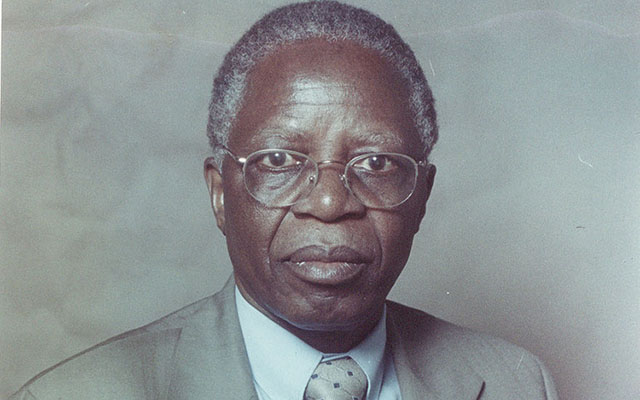
Online Reporter
Alice Tagwira
Beyond Boundaries
Across Africa, from Accra to Addis Ababa, from Cape to Cairo, one argument keeps appearing in comment sections, radio call-ins, and church WhatsApp groups.
A woman speaks about safety, pay, education, or dignity. A man replies: “So you want to be a man.” Or: “You just want male anatomy.”
At first, it sounds like an insult. On closer inspection, it is a confession. What that reply exposes is not confusion about feminism. It is a worldview in which humanity itself has been filed under “Male”.
Let us be plain, because the internet loves to complicate plain things. Across the continent, women’s organisations, legal aid groups, and ordinary mothers are not asking for beards, baritones, or football boots.
They are asking for what was promised in constitutions from Harare to Nairobi: equal protection of the law, equal pay for equal work, freedom from violence, bodily autonomy, education, and the right to speak and be heard. That is the full list. No hidden agenda.
In Zimbabwe, sections 17 and 80 of the Constitution guarantee equality and women’s rights.
In the AU’s Agenda 2063, gender equality is listed as Aspiration 6. In the Maputo Protocol, 44 African states have committed to ending discrimination against women. So why does “equal treatment under law” trigger such panic? Because in many minds, the default human is male. Everything else is a variation.
Online, the conversation is often reduced to one fake math problem: “You want 50/50.” It is a convenient distortion. No woman died in childbirth because she forgot to split the electricity bill.
Yet, every two minutes, a woman somewhere in the world dies from pregnancy-related causes. In sub-Saharan Africa, the maternal mortality ratio was 531 deaths per 100 000 live births in 2020, according to WHO — far above the global average of 223. Women carry pregnancies. Women lose jobs to maternity. Women do an estimated 76,2 percent of unpaid care work globally, according to UN Women 2023. Men do not. So when women ask for fairness in schools, courts, and parliaments, they are not asking for a receipt-based split of chores. They are asking to stop paying in blood for things men get by default.
The giveaway line is: “You want to be a man.” Translate it and it says: “I thought rights were stored in my body.” French philosopher Simone de Beauvoir called this in 1949: men are positioned as “the subject” — the default human — while women are “the Other.” Auxiliary. Conditional. Modern neuroscience helps explain why the idea sticks.
Large imaging studies, including a 2014 University of Pennsylvania study of 949 brains published in PNAS, found on average that female brains show greater connectivity between hemispheres, linking analysis with emotion and social context. Male brains, on average, show stronger within-hemisphere connectivity, favouring focused, compartmentalised tasks.
This does not mean men are robots and women are saints. It means, on average, women process moral and relational information together.
Many men are socialised to process them separately.
Add patriarchy and you get a problem. Boys are told “don’t cry.” Caregiving is called “women’s work.”
Sensitivity is mocked. Then those same boys grow up and are handed authority, budgets, and pulpits anyway. We trained half the population out of emotional integration, then made them the judges of fairness.
Is it any wonder equality sounds like an attack?
Here is the psychology behind the shouting. If you have always had something without paying for it, and someone asks to share it, it does not feel like justice.
It feels like loss. For generations, traits we now call “human” were rebranded as “masculine”: leadership, ambition, rationality, authority, even the right to be angry in public. Intelligence? Masculine.
Decisiveness? Masculine.
Saying no? Masculine. Planning for the future? Masculine. Men did not invent these traits.
They simply occupied them first and put a “No Women” sign on the door. So when a Zimbabwean woman runs for council, when a Kenyan woman demands land title, when a Senegalese girl says she wants school not marriage at 14, the response is not “Great, another human.” The response is “You are impersonating us.” That is why the reaction is so loud. It is not about policy. It is about property.
This is not an imported debate. In Rwanda, 61,3 percent of parliamentarians are women — the highest in the world, according to IPU 2024.
The country did not collapse. It rebuilt after genocide with women in budget, health, and security committees. In Ethiopia, the number of girls in secondary school rose from 24 percent in 2000 to 42 percent in 2022, per UNESCO.
Those girls are not asking to be men. They are asking to read. In Zimbabwe, women make up 52 percent of the population, per ZIMSTAT 2022 Census.
Yet women hold 31 percent of seats in Parliament and only 14 percent of chief positions under the Traditional Leaders Act.
We are half the country, but not half the decisions. The cost is real. UNFPA estimates that child marriage costs African economies $63 billion in lost earnings and productivity by 2030. Gender-based violence costs South Africa alone an estimated R36 billion per year, per KPMG 2014 and updated by civil society.
This is not “women’s issues.” This is GDP, health budgets, and classrooms.
So, what do we do with the comment that reduces rights to male anatomy? Do not debate biology.
Name what is happening. What you are hearing is a man who was taught that personhood lives in his body. Strip away titles, money, and tradition, and he is afraid there is nothing left.
So, he guards the gate.
But humanity was never private property. The Zimbabwean Constitution does not say “Male persons have rights.” It says “Every person.”
The African Charter on Human and Peoples’ Rights does not add “subject to gender.” Sarcasm helps here, because sarcasm is truth wearing shoes. If leadership requires a Y chromosome, explain Rwanda. If rationality requires testosterone, explain the women who kept markets running during Covid-19 while clinics were empty. If authority requires male biology, then we have been confusing anatomy with competence for a very long time.
This is not about shaming men. Many African men are raising daughters, marching against GBV, and sharing parental leave. In South Africa, paternity leave is now 10 days. In Kenya, men’s groups are working with UN Women to end FGM in Kajiado. The task is to expand the definition of human, not shrink the definition of man. To boys: emotional literacy is not weakness. It is bandwidth.
To institutions: measure what matters — maternal deaths, school completion, court case backlogs — not vibes.
To media: stop framing equality as a fight between men and women. It is a fight between the past and the future. To women: stop explaining. State the claim and move on. “I want safety” is a complete sentence. “I want land” is a complete sentence. You do not owe a biology lesson with it.
Africa does not have a women problem. It has a hoarding problem. For too long, ordinary human rights were kept in a box labelled “Masculine.” When women reach for the box, some men shout “thief.”
But you cannot steal what was always yours. Humanity is not male property.
Dignity is not leased. Intelligence is not trademarked. In Harare, in Lusaka, in Bamako, the question is simple: will we build societies where 100 percent of the population is allowed to be 100 percent human?
If the answer is yes, then the jokes about male anatomy will start to sound as dated as arguments against girls’ education.
And good. Let them. Because once women are recognised as fully human, no one loses humanity.
We only lose the illusion that it belonged to one half of us. And that is not a loss. That is a country finally coming home.