admin
admin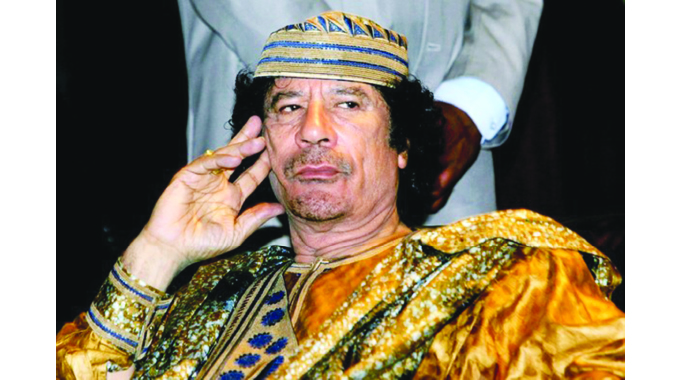
Gibson Nyikadzino Correspondent
Why is it when China hosts a summit of Africa leaders, the western establishment and its media target the Asian country as a “new coloniser?” Yet on the other hand, why is it when Italy hosts a summit for African leaders, it is perceived as an “opportunity for development?”
Have you ever wondered why if Russia does the same, it is seen as “entrenching authoritarianism and undemocratic values”, while for the US it is “the expansion of growth opportunities, human rights and democratic ideals?”
That is how bad it has become for Africa. It has become a geographical area of foreign social, economic and political contestations, with the recent coming through the Italy-Africa summit.
Every country that wants to recalibrate and reconfigure its foreign policy is beginning to look to Africa.
Ironically, last year Estonia, a country of just 1,3 million people signalled it was contemplating having its inaugural Estonia-Africa summit.
The plan, revealed last October, allocated a budget of US$633 million towards the new Italian Fund for Horizontal Cooperation for Africa from 2024-2026 to enhance energy cooperation and help Africa in areas such as health, education, and other key sectors.
But the plan lacks a clear strategy, it has been hurriedly put in place because Italy does not want to lose an opportunity on the deliberations focusing on Africa.
It is claiming its pound of flesh. What is therefore overwhelmingly known is that the main purpose of remaking Italy-Africa co-operation is to endeavour to stop African immigrants from crossing the Mediterranean Sea into Europe through Italy.
This multilateral cooperation is an attempt to balance development and Italy’s migration concerns.
Statistics show that last year 260 662 migrants crossed the Mediterranean Sea from Northern Africa to Europe, and of those, about 155 750 landed on Italian shores.
It also has to be recognised that no matter how much Italy wants to appear sincere to Africa, suppose the US$633 million financial package, if divided among 55 African countries, each country would be getting US$11,5 million yearly.
For three years, each country would be getting around US$34,5 million.
Instead of using summit diplomacy to engage Africa, Italy should have engaged sovereign African states through bilateral arrangements to deliberate ways to eliminate what Italians are mostly disgusted about — immigration.
Notably, Italy’s Prime Minister Giorgia Meloni came to power in 2022 on an anti-migrant ticket. So the proposals in the Mattei Plan seek to enhance the position of Italy by dangling investments in the south in exchange for actions aimed at preventing migration.
Cost of immediate gratification
The migrant crisis that Italy wants to end in exchange of energy investments is one that Europe brought upon itself through the murder of Libya’s Colonel Muammar Gaddafi on October 20, 2011.
To curb migration, the Italian government in 2009 through the Italy-Libya Friendship Treaty pledged to provide $200 million a year for 25 years through investments in infrastructure projects in Libya. The European country provided patrol boats to Libya and pledged to help construct a radar system to monitor Libya’s desert borders, using an Italian security company, to stop migrants from making it to Europe.
The deal stood, but not later than October 20, 2011. According to Italian deputy prime minister and Foreign Minister Antonio Tajani, because of the agreements reached with Col Gaddafi, Italy was able to stop the migration flows, and the situation was far more stable in the region.
On the part of the West to allow Col Gaddafi to be killed, Tajani said: “It was a very serious mistake. He may not have been the champion of democracy, but once he was killed, political instability descended upon Libya and Africa.”
Immediate gratification and political convenience are the goals of the West. When it was convenient for them to collaborate and kill Col Gaddafi, the treaties that had been signed between the parties were discarded. Now that the crisis has become overwhelming, they want the African collective to help alleviate their self-inflicted burden.
Does Italy have capacity?
In January, Rome assumed the presidency of the Group of Seven (G7) countries and vowed to make African development a central theme.
This theme is informed by the need to checkmate the influence of countries friendly to Africa like China, Russia, Turkey and India. These too engage Africa on the basis of satisfying their interests. Italy has the second weakest or lowest performing economy among G7 members after Canada.
The G7 has never prescribed favourable economic and political antidotes to Africa. It rather counters the themes that Africa stands for. Critical questions have to be answered on what Italy means by making “African development the central theme” during its G7 presidency. From an Italian perspective, what constitutes African development? How much of the input will Africa give in this development venture?
The danger is to have western recommendations of what African development entails, yet since Africa’s post-colonial renaissance the majority of countries have been implementing western prescriptions without success.
In attempting to lure and get Africa’s listening ear to its suggestions, Italy is facing a biggest challenge. Around 40 percent of its gas comes from African producers; its involvement in the Sahel and North Africa to mitigate rising instability and foreign interference has been at times careless.
Where Italy wants to shape policy and cooperation with Africa through $633 million, the EU under the Global Gateway (GG) has promised to mobilise $160 billion from diverse investment sources by 2027 for the implementation of infrastructure projects. Does Italy have capacity?
Neo-colonial overtures
Whatever the Italian government will do to try and clearly explain the strategies it will employ to make the Mattei Plan successful, they will be lopsided, tipping Africa’s position to European favour.
Remember the Gaddafi agreements and treaties that Italy entered into with Libya. They had commitments that ensured peace would prevail, but when terrorists waged an attack on the Libyan government, even Italy supported actions leading to the demise of Col Gaddafi.
Early this month PM Meloni said “a certain paternalistic and predatory approach has not worked so far. What needs to be done in Africa is not charity but strategic partnerships, as equals.”
The ‘non predatory’ approach that Italy wants to espouse is not at all a road to glory. It has to be analysed and scrutinised for accepting it at face value might as well be a dangerous road to return to a second Berlin conference.
The next step
The most inspiring historical episode that embarrasses the Italian establishment is their 1896 defeat of their invading forces at Adwa by an African state, Ethiopia. That decisive victory thwarted the campaign of Italy to expand its colonial empire in the Horn of Africa. That defeat, overseen by Emperor Menelik II who commanded a united and purposed army, was a result of pure political, military and psychological strategy.
Alternatively, those foreign powers that intend to engage and propose their plans to Africa, why should they not present their suggestions at the AU headquarters in Addis Ababa, Ethiopia?
It should be incumbent upon Africa’s leaders to resist the advances of the neo-colonial masters. While acts of the former coloniser may be seen as non-predatory, the repercussions will soon prove to the contrary.
We cannot be defeated through colonial condition. It is high time to untie ourselves from political subservience in the name of diplomacy!


 Online Reporter