admin
admin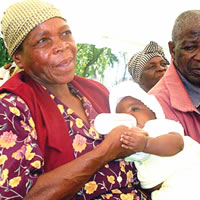
LUNGISI Phiri has lived at Entembeni Old People’s Home in Bulawayo’s Luveve suburb for the past 39 years. Originally from Malawi, he opted to remain in the country when his family decided to go back to their country of origin in 1983, the same year he last saw them and moved to Entembeni. Having stayed at Entembeni for close to four decades, no one in the current crop has lived there longer than him.
Recently, Phiri told Chronicle that he had lost hope of ever seeing his family again.
“I arrived in Zimbabwe in 1948 and worked as a cook in a number of hotels. I then came to Entembeni Old People’s Home in 1983 after my family left for Malawi. Although I desire to see them again, I don’t see it happening anytime soon because I haven’t been in contact with them since they left,” he said.
Although he is grateful for the kindness of those who have provided him with a home, there are limitations to what they can offer.
Like many people living at the country’s old people’s homes, isolation and gloom punctuate his everyday life.
A visit to an old people’s home raises anxieties for the visitor who may be keen to listen to each and every story these old people may have to tell.
Most of their stories are about times past and people gone and they take one day at a time.
Joseph Nandalo, who came to the country from Namibia in 1947, said he misses his siblings back home, and does not know whether they are still alive or not.
While in Zimbabwe, he never got married or sired any children and his employers were the only family he knew.
“I haven’t seen my siblings in a very long time. I have nine siblings and I haven’t seen them since I came to Zimbabwe. I used to work for a white man at Umguza Farm in the then Southern Rhodesia.
“Upon attainment of the country’s independence, the white man left the country after which his farm was taken over by a new owner. That’s when I lost my job,” he said.
Nandalo said he was later brought to Entembeni in 2002 by a former employer through the assistance of social workers.
Old people’s homes are not just homes for foreigners; even locals have found their way there, one way or the other.
One of them is Maria Hadebe from Maphisa in Matobo District.
She said coming to Entembeni was a relief as she had no one to look after her.
“Many members of my family have since died. I had a son and he died long back. His wife left for Bulawayo where she stays. Her name is Nana Ncube and my grandson’s name is Themba Maseko. They don’t know that I’m here and I wish to see them again,” said Hadebe.
Another granny at the institution Priscilla Nsimbi, 85, from Mbembesi in Matabeleland North, said she was orphaned at a young age and moved from place to place before settling at the institution.
“My mother died when I was eight months old and I had to stay with my father but he also died while I was young. I had to stay in one place or another but I never stayed in one place for long before moving,” said Nsimbi.
“I never married but had a child who has seven children but they all went to South Africa. Since they are in South Africa I don’t know how to connect with them again.”
Established in 1967, Entembeni Old People’s Home has 75 beds and is home to 49 elderly people, 38 men and 11 women.
The home’s volunteer matron Catherine Chiponda said the organisation was facing a number of challenges, chief among them lack of funding.
“The biggest challenge is salaries for our members of staff. The institution is under the government’s social service department and it only gives us contributions which sometimes come once a year,” said Chiponda.
“Since I joined the institution in 2010 we have received two grants one in 2011 and the other last year in December. In 2011 we received $4,000 and last year we got $3,500. I don’t know what period the grant covers and I’ve written to the social welfare several times inquiring on how long it takes but they have never responded.”
She said because of financial constraints they were paying their staff $120 which was too little for them.
Before independence, she said, the organisation was owned by the council, but presently the Rotary Club of Bulawayo was taking a leading role in their needs.
Chiponda said lack of transport was another problem as they do not have a vehicle, making it difficult taking people to hospital.
“When someone dies, we struggle to get transport to carry their bodies to mortuaries or for burial. Police sometimes tell us that they don’t have transport and we resort to begging for transport from residents,” said Chiponda.
She said when one of the elderly at the institution dies, a pauper’s burial is conducted.
“Seventy percent of the people under our care are of foreign origin and were referred to us by the social welfare. Before they’re brought here, they go through a medical exam because we don’t have health experts to look after those who need nursing.
“They don’t have a family unit or support although some always long for family which won’t be there. They live a life of hopelessness,” said Chiponda.
She said when she joined the institution, there was only one married couple who lived there but has since died.
“I don’t really know how they ended up together but I found them there when I joined the institution. They did not use the inner beds like other couples, they used one of the outside houses. We’ve never had a similar incident again,” she said.
Chiponda said because of their status she did not know if any of them were receiving pension.
In a separate interview, HelpAge executive director Priscilla Gavi said although it was “unAfrican” to send the elderly to old people’s institutions, it was necessary as they needed someone to look after them.
She said migration was one of the reasons why there were many people at old people’s institutions, saying the majority came to the country to work as labourers in mines and farms and many ended up losing track of their families.
Gavi said these elderly people were facing various challenges such as shortage of medication and loneliness.
“They’ve nowhere to go and there is a lack of food and shortage of medication. These elderly people also need someone to entertain them and activities to keep them busy,” she said.
Gavi said it was government’s responsibility to look after the elderly and destitutes.
“On paper the government should pay $15 per month to every head in old people’s home but on the ground that is not happening. Those grants have not been followed,” she said.
She called on the corporate world to chip in to assist looking after the elderly saying the country’s economic situation called for co-operation from various participants.


 Online Reporter