Online Reporter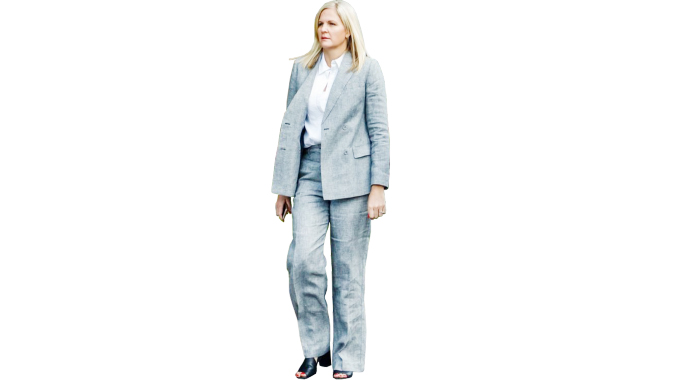
THE 10th IOC president could be its first female leader and its first leader from Africa and, for Kirsty Coventry, the first major assignment would be to lead in the delivery of the 2028 Olympic Games.
The new president will become only the tenth person to lead the IOC in its 131-year existence.
So far all have been men, and eight of the nine − with the exception of American Avery Brundage − have hailed from Europe.
Whether or not they vote for a candidate of their continent, Europeans will have a big say in the outcome.
Of the 109 IOC members eligible to vote, more than a third are from European nations.
The Olympic Games will be back in LA for the first time in 44 years and will be returning to the city where some believe the world’s biggest showcase was saved.
The ‘84 Games marked a significant milestone in Olympic history for female athletes’ participation, demonstrating to the world that athletic excellence knows no gender.
It would probably be fitting that Coventry, a model of women’s success and Africa’s most successful Olympian, will be the one with the task to lead the organisation of the LA Games in 2028.
The ‘84 LA Games saw the organisation of the inaugural Olympic women’s marathon, as well as exclusively female disciplines − synchronised (now known as artistic) swimming and rhythmic gymnastics.
Female athletes also competed for the first time in the 3000m and 400m hurdles, road cycling and shooting.
With 23 per cent female participation, the ‘84 Games set an Olympic record at the time.
But that was not only.
When the IOC met in ‘78 to pick a host for the ‘84 Summer Games, it had just one candidate, LA, after the only other bidder, Tehran, dropped out during the early days of Iran’s Islamic revolution.
No one else wanted the Olympics.
The costs were seen as prohibitive – and for a good reason.
Financial problems forced Denver to give back the ‘76 Winter Olympics, and Montreal’s ‘76 Summer Games left the city with a then-astronomical US$1.5 billion in debt.
The Games’ ideals of peace and unity had frayed as well with the attacks at the ‘72 Munich Olympics, leading to the deaths of 11 Israeli athletes and coaches.
Two months before the ‘80 LA Olympics, a Newsweek cover story asked what then felt like an appropriate question: “Are the Games Dead?”
“The general view was that the Olympics had been good for the 20th century but were too big and too costly to continue,” said sports consultant Michael Payne, who had been hired by the IOC in ‘83 to revise its marketing strategy.
Then came LA with an Olympics run by a young travel executive named Peter Ueberroth, who brought new funding ideas built on television deals and corporate sponsorships.
The success was transformative.
For two weeks in the summer of ‘84, the LA Games boomed as a non-stop celebration of the United States.
Ueberroth’s financial model was a runaway success, not only covering the costs but yielding a US$233 million profit.
Other cities around the world watched what happened in LA and decided they, too, could pay for their own Olympics.
Coventry was just a one-a-year-old toddler when the ‘84 LA Olympic Games were held.
Now, she could be the leader of the Olympic movement when the Games return to LA in three years’ time.
THE IOC PRESIDENCY RACE
But, first, she has to win the race for the IOC presidency on March 20.
The others vying for the post are Prince Feisal al Hussein of Jordan, Sebastian Coe of Great Britain, Johan Eliasch of Great Britain, David Lappartient of France, Juan Antonio Samaranch of Spain and Morinari Watanabe of Japan.
These seven contenders are a study of power and influence in the intersecting worlds of international sport and business, with a splash of royalty thrown in too.
Al Hussein is the younger brother of Jordan’s King Abdullah II.
Samaranch is an IOC vice-president whose father guided the organisation between 1980 and 2001.
Coe, a former middle distance runner, and Coventry, a retired elite swimmer, are both Olympic gold medallists in their own right.
The IOC membership, which includes several high-profile sports legends and one Academy Award-winning actress, will determine who succeeds Bach, likely over multiple rounds of voting.
IOC presidential candidates are not allowed to campaign for office in the traditional sense.
This election is not about lawn signs and campaign rallies.
Instead, each candidate prepared a manifesto setting out who they are and what they aspire to do, which was quietly published on the IOC website in December.
Whoever emerges as the winner will have convinced voters that they are the best fit to deal with the issues currently on the IOC’s doorstep, and others looming on the horizon.
The next IOC president will oversee the delivery of the Olympic Summer and Winter Games between now and at least 2032, while also serving unofficially as sports’s main ambassador to an increasingly troubled world.
Bach has had to walk an uncomfortable line at times, maintaining that the IOC is “strictly politically neutral” while recognising that sport in general and the Olympics in particular have the power to soothe divisions and build solidarity in places of conflict.
WHAT WILL THEY INHERIT?
The winning candidate will inherit a much changed landscape from what Bach stepped into when he took over from Jacques Rogge after an undramatic election 12 years ago.
Bach has spent a good deal of his mandate modernising the Olympic movement.
His Olympic Agenda 2020 did away with some of the IOC’s stuffier traditions and paved the way for the inclusion of trendy urban sports like BMX and breaking at the Games.
Whoever wins the vote will also be responsible for assuring the organisation’s success beyond 2032, the year when several of the IOC’s major broadcast deals are set to expire.
Potentially rethinking the tiered way Olympic sponsorships are structured − particularly in light of the departure of three major sponsors last year − and how AI is used may also be key items on the agenda.
The Olympics are booked out until 2036, with Milan and Dolomite resort Cortina D’Ampezzo jointly hosting next year’s Winter Games before the spotlight shifts to LA and the Summer Games in 2028.
The French Alps will host in 2030, with Brisbane, Australia and Salt Lake City welcoming them in 2032 and 2034.
As past leaders did, the new IOC presudent will strive to uphold the historic Olympic motto of faster, higher, stronger.
But not together − like any other Olympic contest, only one can emerge as the victor.
WHEN ARE THE ELECTIONS AND WHO VOTES?
The IOC election meeting is on March 18-21 at a resort hotel in Greece, near the site of Ancient Olympia.
Candidates and their compatriots cannot vote leaving about 95 eligible to take part.
Among them are members of European and Asian royal families, including the Emir of Qatar; diplomats and lawmakers, including a former president of Croatia, Kolinda Grabar-Kitarovic; businesspeople, including Nita Ambani, whose husband is India’s richest man; leaders of sports bodies; current and former Olympic athletes.
What is the IOC president’s job?
It’s an executive role running a not-for-profit organisation that employs hundreds of staff at a modern lakeside headquarters in Lausanne, Switzerland.
The IOC earns several billion dollars in revenue every four years from selling broadcasting and sponsor rights for the Summer Games and Winter Games.
Most of the money is distributed to the Olympic family.
The job ideally calls for a deep knowledge of managing sports, understanding athletes’ needs and political skills.
Within the Olympic family, the president can − and Bach did − use their influence and patronage to decide who hosts future Olympic Games, who becomes an IOC member, who gets key committee positions.
Out in the wider world, the IOC is historically neutral in politics.
The 2018 Pyeongchang Winter Games briefly brought host South Korea and North Korea closer together.
The IOC and its president go on decade-long journeys with governments and mayors of countries and cities that bid for, then organise and host Olympic Games.
Bach’s final lap ended in celebratory style in Paris this summer, often beside French President Emmanuel Macron.
The IOC president can stay in the job for a a maximum of 12 years, with a first term of eight years and the chance for one re-election for a further four.
The IOC describes Bach as a volunteer, who should not financially benefit from his position though also “should not have to finance activities related to his function from his personal savings.”
The solution since 2013 has been paying “a single annual fixed amount linked to inflation.”
That amounted to US$306,000 in 2023, according to the most recent IOC annual report. − Sports Reporter/AP/Forbes/Washington Post