daniel chigunwe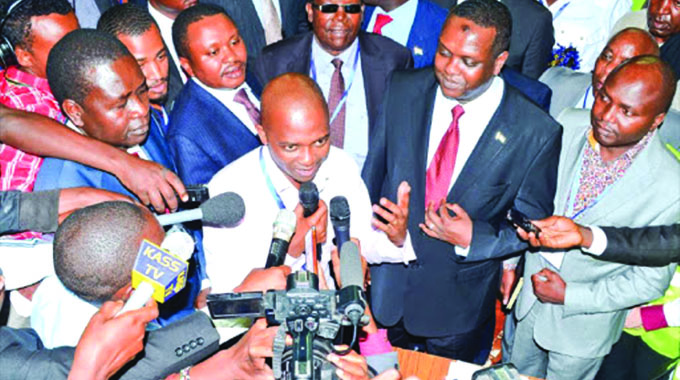
Sharuko On Saturday
HE was their Fresh Prince of Bel-Air — there was promise in his youthfulness and charm in his handsomeness.
They even ignored his occasional madness.
Why?
Because there was hope in his candidacy, a promise of greatness, a return to serious business and a goodbye to a past filled with sadness.
A past in which their beloved Harambee Stars had become a symbol of sickness, a model of weakness, a definition of lifelessness and a representative of both ugliness and abusiveness.
Kenya’s senior national football team was now a collection of individuals who had become specialists in the art of ineffectiveness, merchants of barrenness and agents of bitterness.
A group of athletes led by officials had become allergic to the values that come from orderliness and, in their crazy world, believed there was life and value in a state of drunkenness.
So, the wilderness, far away from the world were real football was being played, and such festivals like the Nations Cup are staged, became the home of the Harambee Stars.
The team of Wilberforce Mulamba, which in the past used to punch according to its weight, had now been reduced into a punching bag, a ghost from the past which, it appeared, no one cared about anymore.
They are a very proud people, these Kenyans.
After all, they are a country which has given the world some of its greatest middle and long distance athletes who have, over the years, dominated the Olympics and marathons around the globe.
Eliud Kipchoge became the first man to run the marathon in under two hours.
And, by the time the Harambee Stars returned to the AFCON finals, in 2019, after a 15-year absence, he had won 12 of the 13 marathons he had entered.
Paul Tergat, who was described by RunnersWorld as the “most comprehensive runner of all-time,” King David, the Maasai Warrior also known as David Rudisha, Ezekiel Kemboi Cheboi, Kipchoge Keino and the late Samuel Wanjiru all wrote their names in gold letters in athletics’ Hall of Fame.
And, so did Brigid Jepscheschir Kosgei, Janeth Jepkosgei Busienei, Pamela Jelimo and the Pocket Rocket, Vivian Cheruiyot, everyone’s favourite athlete.
The Kenyans will also tell you there is a special reason why they also gave the United States its first, and only, black American President in the 233 years that this office, first occupied by George Washington in 1789, has existed.
Barack Obama’s father came from Kenya and, when he rose to occupy the highest office in the United States, celebrations erupted in the East African country.
But, while Kenyans have thrived, across a number of fronts, since the turn of the millennium, their football hasn’t matched the expectations of a nation, which has an enduring passion for the beautiful game.
Between 1988 and 1992, they were in the right direction, still feeding off from the feel-good factor brought in by Reinhard Fabisch, and his golden touch, and they qualified for the Nations Cup finals on three occasions, on the bounce.
Twice, in ’88 and ’90, they made it into the AFCON finals which had just EIGHT participants, which is a third of the 24 teams, which now play at this tourney these days.
In Morocco, at the ’88 Nations Cup finals, they were in special company with the likes of the hosts, Algeria, Cote d’Ivoire, the DRC, Nigeria, Cameroon and Egypt.
In Algeria, at the ’90 Nations Cup finals, the Harambee Stars were once again in great company, with the likes of Algeria, Cameroon, Cote d’Ivoire, Egypt, Nigeria and Zambia.
Two years later, they returned to the AFCON finals, in Senegal, where the number of participants had been increased to 12.
Ironically, a dozen years would pass, before they returned to the AFCON finals, with their lengthy wait ending when they made it to the 2004 Nations Cup finals, in Tunisia.
That tournament also welcomed its latest participant when the Warriors of Zimbabwe made their bow, after ending a 24-year wait, to share the stage with the continent’s best teams.
Nineteen years earlier in 1985, the Warriors and the Harambee Stars had clashed, in the final of the CECAFA Senior Challenge Cup at Rufaro, with Zimbabwe winning her first silverware, in international football, after a 2-0 victory.
Since then, both teams had provided a home to Fabisch, whose golden touch revived their fortunes and, now, for the first time ever, they were gracing the same Nations Cup finals.
While the Warriors returned to the next AFCON finals, in Egypt in 2006, the Harambee Stars started disappearing from the radar again and did not appear at the tournament, until they made it to Gabon, in 2019.
Twice, in 2004 and in 2006, they were suspended by FIFA, for what the world football governing body termed to be third-party interference, in the way football was being administered in the East African nation.
No wonder, when a dashing 36-year-old businessman, who also ran a football club, emerged on the scene, in 2016, promising to end Kenyan football’s perennial woes, he attracted a number of disciples, in a sport weary of how life had been sucked from its lungs.
His name is Nick Mwendwa, a man with such boyish looks it’s difficult not to believe him, let alone support him, when he sells you an idea, including buying a non-existent OB van.
THEN, FOR POOR OLD NICK, THINGS CHANGED
Of course, Nick, given he is so boyish using his surname appears to be an insult to his youthfulness, didn’t only win the race for the Kenyan Football Federation presidency, he annihilated the opposition.
He won 50 of the 77 votes on offer in what was such a comprehensive victory it’s also an insult to even mention the names of those he beat.
To name them would be to subject them to another tsunami of insults because this was a complete mismatch, like Brazil playing Somalia, like France taking on the Seychelles.
Nick became the poster boy of Kenyan football, its Charming Prince and when the Harambee Stars returned to the AFCON finals in 2019 for the first time in 15 years, it was hard to find any fault lines in the way he was running the game.
He also became a darling of the FIFA leaders.
This meant that even when he controversially increased the number of teams in the country’s top-flight league to 18, with his own club, Kariobangi Sharks being the beneficiaries, his wayward behaviour was not sanctioned.
It also meant that, somehow, he was able to dodge the bullet when he splashed about US$1,186 million of FIFA funds on the acquisition of an Outside Broadcasting Van for the KFK, which never landed in Kenya.
It’s probably the biggest ghost transaction in the history of African football.
The problem is that once one is able to find a way to escape censure in such dodgy deals, thanks in part to having the right connections, especially those in Zurich, it takes away the fear of plundering the game’s resources and public funds.
So, inspired by the OBV Heist, Nick went even further and bought a trophy, which weighed 11kg and was 80cm in height from Dubai, which he said was for the league championship.
The problem was that he said, live on television, that it cost upwards of US$50 000, because it was a special trophy, which would make everyone connected with football in that country,very proud.
But, the problem came with the cost and, in today’s connected digital world, it’s easy to cross check some of the fantasy which our football officials sell us packaged as the truth, when it’s a heap of lies.
Some journalists in Kenya dug deeper and by the time their investigations had ended, they found out that the real cost of the trophy was about US$9 670.
This is way short of the “upwards of US$50 000,” which Nick had sold them, in his latest dummy to try and conceal the truth.
In a way, it’s like how our football leaders sold us the dummy that they were using thousands of dollars, from the US$2,5 million Covid-19 relief package that came from FIFA, to clubs and match officials in the non-existent Division Four and Five clubs.
At least, some people started seeing beyond the wall, which Nick and his crew had built around themselves, helped by a powerful public relations machinery, which kept telling Kenyans they needed to believe the name of the country starts with the initial F, instead of K, as part of its web of distraction.
Blogger Milton Nyakundi was one of those who chose not to be deceived.
“Nick likes working with sycophants, people who just say yes and get fed with leftovers,” Nyakundi thundered.
“The FKF president is a typical Kenyan businessman or CEO, phoney and corrupt.
“Nicholas Kithuku Mwendwa would again let the country down by failing to deliver an outside broadcasting van after his FKF paid Sh130 million to a supplier that was declared insolvent immediately.
“At the core of the woes facing the Harambee Stars and football in the country is corruption at the federation. The list of misappropriated resources runs long and thick.
“The year Nick Mwendwa took over at FKF, for instance, Kenya was to buy an Outside Broadcasting van to help in broadcast of matches. To facilitate this purchase, FIFA disbursed Sh135 million to Kenya.
“No van was bought.”
THIS IS THE END, AS SIMPLE AS THAT
But, nothing lasts forever and in November last year, Kenyan authorities, led by their Sports Minister, decided they had just had enough of Nick and his crew and cracked the whip.
The KFK board was dissolved and, despite all the red signals which showed that Nick and his cartel had destroyed Kenyan football, including failing to deliver an OB van bought by FIFA funds, the world football governing body rallied behind them.
The message from Zurich was clear to the Kenyans – we don’t care about the Harambee Stars, we don’t care about development of football in your country and we don’t care about efforts being made to try and raise the next Victor Wanyama or the next Dennis Oliech.
In short, thundered FIFA, we don’t care about YOU.
So, what do they care about?
Of course, Nick, despite all the controversy around him.
Why?
Because he was the person who could vote to have the World Cup played every two years, which was more important to Zurich than the Harambee Stars winning the AFCON finals.
To them, one man, Nick Mwendwa, was more important than 48 million other Kenyans, including Obama, who will probably celebrate, should his father’s homeland seal a place at the World Cup finals.
To them, Kenya doesn’t exist, it’s Mwendwa who matters because his vote is important, his support is priceless and his loyalty is unquestionable.
So, despite all the allegations, which were being levelled against him, FIFA stuck with their man, of course, not for his fine facial features, because they don’t run beauty contests in Zurich, but because they could trust him, despite all his shenanigans.
They chose a familiar template – reinstate Mwendwa or Kenya will be expelled from international football.
In other words, he was the only Kenyan who mattered to them because he was the one who would cast the vote to determine the direction world football should take.
But, what they didn’t know was that the Kenyans were ready for the long haul and suspension from FIFA was a sacrifice worth enduring if that was the only way they could get control of their football from the cartel who had captured it.
Mwendwa was arrested, charged with corruption, released by a court and arrested again, as the State in Kenya flexed its powerful muscles.
There was only one way for him and, just as well, he saw the signs and quit his post as KFK president in what was a humiliating end to his five years as the boss of football in Kenya.
A new phrase has been trending in world football — ‘Kiss Of Death.’
It’s what is now being used to describe the backing, which FIFA traditionally gives to leaders of national associations, when they are facing rebellion within their constituencies.
FIFA’s backing, just like the dreaded vote of confidence in a football coach, is dressed in such beautiful language and, while it can buy you a day or two of peaceful nights, we now all know it always ends up in tears.
That’s why, in the end, the same FIFA could not protect Mwendwa, when it became clear that the Kenyan authorities would not be moved by threats of having their country suspended from international football.
The same FIFA could not protect Isha Johansen in Sierra Leone, and a deal had to be reached where she would bow out, with some touch of grace, by suggesting she was leaving to concentrate on her new role on the FIFA Council.
The same FIFA could not protect Cuthbert Dube, a man whom they had given a post on the organising committee of their Confederation Cup, and who had hosted Sepp Blatter in Harare, in what his supporters claimed was a show of his growing influence in international football.
Of course, FIFA delayed his fall but the bottom line is that he went down in the very year that the rebellious ZIFA Councillors drew a line in the sand and decided he had to go because he had become a cancer to the game.
Felton Kamambo deserves credit for the big part he played in that fight to topple Dube and his dysfunctional board.
But, he should also know that what happened back then, is exactly what is happening now, and no amount of FIFA backing, in this twilight of his leadership of ZIFA, will save him.
The process, like what we saw with Mwendwa, can only be delayed but it cannot be stopped, not by FIFA and not by anyone else.
It’s as simple as all that.
There is no AFCON suspension to use as a bargaining tool, anymore and the Warriors are not in action until June this year.
The moment our national anthem was sung in Cameroon, and our boys played at the AFCON finals, where they did better than the absolute chaos in Egypt two years earlier, it became the beginning of the end for Kamambo and company.
What Kamambo is getting from FIFA right now, just like Mwendwa before him, just like Johansen before him and just like Dube before him, is the KISS OF DEATH, disguised as support.
It started with Judas Iscariot in the Bible, when he betrayed Jesus Christ.
If he survives, Kamambo would go into the Guinness Book of Records as the first man to kiss a black mamba and live to tell the story.
He can call Mwendwa if he is in any doubt whatsoever.
I’m not sure about his mobile number, I replaced it when he resigned late last year, but I’m pretty sure it starts with +254 something.
I have since replaced him with Francis Gaitho’s number.
To God Be The Glory!
Peace to the GEPA Chief, the Big Fish, George Norton, Daily Service, Sitting Bull, Crazy Horse and all the Chakariboys still in the struggle.
Come on United!!!!!!!!!!!!!!!!!!!!!!!!!
Ronaldoooooooooooooooooooooo!
Text Feedback 0772545199
WhatsApp 0772545199
Email- [email protected]; [email protected]
You can also interact with me on Twitter (@Chakariboy), Facebook, Instagram (sharukor) and Skype (sharuko58) and GamePlan, the authoritative football magazine show on ZTV, where I interact with the legendary Charles Mabika, is back every Wednesday night at 9.30pm



 Online Reporter