dyton mupawaenda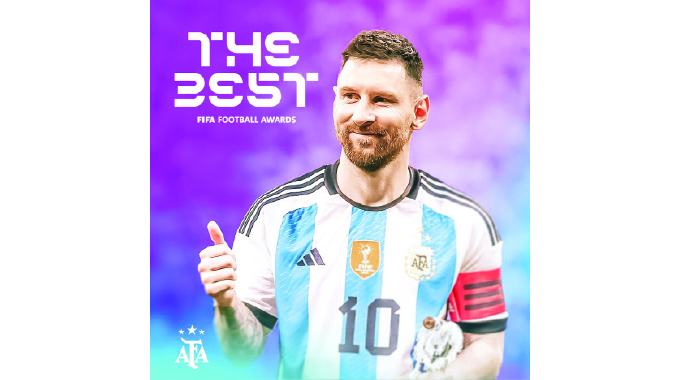
Sharuko on Saturday
THERE are things that FIFA are just supposed to get right like, for instance, the nationality of Manchester City forward Julian Alvarez.
I can probably understand if FIFA gets the nationality of, let’s say, someone like Kalisto Pasuwa, wrong.
Why?
Because he never played at such high-profile tournaments like AFCON and the World Cup, where his nationality would have been captured, for good, by the FIFA system.
Pasuwa works in Malawi, has a father who was born in Malawi before settling in this country, has relatives all over the warm heart of Africa and could have even played for the Flames.
He is not the only one in that category.
Moses Chunga, Benjani Mwaruwari, Benjamin Nkonjera, John Phiri, Joseph Zulu, David Mwanza, Benjamin Zulu, Kaitano Tembo, Alois Bunjira, to name just but a few, have similar family trees and could also have played for Malawi had they chosen that.
Of course, all these guys are bona-fide Zimbabweans, born and raised in this country and, to them, the Flames were the enemy, when it came to battles on the football fields, just like Chipolopolo or Bafana Bafana.
I can understand if FIFA, for instance, makes a mistake when it comes to the nationality of someone like Nico Williams, the young forward who plays for the Spanish national team.
His parents are Ghanaians, his brother Inaki plays for the Black Stars but he chose to play for Spain, the country where he was born.
What I can’t understand is FIFA getting the nationality of someone like Julian Alvarez wrong, especially given he was one of the stars of the last World Cup in Qatar.
He was named as one of the substitutes in the World Cup Team of the Tournament and FIFA got his nationality right that he was Argentine.
Two months later, at the FIFA Best Awards, the world football governing body somehow gave his nationality wrong this time and listed him as a Spaniard.
Alvarez finished seventh in the voting process but, somehow, FIFA named him as a Spaniard, which was quite embarrassing, especially given that none of the Spanish players made it into the Top 14.
That the huge blunder was generated at the FIFA offices and then posted on official FIFA media release was as embarrassing as it was incredible.
But, in a way, it highlighted to us the weakness related to the organisation of such awards and the loopholes which might, at the end of the voting process, fail to give us the best possible result.
A big question then emerges which one has to ask — If FIFA can try to rig the nationality of Julian Alvarez, possibly alarmed that no Spanish player made the Top 14, what else can they do, or are doing, to rig the outcome of the voting process?
In September 2019, the then Sudanese coach, Zdravko Logarusic, publicly claimed that his vote for the FIFA Best Awards had been tampered with.
He produced evidence, which showed he had voted for Mo Salah, Sadio Made and Kylian Mbappe but when the results were unveiled by FIFA, it showed he had voted for Messi for the top award.
The Egypt Football Association questioned why votes from their coach Shawky Ghareeb and captain Ahmed Elmohamady, which had Salah in first place, were not considered by FIFA even though they were sent before the deadline.
Then, Nicaragua captain, Juan Barrera, revealed he never cast a vote even though his name appeared on the FIFA list showing he voted for certain players.
All this negativity has the chilling potential of eroding confidence in a voting system and when outcomes are as dubious as what we have had to deal with, in recent years, then it can destroy the value of the awards.
EVEN INFANTINO DIDN’T ATTEND THE SHOW
Maybe, that explains why none of the top three players in world football last year — Lionel Messi, Erling Haaland and Kylian Mbappe — decided to grace the latest FIFA Best Awards ceremony in London on Monday.
It didn’t matter that both Haaland and Mbappe were just an hour’s flight away at their bases and that Messi has been on an extended holiday since his Major League Soccer season ended when Inter Miami lost to Charlotte in October last year.
Even FIFA president, Gianni Infantino, did not attend his organisation’s big night to celebrate and honour the stars who had illuminated the game last year.
Given he knew the outcome of the vote, when it comes to the best men’s player of the year, it’s a fair bit of speculation to suggest that he might have stayed away to avoid having to face the embarrassment of the voting outcome.
Because, with all due respect, how can we sit down as a global football community and pretend that there was nothing wrong with Lionel Messi emerging as the winner of the FIFA Best Player award for last year?
How can we pretend that a process, which somehow ended with Messi being named the FIFA Best Player of the year, wasn’t a product of a process that doesn’t only stink but which also borders on the kind of corruption which was the foundation on which Sepp Blatter’s FIFA was built on?
How can we pretend that the presumed normality of this whole process doesn’t have a dark shade of abnormality?
Especially, when it’s quite clear that this was an endorsement of madness, an embracement of crookedness and an acknowledgement of a flawed voting system that has now lost its relevance.
Messi was not supposed to win it, he was not supposed to finish in second place and, to some extent, even third place would have been a bonus for him in a year in which the value of his contribution was subdued.
“While congratulating Lionel Messi and his passionate fans for the achievement, we cannot ignore the sense that the award may have been influenced more by the prestige of the name than by effective performance in 2023,” wrote Arthur Fernandes on the mlsmutiplex.com website.
“This raises an uncomfortable question: to what extent is the award truly aligned with the individual merits of players, or has it become a ceremony where renown supersedes excellence on the field?”
WHAT DO THE STATS TELL US?
Halaand plays for the noisy neighbours and, as a lifelong Manchester United fan, he is the ultimate monster I love to hate simply because he represents the enemy within.
It would have been worse if, for instance, he played for Liverpool, who are the ultimate enemy, but playing for the Citizens is just as bad although not as horrible a sin as playing for the Reds.
But, what isn’t in dispute is that Haaland was the best player in the world last year, and by a considerable distance, it’s an insult to tell us that he ended with the same number of points as Messi and lost because the Argentine superstar received more first place nominations.
To his credit, Messi, always the ultimate gentleman, voted for Haaland.
Messi was a worthy winner of the Ballon d’Or because it included performance at the 2022 World Cup.
But, once the World Cup was taken out of consideration for this award, with FIFA only considering the period between December 19, 2022, the day after the Qatar World Cup, and August 20 2023, Messi should not have had any chance.
He should not even have featured in the Top Five because there is nothing, in terms of the levels he displayed at club level during the year, to suggest he was the best of the lot.
He played 19 games in France Ligue 1, during the period under review, scored nine goals, provided six assists as PSG, as has become routine, won the league title.
He played seven games in the Leagues Cup in the United States, scoring 10 goals, including in the final as Inter Miami won the tournament.
His first appearance in the MLS regular season came on August 27, 2023, a week after the FIFA deadline had lapsed while his team lost in the semi-finals of the US Open Cup.
During the same period, Haaland featured in 22 Premiership matches for Manchester City, scored 18 goals, TWICE the number which Messi got and provided two assists as the Citizens won the championship.
He played four games, and scored three times, as City won the FA Cup.
Messi’s PSG was knocked out of the Round of 16 by Bayern Munich, in a game in which they failed to score in both legs and conceded three times, while Haaland’s City won the tournament for the first time.
There were 35 games for Haaland during that period, he scored 30 and won the league, FA Cup and Champions League.
There were 29 games for Messi and he scored 16 goals and won the French league and the Leagues Cup but the Argentine was still deemed the best player in the world during that period.
That’s an insult to everything that makes football such a beautiful game.
To God Be The Glory!
Peace to the GEPA Chief, the Big Fish, George Norton, Daily Service, Sitting Bull, Crazy Horse and all the Chakari-boys still in the struggle.
Come on Chegutu Pirates!!!!!!!!!!!!!!!!!!!!!!!!
Zaireeeeeeeeeeeeeeeeeeeeee!
Text Feedback 0772545199
WhatsApp 0772545199
Email – robsharuko@gmail,com


 Online Reporter