admin
admin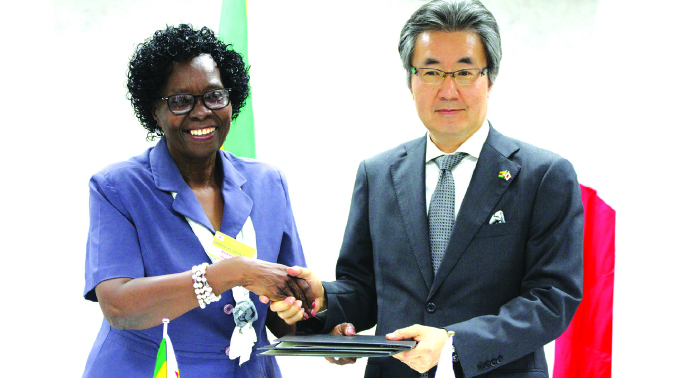
Trust Freddy, Herald Correspondent
JAPAN has committed more than US$480 000 to fund four projects aimed at improving the welfare of vulnerable groups in Zimbabwe.
This development comes at a time when Japan’s programme of grant assistance for Grassroots Human Security has successfully implemented 156 projects since 1989, with total funding exceeding US$15,9 million, strengthening the diplomatic and economic ties between the two countries.
Japanese Ambassador to Zimbabwe Shinichi Yamanaka yesterday handed over US$486 239 to four local implementing partners for grassroots projects involving landmine clearance, education, gender and health.
The HALO Trust, a local organisation dedicated to landmine clearance in Zimbabwe, received the largest share of the funding, totalling US$252 087 as part of ongoing efforts to clear the remaining 4 percent of contaminated land in the country.
This donation comes at a critical time, as Zimbabwe faces a funding shortfall of US$23,79 million, which threatens to limit landmine clearance efforts to just 12 square kilometres of contaminated land.
“I am pleased to hear that the mine clearance programme is making a huge difference in the lives of people near the border with Mozambique, and we would like to assure them of our continued support,” said Ambassador Yamanaka.
“Our new support will be another step towards making Zimbabwe a landmine-free country.”
Ambassador Yamanaka was optimistic that Zimbabwe would soon become land mine free.
“The new project will continue Japan’s support of a demining team removing landmines in Rushinga and Mudzi districts for a year.
“The Government of Zimbabwe and HALO are aiming for Zimbabwe to become a landmine-free country, and the achievement of this goal will make a huge difference to the lives of people along the Mozambique border areas.”

Ambassador of Japan to Zimbabwe Shinichi Yamanaka (right) is joined by the HALO Trust Programme Manager Oliver-Gerard-Pearse during the signing ceremony of the Japanese Grants Assistance for Grassroots Human Security Projects (GGP) programme at the embassy of Japan, in Harare yesterday.-Picture:Joshua Muswere
Lower Guruve Development Association, a community-based organisation started by peasant farmers residing in the Mid Zambezi Valley received funds for school buildings and teachers’ houses at Sangojena Primary School in Mbire District, Mashonaland Central.
Ambassador Yamanaka said the new classroom blocks and a teachers’ cottage, once constructed, will greatly benefit pupils and teachers.
Another organisation, Local Initiatives and Development Agency received US$71 940 to build shelters and a training centre for survivors of gender-based violence in Zvishavane,.
Mashambanzou Care Trust , another local implementing organisation, received US$52 019 for the provision of second-hand ambulances for an HIV Clinic in Harare .
In separate interviews, the beneficiaries thanked both the Government of Zimbabwe and Japan for their excellent relationship, which is significantly contributing to the nation’s development. “I am very happy as this is the first time we are partnering with Japan, and I hope to maintain our relationship as we envision a community free of AIDS,” Mashambanzou Care Trust executive director Ms Constance Chigwamba said.
Local Initiatives and Development Agency executive director, Dr Pascal Manyakaidze, was equally excited, noting that this partnership marks the sixth time they have collaborated with Japan.

Ambassador of Japan to Zimbabwe Shinichi Yamanaka (right) is joined by the Mashambanzou Care Trust Executive Director Constance ChigwambaTrusting the signing ceremony of the Japanese Grants Assistance for Grassroots Human Security Projects (GGP) programme at the embassy of Japan, in Harare yesterday.-Picture:Joshua Muswere



 Online Reporter