

 admin
admin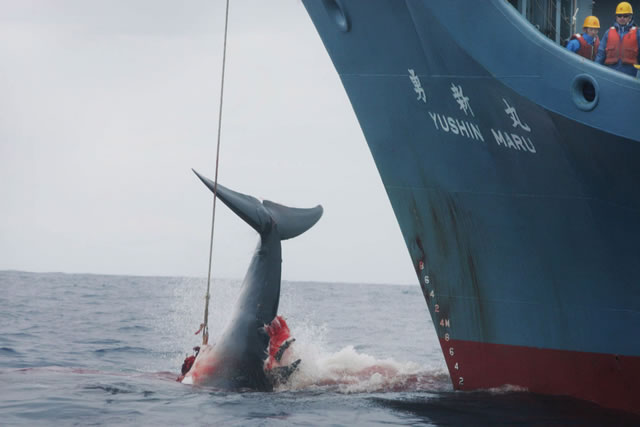
 JAPAN was last night forced to immediately end its slaughter of thousands of whales in the Antarctic after the top UN court backed Australia’s claim the killing was unlawful.Twelve of the 16 judges of the Court of International Justice in The Hague endorsed Australia’s claim that the Japanese whaling program, described as scientific research, was unlawful.
Australia accused Japan in the court of simply “cloaking commercial whaling in a lab coat of science” and insisted Japan had violated Article 8 of the International Convention for the Regulation of Whaling.
In a majority verdict, the court agreed, saying the “special permits granted by Japan are not for purposes of scientific research’’.
New Zealand backed Australia’s stance and supported the case midway through the legal battle.
ICJ chief judge Peter Tomka last night banned Japan from killing whales and ordered the country to refrain from issuing further permits.
“The court unanimously finds that it has jurisdiction,’’ Justice Tomka said.
“By 12 to four the court finds that special permits granted by Japan in connection with (the permit scheme) JARPA II do not fall within Article 8 for the International Convention of Whaling.’’
Japanese lead counsel Koji Tsuroka said while the decision was regretted and “bitterly” disappointing, Japan would abide by the judgment of the court “as we are a state that places great importance on the international legal order”.
However, Mr Tsuruoka said the country would consider its “appropriate course of action” after fully digesting the courts orders and findings.
When asked whether Japan would consider leaving the Whaling Convention, or consider establishing a different whaling program, he replied, “Do not put words into my mouth. The decision has just been handed down and it is not a simple issue for any expert to digest.”
International Fund for Welfare Animals director Patrick Ramage said: “This is a win for the whales.
“I was very surprised and delighted — we had hoped for this outcome but we didn’t expect it. This is a very important day,’’ he said.
Greenpeace spokesman John Frizell said he expected Japan to honour the court’s ruling and dispense with its harpoons.
Sea Shepherd Netherlands director Geert Vons said the activists would be in the Antarctic next season, which starts around December, to monitor the area.
“The highest legal court has condemned the whaling practices and for the first time the Antarctic whales can have a rest,’’ he said. — The Australian.



 Online Reporter