Online Reporter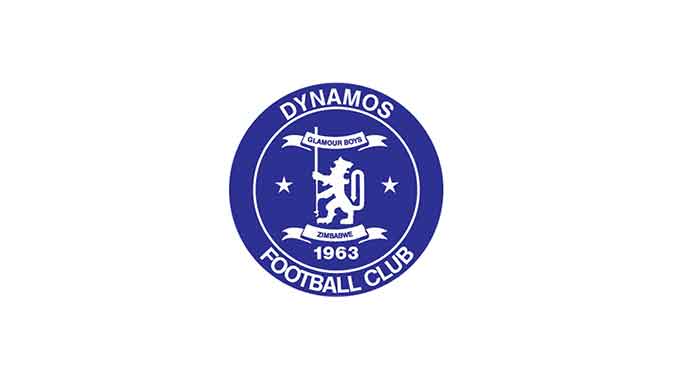
Tinashe Mukono
Zimpapers Sports Hub
ON April 4, 2013, Dynamos were told they could not use their own name after a US$4 900 debt triggered a court order attaching their trademark.
For a moment, the biggest club in the country was staring at the absurd reality of playing football without being Dynamos, a warning that should have shaken the entire game, but somehow never travelled far enough.
Thirteen years later, the name is back, the badge is everywhere, and the market is alive.
But the money is still moving in the wrong direction, flowing through vendors and informal channels that have nothing to do with the clubs that built the brands in the first place.
As Zimbabwe counts down to World Intellectual Property Day on April 26, the timing feels less like a celebration and more like a mirror being held up to a game that has mastered the spectacle, but continues to fumble the business behind it.
Walk through Harare and it is all there. Dynamos jerseys hanging from every corner. Caps, flags, calendars and stickers moving fast in a market that understands demand better than the clubs themselves. Yet the simple question remains unanswered, how much of that money finds its way back to the source?
Intellectual property specialist, Moses Nkomo, keeps it straightforward.
“IP is about turning creativity into income, and that applies just as much to sport,” he says.
“When you look at a football match or a tennis tournament, it’s not just the players. There are organisers, broadcasters, sponsors, equipment makers, all creating value behind the scenes.”
That value exists in Zimbabwe. It fills terraces, drives matchday economies and fuels fan culture. But the structures meant to capture it are either weak or missing.
“Internationally, athletes build massive brands through image rights, sponsorships and merchandise.
“Leagues generate huge revenue from broadcasting deals. Locally, we’re not seeing that level of commercial success, even though the potential is there,” Nkomo says.
The Premier Soccer League sits right in the middle of that gap, rich in identity and support, but disconnected from one of the most basic revenue streams in modern sport merchandise.
Replica jerseys are being sold in numbers that should excite any club accountant. The problem is simple. The sellers are not the clubs.
Back in 2020, when ZIFA floated an umbrella kit deal meant to help clubs structure production and sales, the reaction was firm.
Clubs wanted independence. They believed they could build their own commercial pathways without interference.
Years later, that independence has produced a market that is busy, but unregulated, visible but poorly controlled, active but not feeding the clubs the way it should.
“National sports associations have not registered intellectual property rights for national IP assets in sport, sporting teams do not take intellectual property as a strategic asset that they can leverage on to generate income,” Nkomo says.
“There is no strategic generation of relevant IP to meet the needs of local sporting disciplines, no one is interested in innovating to address the unique needs we have as a nation.”
The consequences are playing out in real time. In how images are used. In how merchandise is produced. In how athletes and clubs continue to give away value they do not fully understand.
“Too many athletes are giving away their value for free simply because they don’t understand it,” Nkomo adds.
“Sport has been treated as entertainment and not as business (in Zimbabwe), and most people involved approach it as a hobby rather than a commercial enterprise.”
Outside football, there are glimpses of what structure looks like.
Tennis players Benjamin and Courtney Lock operate in systems where branding and image rights are part of the ecosystem. Golfers Scott and Kieran Vincent have built careers where performance and commercial value move together.
Back home, football offers a more immediate contrast.
Scottland, new to the league and without the weight of tradition, have moved with intent.
They have set up distribution channels through shops, pharmacies and a mobile store, giving supporters clear access while maintaining control of their brand.
When counterfeit merchandise began to circulate, they acted. Police raids followed. Fake products were seized. A line was drawn.
It is a simple approach, but it carries weight.
Placed against a league where established clubs continue to watch their brands move freely through informal markets, the contrast is hard to ignore.
Not because Scottland have solved everything but because they have shown that action is possible.
“If we use IP properly, sport can begin to sustain itself financially,” Nkomo says.
“We have everything that is necessary to build a vibrant and successful sports ecosystem by leveraging on the diverse intellectual property rights which the law provides.”
World Intellectual Property Day is meant to push innovation, to force sport to think beyond the pitch.
In Zimbabwe, the starting point still feels basic.
Know what you own. Protect it. Make it pay.
Right now, the jerseys are selling. The fans are spending. The market is alive.
The clubs are still standing on the outside of it.