Online Reporter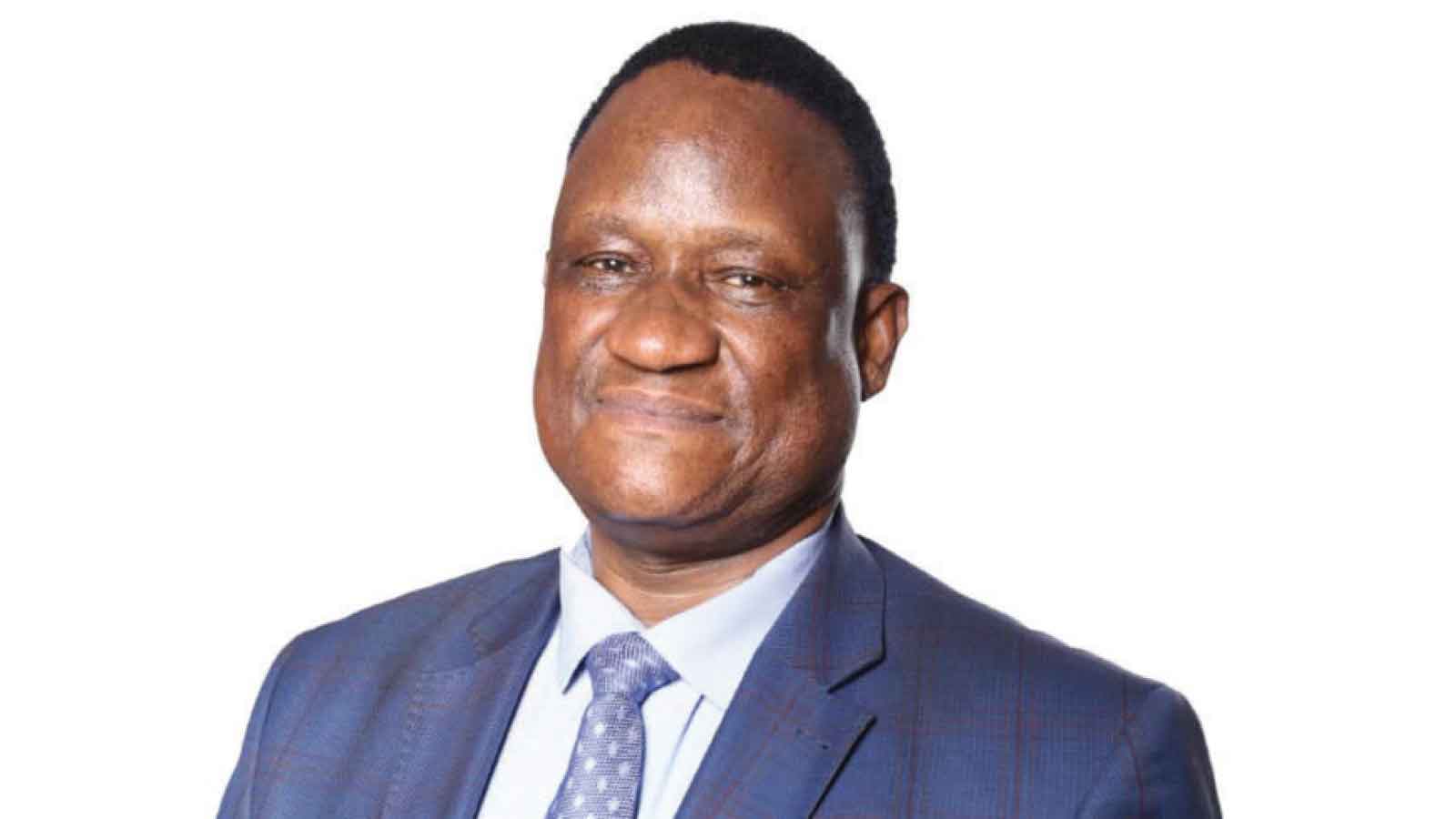
Tapfuma Machakaire
JOHN Masuku, who was one of the first black Zimbabweans to become a broadcaster, was a character that most journalists found difficult to understand.
Masuku died yesterday morning at his home in Marlbereign, Harare, his family announced in a statement.
“Though he had a known heart condition, Masuku was in good health and going about his normal activities. His passing has come as a complete shock to the family, and we are still trying to process this sudden and unexpected loss,” the family said in a statement.
He passed on on World Radio Day, “a day that held special meaning for … Masuku, who loved radio deeply. He passed on a day dedicated to a medium he cherished.
“The family respectfully requests privacy and space to grieve during this very difficult time,” the family said.
He was among those of his age group who adopted the British dress code. If not in a suit he would be smartly dressed with a shirt, jacket and necktie to match the occasion. When he interacted he always put on his trademark broad smile often accompanied by a funny giggle.
But never make the mistake to dismissing him for just another push over character.
Masuku took his journalism practice to another level.
He set up his own platform, the JM Archives, where he stored information about iconic characters, his work colleagues, friends, and relatives and about himself.
JM Archives has become a recognised research platform for media practitioners and he took pride in it.
On social media platforms, Masuku posted updates of almost every activity he was involved in and he always included photos.
Masuku was the man who was appointed by UNESCO as the 2023 World Radio Day Coordinator. World Radio Day, which is commemorated annually on February 13, was proclaimed in 2011 by the Member States of UNESCO and adopted by the United Nations General Assembly in 2012 as an International Day.
The event, which this year is running under the theme “Radio and Artificial Intelligence” (AI), brings people together and provides vital information to communities.
Announcing the appointment, Mirta Lourenço Chief Media and Information Literacy and Media Development for UNESCO said, “I take pleasure in informing you that John Masuku joins us as the 2023 World Radio Day Coordinator. He has decades of Broadcast Journalism experience, mainly in radio but also including stints in television news reading, programme anchoring and newspaper feature writing.”
Lourenco said Masuku was selected from dozens of candidates who applied for the job which was widely advertised on different media platforms.
Masuku was to coordinate from Harare World Radio Day activities for all radio stations in member countries of the United Nations and would also spend some time at the UNESCO Headquarters in Paris, said Lourenco.
His duties included undertaking strategic planning, identifying key opportunities for the event and coming up with key campaign moments and champions. He would also prepare campaign guidelines.
The task also involved leading and supervising a dedicated website and prepare infographics, press kit, banners, news stories, tweets and other media elements. Masuku would oversee the production of materials in the six UN official languages which are Arabic, Chinese, English, French, Spanish and Russian.
Accepting the appointment, Masuku pledged to give his best to the task ahead.
“I pledge to perform to the best of my ability in respect for my very supportive family, country and the worldwide radio community.” said Masuku.
Commenting on the appointment, media expert Tawanda Majoni said Zimbabwe had every reason to celebrate the recognition given to Masuku as the move put the country on the world map of broadcasting.
“We must all wish John a successful and rewarding stint as the coordinator. His recognition by UNESCO must also inspire our Government, industry and other stakeholders to acknowledge and reward local talent, experience and contributions by our own veterans,” said Majoni. John Masuku was born on December 10, 1955, at Harare Hospital. He attended Kudzanayi Primary School and Highfield Secondary in Harare where among his teachers were the late former education minister and historian, Aeneas Chigwedere, and the late renowned soccer administrator, Ndumiso Gumede.
At Highfield Secondary Masuku was a member of Young Writers and Debating Clubs. He was also on the editorial board of the school newspaper, The Elephant. He also wrote articles for Terera (Listen), the school magazine.
In 1974 Masuku was recruited by Amon Nyamambi and Dominic Mandizha into joining the Rhodesia Broadcasting Corporation in Salisbury. Among the early black broadcasters he found at the station were Luke Mnkandla and John Matinde.
The team was later joined by other broadcasters who include Maguire Godzongere, Ray Chirisa, Clement Maphosa, Cephas Chimanga, Masimba Musarira and Lisbern Nasasara.
Masuku soon assumed extra duties as television presenter on a current affairs programme on TV Mashonaland. At Independence in 1980 he was transferred to the News Department as a Sub Editor and Newsreader. In 1982 Masuku was tasked to establish Radio 4 now National FM under Reverend Stanley Nyahwa who was deputised by Mavis Moyo. He held posts of general manager of ZBC’s four national radio stations and Controller Montrose ZBC Station in Bulawayo.
Upon leaving ZBC he was appointed Executive Director of an independent radio station Voice of the People (VOP) where he trained and worked with young journalism graduates from colleges in the country.
At the time of his death, Masuku was working as a media consultant, radio trainer and part time television presenter for an independent production house Medianet on a weekly programme Economic Forum aired on ZBC.
Masuku held a Bachelor’s degree in Politics and Administration from the University of Zimbabwe, a Master of Philosophy in Journalism degree from Stellenbosch University, South Africa and a diploma in Marketing from the London Chamber of Commerce (LCCI) UK.
He attended radio production courses at the BBC in London and at Radio Deutsche Welle in Cologne, Germany. He also attended broadcasting and media training programmes in Hungary, Singapore, and South Africa. In 2013 Masuku was honoured with the Press Freedom Award by the Media Institute of Southern Africa (MISA).
Masuku, who was in the habit of writing, published numerous articles about radio broadcasting trends in Africa. From year 2000 he worked as a correspondent for Radio World International through which he has contributed dozens of articles on radio programme content, management, technology, sustainability and ownership issues.
Masuku is the founder of BES, a Journalism and Media Studies college in Zimbabwe’s second capital, Bulawayo which has produced some of the prominent podcasters in the country.
In 2018 Masuku was appointed spokesperson of the Motlanthe Commission of Inquiry.
The Commission which was chaired by Former South African President Kgalema Motlanthe was set up by President Mnangagwa to probe the post-election violence that left at least six people dead after the July 30, 2018, elections.
Masuku is survived by his wife Agnes Dziruni, three daughters, one son and eight grandchildren.
* The author Tapfuma Machakaire is a veteran broadcaster who once worked with John Masuku at ZBC.