admin
admin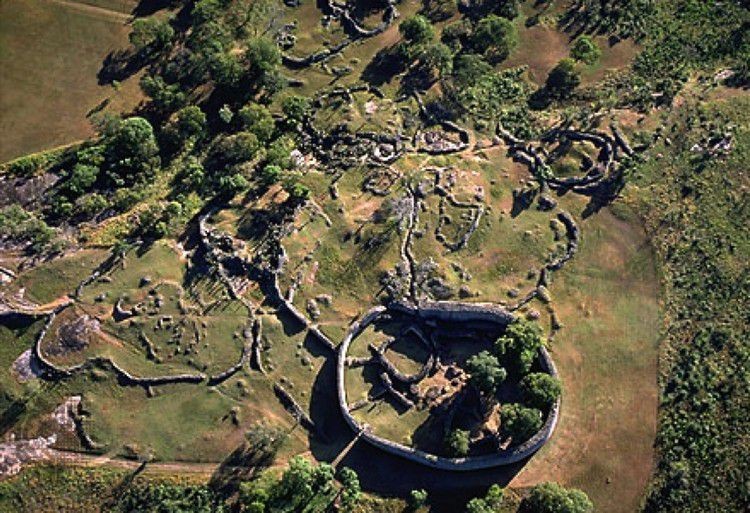
Pathisa Nyathi
GAZING the monumental rock edifice that is Zimbabwe, is like taking a view of the mirror image of the cosmos. One could argue that it is more expedient to gaze at source for a more comprehensive appraisal and assessment of reflections of source.
In the mirror. So it is with Great Zimbabwe, we are better poised for its explanation and interpretation by seeking to understand that which it is a reflection of.
The perceiving African mind replicates cosmic reality. Essentially, that cosmic reality translates to art and its multifarious renditions and expressions within the cultural edifice.
Art is an integral part of culture which, at the same time, it is an expression of. For those overly keen on who built Great Zimbabwe and why, there is none better poised than the monument itself to answer those vexatious questions.
Great Zimbabwe is liberally endowed with incontrovertible artistic language which, if we care to see, tells a story of the African mind, the story of African creativity, the story of cosmic creation.
Accordingly, this article, like those before it, concentrates on the cosmic attributes that the African mind perceived. Today we go beyond the physical attributes of celestial bodies, namely their design, movement, rhythm and resulting endlessness, continuity, eternity and immortality.
There is another set of related attributes which, in collaboration with the natural attributes of celestial bodies, facilitates both explanation and interpretation of Great Zimbabwe as a cultural product of the African mind. Some may say I have already taken sides and attributed creation of the African cultural edifice to African minds. In a way, that is a true assessment as we shall see later. The perceiver of cosmic reality is the creator of a reflected/mirrored cosmic reality.
The all important complementary set of attributes refers to what may be termed elements of African Aesthetics. By this term, we refer to identified attributes of African beauty. Here we observe an important link between nature and culture. “Art is consumed for its beauty. Art appeals to the eye, the ear and sense of touch or feeling. But, it also results in emotional gratification. It appeals to the emotional and spiritual (Chikomo and Nyathi 2011).”
Beauty resides in, and is an integral part, of nature. What this amounts to is that the elements of African beauty or aesthetics are resident in nature. There is thus a link between African ideas of beauty and attributes of nature. The cosmos, being a part of nature, is the source of inspiration for Africans when they engage in artistic execution and expression, be it through architecture, sculpture, performances (song, music and dance) and crafts.
Let us deal with the first element of African Aesthetics and see how it is in line with observed natural or cosmic reality. That element is circularity. It will thus be observed that African art dwells in utility. I am of the same view as Chinua Achebe who said, “Art for art’s sake is like deodorised dog shit.”
What Achebe is asserting, which I concur with, is that Africans created, in the first instance, utility or functional objects. Art is embedded at two levels. The first level is the design of a particular utility or functional object.
Working on Ndebele material culture several years ago, I realised there was not a single object which was rectangular or bore an angle of 90 degrees. Where circularity is viewed as being an element of African Aesthetics, it therefore follows that whatever Africans made (sculpted, built, painted, engraved, moulded) bore an element of beauty. Everything that the African made was beautiful on account of its bearing a circular design which is an expression of beauty.
At the second level, where an object bore a surface that could be infused with artistic designs, in particular geometric motifs/icons, the object carried the second set of elements of beauty. It is important to appreciate that art, even at this second level, carries an element of utility. It was functionality which was carried by art.
Artistic designs or utility objects carried or conveyed messages. Sadly, it is messages residing in art that have disappeared in the sands of history. Let us reiterate the essence of what we are saying here.
When a clay pot is being moulded, it is made to bear a circular design. The pot is made for utility as a storage or cooking vessel. However, by making it circular, aesthetics or beauty has been inbuilt into its functionality.
On the surface of the clay pot, chevron designs are executed. This is artistic expression or beauty. That created beauty carries messages from a distant past. The messages have been lost over time. What has endured to this day is the artistic component, enduring beauty minus its inherent meaning or message. This is what we are referring to as functionality or utility in art.
There is thus aesthetics in object design or making, and functionality/ utility in object beautification/decoration.
This idea resides in all African items of material culture. Design, in particular, is infused with art, it is endowed with beauty. It is beauty that is gleaned from above: as above, so below. The cosmos provides ideas about and of beauty. It is, as we would expect, beauty that resides in Great Zimbabwe.
When we descend from the heavens and land on Great Zimbabwe, we should be able to identify applications of these African ideas, not only when it comes to the colossal walls, but elsewhere within the cultural edifice.
In the last article we explained the meaning of a circle — eternity, endlessness, continuity and immortality. Now we are dealing with the second reason for making items and structures circular — aesthetics or beauty. More importantly, we ought to appreciate the sources of these ideas — the cosmos. Africans did not invent the circle, they merely copied it from the heavens. They transposed the circle from nature/ cosmos to culture. In other words, they replicated the heavens on the earth’s cultural plane.
Without specifically referring to Great Zimbabwe, let us see the ubiquitous application of the idea of circularity in the African cultural world. As observed above, items of material culture exhibited circularity. Further, the decorative motifs on these items of material culture represent circularity and express continuity and eternity.
As we shall see later, the chevron is itself circular as long as we appreciate that it is a cone. It is a two-dimensional representation of a three-dimensional reality. The chevron is thus a design of convenience which represents the circle and expresses what is expressed by the circle. In fact, as we shall see, the circle or its derivative, the chevron, comes in many configurations: dentelle, chessboard and herringbone. In all of them there is a single enduring message, the one overarching and ubiquitous message or theme at Great Zimbabwe and other Zimbabwe type settlements scattered in many parts of Zimbabwe and neighbouring countries such as Botswana, South Africa and Mozambique.
Clearly, this makes Great Zimbabwe one of several cultural structures and items of material culture which bear African design and beauty/ aesthetics. The enormity of the walls and advanced technology as displayed in stone masonry do not take away fundamental African attributes such as circularity and its concomitant messages/meanings. This is a typical example of development-building on the pre-existing to attain modernity as opposed to Westernisation.
African houses were/are circular in design, in terms of both walls and roofs. Even in the case of a Zulu/Ndebele beehive hut, iqhugwana, the dome-on-earth is circular. There are other variations such as cone-on-earth, dome-on-cylinder, inter alia.
What remains constant is the fact that the design is circular.
The village outline itself is circular, displaying one aspect of African art and design where there is repetition at macro and micro-levels. Circularity at village outline is repeated at house level and also at the level of the hearth/fireplace. The cattle byre was also circular in outline. Among the Ndebele and Zulu the central cattle byre was sited at the centre of the village, itself taking on the design of the cattle byre.
Archaeologists refer to this arrangement as the Central Cattle Pattern (CCP). What is critically important though, is appreciation of the meaning of the pattern beyond the pattern itself, but rather what the pattern represents and expresses. The pattern is a representation and expression of deep-seated African cosmology.
African dancers position themselves in a circular arrangement or pattern, with drummers being part of the circle. The drum itself is both circular and cylindrical. Let’s not forget that a cylinder is, in actual fact, a circular design. A cylinder, like a tube, may be cut into an infinite number of circles. Phallic objects, and quite many of them were retrieved during excavations at Great Zimbabwe, are represented as cylindrical creations or representations.
Nature or human anatomy dictated their cultural design. Builders at Great Zimbabwe merely observed human anatomy and replicated it at the cultural level. Cursed be the German geologist Karl Mauch who tempered with the structure of the biggest representation of a phallic object at Great Zimbabwe, the Conical Tower, all in pursuit of gold treasures.



 Online Reporter