Chronicle Editor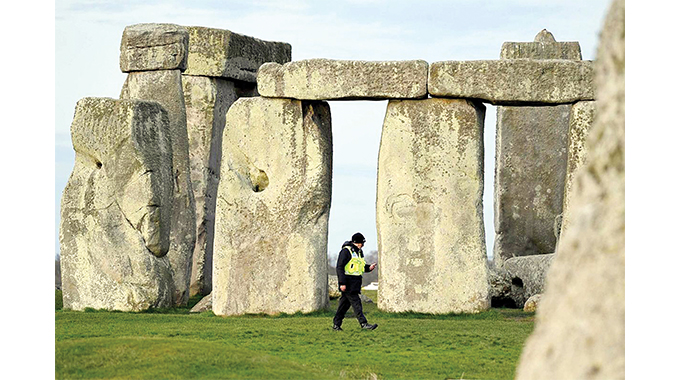
“IN its 5 000-year history this site has served as burial ground, calendar, place of worship and now… a beloved icon of its country.” These words welcomed me when I switched on my laptop to write this week’s article on Stonehenge.
Of course, we have, in the past, unpacked these themes and concepts in previous articles.
As promised, we are once again dealing with sharing of heritage and its transmission to future generations. A scrutiny of both themes seems to point to communication as lying at the centre of the various processes that are involved in sharing knowledge and information in the same generation and transmitting it to future generations.
I have, after close analysis of communication, realised its important role that hitherto I had not sufficiently grasped or appreciated. It is true that I have already been alert to the fact that communication requires energy for its operation. The type of energy may vary from a wide variety of energy forms such as electricity, potential energy, kinetic energy, sunlight, sound, electro-magnetic forms and many more.
An interesting question is what role does communication play in both nature and culture? I will argue that communication begins with and is facilitated through natural processes. Humankind too, being part of nature endowed with intellect, has made use of nature within a cultural context to advance communication for the same purposes.
It has been demonstrated that trees do communicate among themselves. Further, elephants are aware of this capability of trees. Wind seems to be the medium for that communication. Elephants approach a tree in the direction where the tree will not immediately send a message to the next tree. The wind and the direction it is blowing is avoided.
Botanists believe a tree that has been warned about advancing elephants seeking to forage on it produces chemicals that make the tree unpalatable and therefore unappetising to elephants. It is communication with the purpose of surviving. This is communication for protection and continued existence. Human beings also do the same for the same purposes, in addition to other purposes of course.
It seems in addition, there is communication between nature and the spirit world. Human beings are an integral part of nature as far as their material bodies are concerned. At sites with some ritual significance, this form of communication is very important. As once indicated, surviving bones in dolmens, possess some spiritual dimension.
Human beings, aware of the potency, power and energy of spirit beings venerate and propitiate the spirits now dwelling in the spiritual realm.
Humans know what benefits they derive from the communication between themselves and the spirit beings. For them communication may take the form of vocalised but also unvocalised words during communication between them and their dear departed ancestors who have become spirits. The word is the most important aspect in the communication matrix.
In addition to the word, and meant to enhance that word, are libations which may differ from one community to the next. For some communities, beer has played that role. Wine in other communities has been used. Kola is yet another substance that is used and what all these seem to share in common is that they are liquids.
Sacrifices and offerings augment both the libations and the words. Offerings and sacrifices also vary from community to community. A whole beast may be sacrificed. In ancient ritual sites bones of cattle have been identified pointing to ceremonies that were held during the arrival of some cosmic body such as a star. There are, however, known parts of a beast that serve the purpose such as blood, meat, bile and others.
Offerings such as food items are also availed to the spirits who are approached at ritual sites that are chosen for their characteristics that facilitate communication between a spiritual person, or priest or shaman to communicate with the spirit world.
The word, however, remains as the primary facilitator of communication where humans are concerned. Communication is of the essence. There are times of the year and stellar cycles when it is ideal to communicate.
In ancient megalithic sites and other ritual places where spirits and gods are venerated, stone circles served as calendars as seen in the opening paragraph above. The calendar served, inter alia, to trek the movement of cosmic bodies whose positions determined the times for performing rituals. The astronomical calendar told time, time when communication is best facilitated.
For example, the summer solstice was one such time when communication was facilitated in consonance with the position of the sun as detected by the alignment between the sun and positioned stones just outside and within the outermost sarsen stone circle.
As I see the emerging picture, I detect critical elements that facilitate communication and the secondary ones within the same cultural landscape, the Stonehenge. For example, alignment is a facilitator as far as it creates a conducive state when communication is facilitated and enhanced.This helps the ritual officers to figure out the best time for maximum communication. Timing is of the essence. The megalithic structures were the equivalent of modern calendars and clocks and watches. That calendar told the ritual officers when to perform rituals.
There is another facilitator that we need to point out. What is clear is that Stonehenge was a burial site. What was special and endured for thousands of years were the bones. These are critically important in facilitating communication between the spirits and the ritual place.
With that facilitated, the ritual officers then approached the spirits and gods knowing very well the spirits are there. This is not unique to Stonehenge. In Africa, graves, where bones still lie, are sometimes visited when communication with the ancestral spirits is sought.
Facilitators are catalysts and no more. There must therefore, be primary and essential conditions which lie at the heart of communication. With or without facilitators and catalysts communication would all the same take place.
The spirits are the primary essence together with human beings, the worshipers, propitiators and venerators.
For some people in southern Africa tone vexatious question arises. At the Njelele Shrine, God (Mwali) was/is approached by worshipers, propitiators or spiritual adepts. Does that mean the site is a burial place? I am not aware how Mwali was attracted to that site. We do know that the site has special environmental or natural attributes that qualify it as the abode of God.
Fertility is facilitated through more ways than one. A womb is symbolised through form or shape. There is some labyrinth that symbolises the interior of a womb with water serving as a metaphor for the contents of the womb. The symbolic link between a pregnant woman and the natural attributes of the site is quite palpable.
It is quite understandable why priests, shamans, spirit mediums and spiritual officers in general must possess a monopoly of power that they derive through communication with ancestral spirits and/or gods. They are able to direct some of the knowledge and power to themselves.
Performance of rituals belongs in the private domain. This is expected as other people, other than the shamans, the priests and spirit mediums desire to access the knowledge and skills in the spiritual business. On the other hand, the spiritual officers desire monopoly of the business. There is power and influence worth monopolising.
In Africa, these people are endowed with spiritual gifts from conception. Humans do not choose them. All that humans may do is to administer known spiritual tests to prove that yes indeed a shaman or spirit medium is endowed with spiritual power. The spirits are the primary essence together with the human beings, the worshipers, propitiators and venerators.


 Online Reporter