Chronicle Editor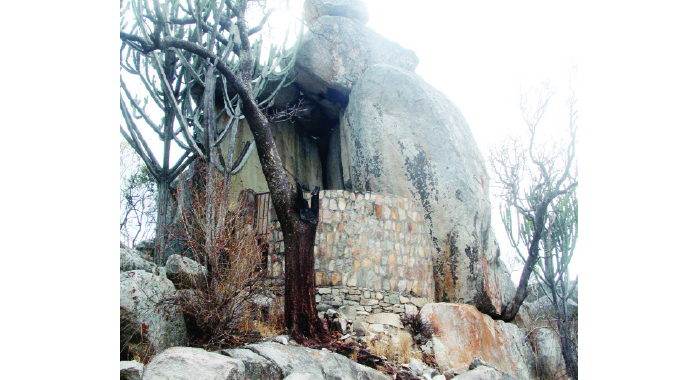
Bruce Ndlovu, Sunday News Reporter
THE grave of King Mzilikazi continues to deteriorate rapidly, with caretakers saying the last resting place of the founding Ndebele monarch is now shunned by local and foreign tourists alike because of its unkempt state.
Located a few kilometres from the popular grave of colonial founding father Cecil John Rhodes, King Mzilikazi’s place of rest, called Entumbani, lies in the heart of an untamed wilderness in Matobo District, Matabeleland South Province. The grave site, however, does not fall under the National Museums and Monuments of Zimbabwe.
Historian, Pathisa Nyathi is on record as saying the place was not a tourist attraction per se, but was in the private domain of traditional dictates of the Khumalo descendants.
When a Sunday News crew got to the homestead that is charged with directing visitors and safeguarding the grave, they were greeted by Gogo MaKhumalo, the stand-in custodian. At a time when the Mzilikazi grave is in its most dire state, the usual custodian, Gogo Masuku, has seen her own health also deteriorate, with Gogo MaKhumalo taking up the caretaker role on a temporary basis.

A barefooted MaKhumalo, a resident at the homestead for the past 40 years, guided Sunday News to the final resting place of the first Ndebele king, with the only discomfort she seemed to suffer coming from the state of the grave, rather than the prickly burnt grass on the rough path she trod on. The bushes surrounding the grave are regularly burnt by miners prospecting for gold. Gogo MaKhumalo said over the years, the number of visitors to the grave had lessened.
“We used to get a lot of visitors but over the years, interest has been waning. As time goes by, we see less and less people coming here but usually people from National Parks will bring some white tourists to come but that is also rare nowadays.
The tourists are also surprised why the grave is so poorly maintained when Cecil John Rhodes’ place is still looking great. It is embarrassing whenever outsiders come here because this is supposedly one of the great kings but out of all monuments, we can place it at the bottom in terms of upkeep,” she said.
Gogo MaKhumalo said unlike at other memorial sites or tourist attractions, there seemed to be no respect accorded to the guardians of the Mzilikazi grave site, with people usually sneaking into the place without observing rules and customs that governed it. Most visitors, she said, usually called on them when bad luck befell them as they made their way to the site.
“People these days do not seem to respect the customs that govern this place. Sometimes, they sneak into the place and they will call upon us when something bad has happened to them. They seem to look down upon us and they don’t believe that we can tell them anything that they don’t already know.
Sometimes we only notice that someone has been there because they would have messed up at the site. People believe that the grave site is a place where they can get rid of their bad luck so they tend to make their way there in order to do rituals,” she said.
Largely abandoned and unguarded, the Mzilikazi grave has been a site for dark rituals which have sent shockwaves in the small and scattered community in Matobo. Gogo MaKhumalo narrated a tale of one family that was reportedly wiped out after carrying out rituals at the grave site at the instigation of a self-proclaimed traditional healer.
“There is an old man who settled in an abandoned home near the grave who once caused great strife and death in the community. He told a certain family that they were from the Khumalo clan and if they wanted to be converted officially, they needed to bring certain things for a ritual. They bought those things and they went to carry out the ritual and afterwards, all the members of that family started dying.
All of them were wiped out and he was the only one who survived but he also disappeared and no one knows what became of him,” she said.

With a fence that used to barely offer security also harvested recently by thieves, Gogo MaKhumalo called upon those interested to help in sprucing up a grave site that, instead of being a prime tourist destination, is seeing less and less traffic every year.
“People have stolen the fence that used to border the grave site. There are a lot of people that have done rituals here and there is very little we can do to stop them. The place needs to be protected. No one has been prevented from coming here and making improvements on the gravesite. After all, this is what happened the last time when the place was fenced off. What they need to do is just to observe the rules and rituals that custom demands when they come here.
They should not look down on them because they now know modern or sophisticated ways of doing things,” she said.
King Mzilikazi died on 5 September 1868, and before Covid-19 hit the world, there used to be annual commemorations at Mhlahlandlela memoral site, Old Bulawayo.
King Mzilikazi, son of Matshobana, was born in Zululand, South Africa in 1790. In 1823, he crossed the Limpopo River during the Imfecane wars after a fall out with King Tshaka and finally settled in Matabeleland in the 1830s, giving birth to what was to be known as the Ndebele State, made up of Nguni people from South Africa and other ethnic groups he conquered along the way and some that he found locally.



 Online Reporter