
Herald Reporter
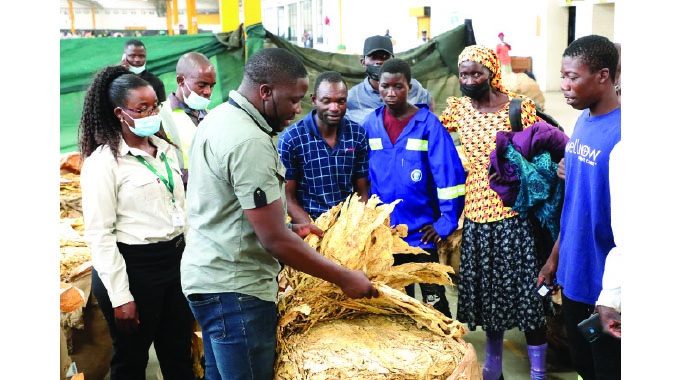
The shisha tobacco marketing season is progressing well with farmers so far having sold 263 bales weighing 25 268 kg worth US$97 897 000 at an average price of US$4,40 per kg and the highest price is at US$5,40 per kg.
Farmers are happy with the prices of the crop and some indicate that they will increase the hectarage the next season.
Shisha tobacco are varieties desired by the producers of tobacco products for shisha pipes, which use water filtering, and usually have extra flavours added. The product is generally air-cured with thinner leaves than the varieties that are flue-cured.
Tobacco Farmers Union Trust president Mr Victor Mariranyika urged more farmers to take up shisha tobacco farming and increase hectares under the crop next season, with prices good compared to the Virginia type and no curing fuel needed.
“I recommend farmers to grow this type of tobacco; no curing using firewood,” he said.
“Hence it is cheap to cure. Farmers need to maximise production since air is the major source of the drying energy. Shisha tobacco production is a welcome development.”
A Marondera farmer, Mr Jayson Scott, said special handling is required.
“The tobacco needs very special attention because the plant or the leaf is very thin so if you don’t carefully handle it, the leaf itself breaks. I have delivered 15 bales and if everything goes well l will increase hectarage.”
Shisha tobacco is proving to be popular in Zimbabwe and the Tobacco Industry and Marketing Board (TIMB) has licensed one company, Cavendish Lloyd Tobacco, to support shisha tobacco production in the country.
A hookah or water-pipe used to smoke shisha is a single or multi-stemmed instrument for heating or vaporising, and then smoking the tobacco. An individual pulls from a pipe, and then the smoke is passed through a water basin, often glass-based, before inhalation. Shisha production seeks to transform the tobacco industry, improve the livelihoods of farmers and boost the economy.
The crop leaf is of good quality and farmers are getting what they deserve this season.
TIMB public affairs officer, Mrs Chelesani Tsarwe, said this season had been for learning and development of a better shisha crop.
She said the target was to expand production in slow growing areas and encouraged more growers to take up shisha production since it presented better opportunities for them.
”Desirable shisha tobacco should have a clean leaf, but the produce from fast growing regions tends to have spots,” she said.
“Growers in these areas should take agronomic advice seriously in order to improve leaf quality and fetch better prices. Good agronomic practices are key to quality and better productivity.”
Shisha tobacco is cultivated in almost the same way as the traditional Virginia tobacco, with minor differences in agronomy.
It uses staggered low amounts of fertiliser, and it is not topped (apical bud removal) to minimise nicotine amounts in the leaf.
Chemical applications for pest and insect control and growth period are just the same as other tobacco cultivars such as Virginia tobacco.
The crop is reaped when the leaves have completely lost all the nitrogen and have fully ripened.
It is cured using the same flue-curing barns, temperature and humidity regimes for the Virginia flue-cured tobacco and it takes four to five days to complete curing.
The cured leaf has low nicotine content to protect the smoker from inhaling huge amounts, since Shisha tobacco is about constant smoke inhalation in huge quantities, so the smoker gets the same amount of nicotine, but from more leaf.
Shisha is not burley tobacco, neither is it cigar wrapper, it performs best in high-temperature zones and it also performs well in cold regions if the crop is planted early, just like other tobacco cultivars.
It will be processed locally and there are lucrative markets for the produce across Africa and Europe.
The crop has the potential to be cultivated across all regions.