Chronicle Editor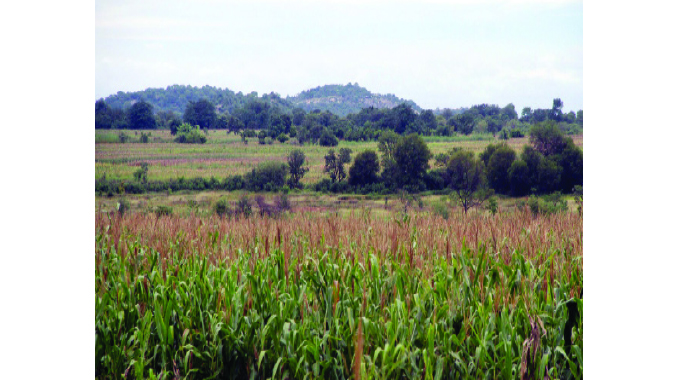
Blessing Karubwa, Features Reporter
SILALATSHANI Irrigation Scheme in Insiza District, Matabeleland South Province, has continued to transform people’s lives, household nutrition and food self sustenance all of which point to a serious intent towards Vision 2030.
The scheme which started in 1967 has 448,2 hectares that are divided into five sections where over 800 farmers are benefiting.
The farmers from communities around grow various crops throughout the year and their produce is distributed in Filabusi, Gwanda and Bulawayo.
They are also engaged in contract farming where they are growing other cash crops for a ready market.
The irrigation scheme comes in handy in the province which falls in ecological region five where rainfall is usually very little to sustain crop farming. The irrigation scheme was a response to the conspiring natural factors that militate against crop agriculture in the province.
A Chronicle news crew visited the scheme last Thursday and farmers were busy but have joyful tales to tell.
Carrying a sack of maize cobs on her bicycle carrier, one of the farmers Mrs Sifiso Nsingo (42) said she had been living off the irrigation scheme for as long as she remembered. She told Chronicle that she wanted to sell her maize quickly to raise money for school fees for her form two daughter ahead of schools opening.
“I have six children and four are still at school. I have so far managed to pay for three of them so I want to sell this maize and raise money to pay fees for the remaining one. We are helping each other with my husband who is also a farmer at this scheme. This season we are preparing for sugar beans. We have inputs challenges but the beans have good returns.
“I sell some at Silalatshani centre and use the rest for home consumption. I have my piece of land at home but I am working hard at the scheme because that is where there is more water,” said Mrs Nsingo.
The growth of Silalatshani growth point can be attributed in part to the activities happening at the irrigation scheme.
One of the farmers who is also secretary at the scheme, Mr Jabulani Moyo, said the farmers were doing well although they were facing challenges in terms of getting markets to sell their produce. He said they used to sell their maize to the Grain Marketing Board (GMB).
Mr Moyo said they were selling a number of crops some of which include garlic, vegetables, maize and tomatoes depending on the season.
“If our roads were good we could be having many people coming to this place to buy our products. We have a number of customers in Bulawayo, Gwanda and Filabusi.
“Some of our customers end up giving up due to the state of the road leading here. We appeal to the government to assist us by attending to the roads,” he said.
The scheme’s Agritex Officer, Mrs Edith Nyatsanga appealed for a fence so that they protect their crops from animals.
She said the farmers have tried contributing money to buy a fence but due to financial constraints they could not reach the amount needed for the fence which must be a radius of 17 kilometres.
“We should have two main gates; on the western and eastern sides of the scheme although we will also have some other gates for other sections. We also want a barbed wire because we are having serious livestock invasions and even the wildlife. Some sections have started hiring night security guards so that they scare animals at night. The guards are being trained by the police on how to scare the animals and even protect themselves.
“The fence that we need costs US$700 000. There are six Agritex officers here and as officers we also don’t have enough accommodation, these houses were built long back and they are now responding to better days that they have seen. We also don’t have electricity, a situation which always makes communication difficult for us,” said Mrs Nyatsanga.
She also appealed for the renovation of some structures like canals which are now old and have lost strength.
Mrs Nyatsanga said they have a number of overnight dam storages but due to siltation the dams have become less useful.
Insiza District’s Agricultural Officer (DAO), Mr Augustine Mhike, said the district has eight irrigation schemes that were functioning. He said Silalatshani was the most robust scheme which has tremendously transformed the lives of communities surrounding it.
“The biggest scheme is Silalatshani which is 442,8 hectares with more than 800 beneficiaries. The irrigation scheme was created to help farmers in communal areas in Insiza district because the area has been receiving low rainfall.
“Initially, the schemes were created for the farmers to grow their cereal crops and vegetables. But basically, during that time there were selected farmers who were given plots.
“Lease agreements that allowed them to grow, eat and sell outputs were signed with the farmers,” said Mr Mhike.
“We also have contractors, where a contractor will come in and request farmers to grow certain crops for him or her and currently we have Agricultural Rural Development Authority (ARDA). ARDA is interested in cereals and usually distribute inputs to the farmers. However, some farmers who have got their capital provide for themselves.
“A growing population at Silalatshani centre meant that irrigation growth is inevitable. People are buying stands to stay while some are also building their shops at the centre. There are a lot of developments which are a result of the scheme, there is a school, a business centre and nice homes surrounding the scheme symbolising development in the area,” he said.
Just around the scheme farmers have started keeping livestock as there are crop residues that they take from the scheme to feed the domestic animals. There are also some value addition activities going such as baking, making peanut butter, amaputi and people are making extra income.
Mr Mhike, said water was available in abundance as they have big dams enough to supply all their schemes.
“In terms of water, we have got Insiza River that feeds into Silalatshani dam with a huge capacity and also upstream we have got Insiza dam which also supplies Bulawayo as well. This one also supplies Silalatshani when the dam runs out of water. In terms of water, we’re getting affected when it becomes too dry otherwise when the dams are full there is no water problem,” said Mr Mhike.
The scheme is contributing largely to the achievement of Vision 2030 because a number of farmers have adopted proper farming strategies adding a lot of value to their livelihoods as the country strides towards the achievement of an upper middle-income economy by 2030.
Mr Mhike appealed for a reduction of prices of inputs which include fertilisers.
“One of the things pushing down the scheme is that the plot owners are becoming a bit old and also you would note that in the southern provinces a lot of young boys have gone to South Africa and we now have a problem of labour force.
“You would also note that most of these districts in Matabeleland South have too much gold panning. People are making quick money out of it and so they would not want to waste their time watering the crops. That’s another thing which is also pushing down the irrigation scheme but the farmers are still working hard and are still producing.
“We also have Zhulube with about 30 hectares benefiting more than 50 people, Siwazi irrigation scheme with about 30 hectares and benefiting more than 70 people, Malole irrigation scheme which is 30 hectares and benefiting up to 80 families, Amazon irrigation scheme which is about 10 hectares benefiting about 20 households, Mosentals with about 20 hectares benefiting about 30 to 40 households. We also have other schemes such as Manzamhlophe, Matiboni although the schemes are benefiting a few people,” said Mr Mhike – @ TichaKarubwa


 Online Reporter