Online Reporter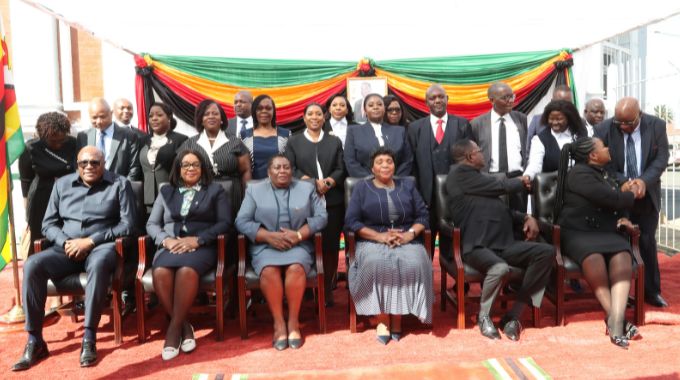
Fidelis Munyoro and Jonward Zvemisha, Zimpapers Reporters
PRESIDENT Mnangagwa has overseen a sweeping reorganisation of the country’s judiciary, reshuffling and elevating judges across all superior courts, in a move signalling major judicial reform.
The changes come amid constitutional updates aimed at streamlining the appointment process and ensuring adequate staffing for the country’s expanding judicial system.
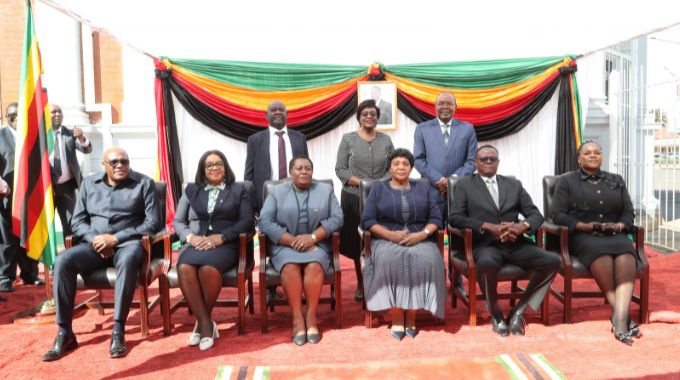
At the Constitutional Court, two respected Supreme Court judges, Justice Antonia Guvava and Justice Chinembiri Bhunu, were elevated to strengthen the judiciary’s highest bench.
This marks a pivotal shift in the court’s composition as it tackles complex legal and constitutional matters shaping Zimbabwe’s future.
The reorganisation did not stop there. The Supreme Court saw the promotion of seven additional judges: former Judge President Mary Zimba-Dube, former Deputy Judge President Justice Garainesu Mawadze, Justice Happias Zhou, Justice Joseph Mafusire, Justice Maxwell Takuva, Justice Amy Tsanga and Justice Esther Muremba.
This expansion reflects a strategic response to the growing demands on the appellate system.
Further down the judiciary, the High Court and Labour Court were bolstered through the introduction of a new cohort of judges and specialised appointments.
Mutare High Court judge Justice Isaac Mzenda takes over as Judge President, with Chinhoyi High Court judge Justice Phildah Mzofa serving as his deputy.
The High Court bench will also be strengthened by the elevation of four Labour Court judges — Justices Godfrey Musariri, Betty Chidziva, Clever Tsikwa and Bianca Makwande.
They will be joined by Justices Loveness Ngwanga, Judith Zuyu, Donald Ndirowei, Vongayi Guwuriro, Charles Manhiri, Justin Uladi, Stanford Mambanje, Timeon Makunde, Feresi Chakanyuka, Anita Tshuma and Gamuchirai Siwardi.
At the Labour Court, Justice Lillian Kudya has been appointed to head the court. She will be joined by three new judges elevated from the magistrates’ courts: Justices Taurai Manwere, Yvonne Masvora and Estere Chivasa.
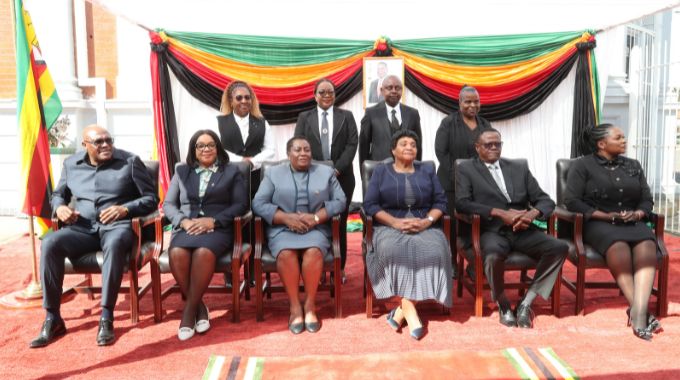
The appointments represent a substantial reshaping of the country’s judicial establishment, with judges moving between the Labour Court, magistrates’ courts and the High Court as part of the latest changes to the bench.
These additions are expected to enhance judicial capacity in the country’s regional courts, including the newly established Kwekwe and Gwanda High Courts.
The latest judicial appointments have been welcomed as a significant step towards strengthening the justice delivery system, with officials describing the swearing-in ceremony as evidence of continued progress within the judiciary.
Permanent Secretary for Justice, Legal and Parliamentary Affairs, Mrs Vimbai Nyemba, said the large number of judges being sworn in across the Labour Court, High Court, Supreme Court and
Constitutional Court demonstrated the Government’s commitment to expanding the country’s judicial capacity.
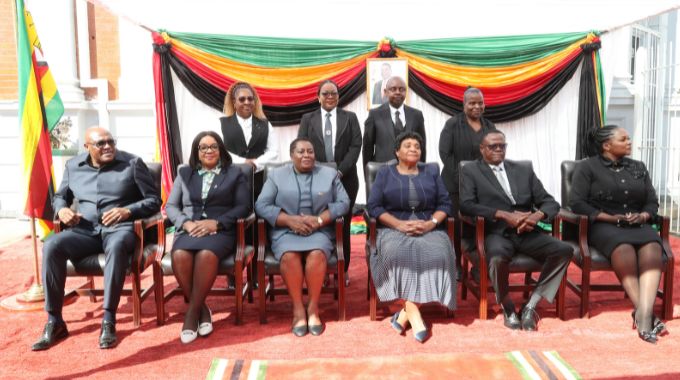
“This is very progressive for the justice delivery system in the country. We have a number of judges being sworn in across the board — Labour Court, High Court, Supreme Court and Constitutional Court,” she said.
Mrs Nyemba said the appointments represented a departure from the colonial-era perception that judicial office should be restricted to a small group of people.
She commended President Mnangagwa for allowing the Judicial Service Commission, particularly the Chief Justice, to facilitate the appointment and swearing-in of the new judges.
Newly appointed Judge President Justice Isaac Mzenda said he was humbled by the elevation and pledged to contribute towards building a sound judicial system through the High Court.
He attributed his appointment to divine intervention, saying his new responsibilities would be guided by prayer.
Meanwhile, Justice Mafusire said the elevation was a recognition of his years of service in the judiciary and the progression expected of judicial officers as they rise through the ranks.
“I feel great and also feel recognised because it has been some time in the judiciary. So, it is important that as you enter into the judiciary, you rise up through the ranks.
“So, I feel happy,” he said.
Justice Zhou, who was elevated to the Supreme Court, also expressed appreciation for the confidence placed in him by the President.
“I am excited, happy about the confidence that the President has given to me by appointing me a judge of the Supreme Court,” he said.
The sweeping judicial appointments follow recent constitutional amendments that updated the framework for selecting judges. Key among these changes was the modification of public interview requirements, a move widely seen as an effort to streamline and depoliticise the appointment process.
With the judiciary’s workload increasing, the staffing adjustments aim to address growing case backlogs and ensure the effective functioning of newly created court stations.
Regional courts like those in Kwekwe and Gwanda, which are vital to improving access to justice in underserved areas, are among the primary beneficiaries of this reorganisation.
These judicial reforms are being interpreted as a reaffirmation of the Government’s commitment to enhancing the legal system’s efficiency and accessibility — a step that could have far-reaching implications for the country’s justice system and governance.