

 Chronicle Editor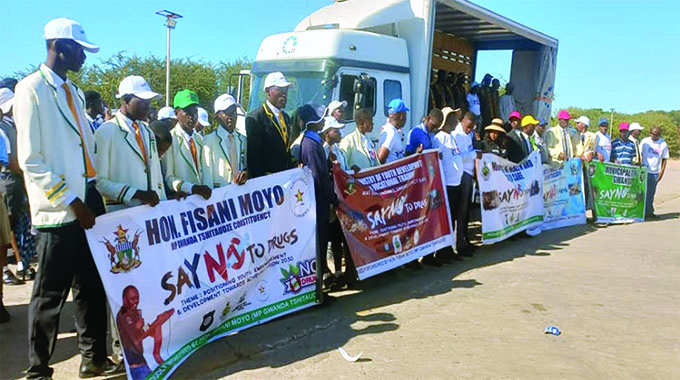
Sukulwenkosi Dube-Matutu, [email protected]
CHILD Parliamentarians from Gwanda District have taken a stand against drug and substance abuse while calling upon authorities to establish more skills training centres,to enhance capacity-building projects.
On Saturday the junior Parliamentarians joined other stakeholders in an anti-drug and substance abuse campaign, which was held in Gwanda Town.
The programme was organised by Gwanda Tshitaudze legislator, Cde Fisani Moyo, in conjunction with the Gwanda municipality, Ministry of Primary and Secondary Education, Ministry of Health and Child Care, among other stakeholders.
Gwanda Tshitaudze child parliamentarian, Westle Dube, a Form 6 pupil at Collen Bawn High School, said drug and substance abuse has reached alarming levels.

“The topic of drug and substance abuse touches us as the youth because age mates who are hooked up are people we know. Some are our neighbours, former classmates and worse some are our friends. It’s touching to see the lives of our peers go to waste like that,” he said.
“It shows there is a need for collective effort as a matter of urgency to redeem our youths. One thing that affects the youth is idleness and if there can be skills development centres in our area, they can go a long way in keeping them occupied. As youths, we also have a role to engage and influence our age mates,” he said
Gwanda Municipality junior deputy mayor, Ms Prudence Moyo from Gwanda High School,said drug and substance abuse engagement must be done on all platforms and urged parents and guardians to play their part.
Gwanda Rural District Council health and environmental junior council chairperson, Mr Aurthur Tafadzwa Mhoswa, also from Gwanda High School urged fellow youths to take an active role in speaking against drug and substance abuse.
The event was held under the theme: “Towards a free illicit drugs and substance abuse community in 2024 and beyond”.
Addressing stakeholders at Phelandaba Stadium after the march, Gwanda Tshitaudze legislator, Cde Moyo, said the march marks the start of an intensive campaign, which seeks to bring a change in Gwanda District.

“We want a drug and substance-free community starting today and into the future. We have been watching as this scourge has been eating away at our people mostly the youth, who are the future of our nation,” he said.
“In order to attain Vision 2030,we need sober and sharp youths to take a lead in developing our economy but this won’t be possible if our youth are busy with drug and substance abuse.
“This march marks the start of an intensive campaign, which will require all hands on deck. We want everyone to play their part, be it by reporting drug lords or any input. On our part as leaders ,we will ensure that we have rehabilitation centres, where those who are already hooked up can get assistance,” said Cde Moyo.
Drug and substance abuse programmes have now been mainstreamed from the national level down to the village level covering six thematic pillars, which are supply reduction, demand reduction, harm reduction, treatment and rehabilitation, community reintegration and psycho-social support. Other pillars are media and communication and resource mobilisation.
Drug and substance abuse is now one of the top-ranking disasters wreaking havoc in many societies across the world and Zimbabwe is not spared. The country has witnessed an increase in drug use, misuse and abuse within communities, with the youths being the most affected.
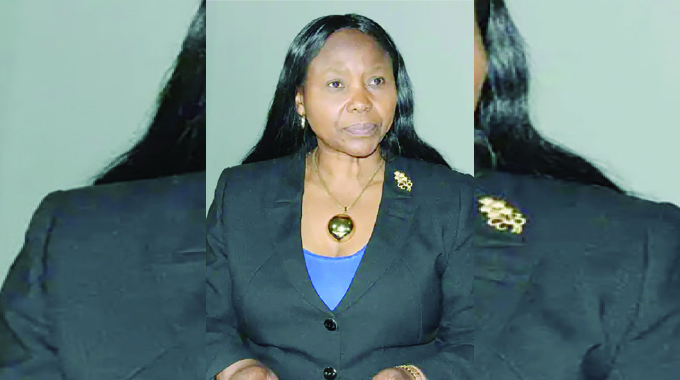
In April 2022, President Mnangagwa established the Inter-ministerial Taskforce on Drug and Substance Abuse Elimination to address the menace. Due to the severity of the matter, the Inter-ministerial Taskforce was elevated to a national committee chaired by Defense Minister Cde Oppah Muchinguri-Kashiri with a clear mandate to curtail the supply of illicit drugs and substances, reduce demand and harm of the same in people.
The committee also has the mandate of ensuring access to treatment and rehabilitation services while promoting the successful reintegration of people who use drugs in society.
The national committee is comprised of Government ministries, departments and agencies, traditional leadership, religious organisations, development partners and the private sector among others.



 Online Reporter