

 Online Reporter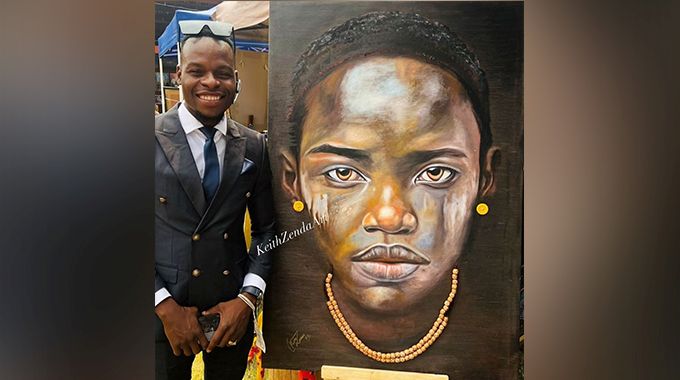
Mbulelo Mpofu, [email protected]
FOR many aspiring Zimbabwean visual artists, breaking into the international art market can seem like an impossible dream reserved for those with formal training, deep pockets or influential connections. Yet self-taught, multiple award-winning visual artist Keith Zenda has spent the past two decades proving that talent, perseverance and authenticity can take an artist from a rural village to galleries and exhibitions across the world.
On Friday, the Chirumanzu-born artist will take centre stage at the National Gallery of Zimbabwe in Bulawayo, where he is expected to deliver a public talk on navigating the international art scene. The session promises to offer visual artists, students and art enthusiasts practical lessons drawn from a remarkable journey that has taken him from sketching with charcoal and matchsticks in rural Zimbabwe to exhibiting his work in countries including South Korea, the United Arab Emirates, Switzerland, Germany, the United States, India and China.
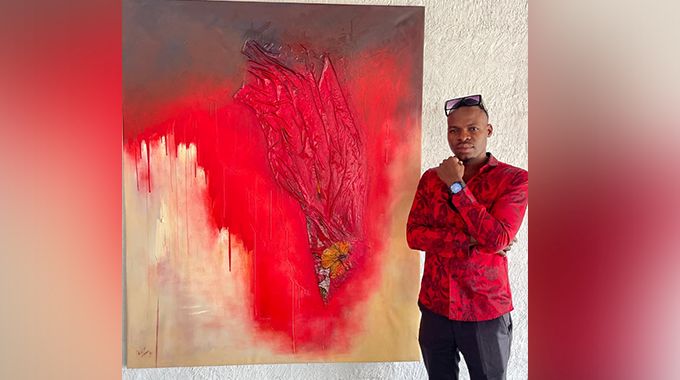
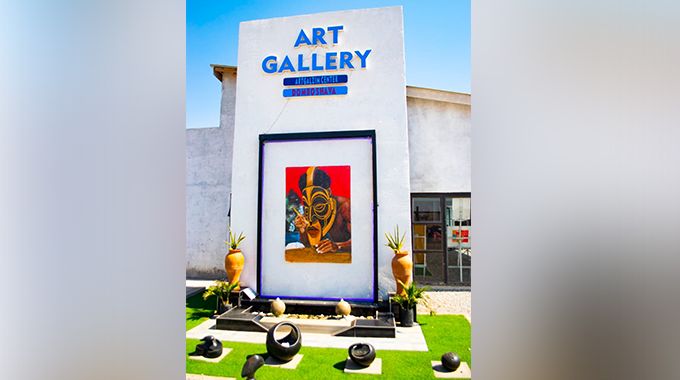
While international travel forms part of his story, Zenda insists that his greatest achievement lies much closer to home. His house in Lower Gweru has evolved into the Zenda Art Centre, a thriving creative hub where emerging artists receive mentorship, interact with visiting international artists and develop their own artistic voices. What began as a personal dream has become one of Zimbabwe’s most inspiring examples of grassroots arts development.
The transformation was born out of lived experience. Growing up in Chirumanzu, Zenda discovered his love for drawing at the age of 10. Yet, opportunities for artistic growth were almost non-existent in his rural community.
Instead of accepting those limitations, he was determined to create the opportunities he never had for future generations.
“My home is in Lower Gweru, so I experienced first-hand what it was like growing up in a rural community. I established an arts centre at Makepesi Business Centre because there was nothing available to empower young people. They were largely exposed to alcohol, drugs and other social ills, so I wanted to create a space that would offer them a positive alternative and inspire them to pursue their talents.”
For Zenda, the centre is far more than a studio. It represents a legacy.
“As I grow older, I thought I needed to establish a centre that I’d be remembered for, something that would continue to bear fruit for future generations. I wanted to give a young child in the rural community the exposure to art that I never had.”
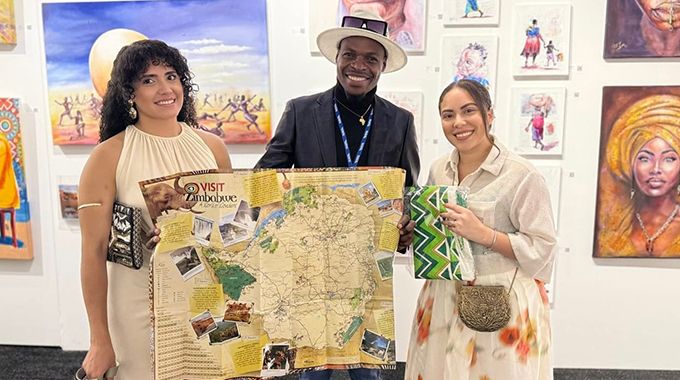
Today, that vision has transformed Makepesi into an unexpected destination where artists from different parts of Zimbabwe and beyond gather to exchange ideas. The centre has also attracted international creatives, with artists travelling to Lower Gweru to facilitate workshops while learning from Zimbabwe’s artistic traditions.
The initiative complements Artgal Zim Centre, another platform established by Zenda to mentor aspiring artists and support disadvantaged members of society through training, exhibitions and creative development.
His work is rooted in Ubuntu philosophy, celebrating African identity while using art as a tool for unity, hope and social transformation. Ironically, the artist who now travels the world never attended art school. His artistic education began with improvised materials. He moulded clay figures, drew footballers and wrestlers in school exercise books, and used charcoal and matchsticks as brushes because proper art materials were beyond his family’s reach. His breakthrough came when he met mentor Berthold Moyo, then a lecturer at Mkoba Teachers’ College.
The experienced artist opened his studio to the young Zenda every weekend, introducing him to painting techniques ranging from landscapes to wildlife and portraiture.
“He welcomed me with love and kindness. He taught me how to paint skies, mountains, trees and animals. That mentorship was given freely, and it changed my life,” recalled Zenda.
Life outside the studio, however, remained difficult. As the eldest child, Zenda sold vegetables, fruits and boiled eggs alongside his mother to help pay school fees and support his younger siblings. After completing his O-level studies, he travelled to Botswana carrying wildlife and landscape paintings to sell to tourists. The experience taught him valuable lessons, but returning to Zimbabwe also exposed him to harsh criticism.
Some galleries rejected his work outright, telling him they wanted something different. Rather than becoming discouraged, he used the criticism to redefine his artistic direction. He gradually shifted from realism to impressionism, contemporary art and, more recently, abstract expressionism.
His latest body of work, “Liberation”, represents his boldest artistic transformation yet. The series draws heavily on Zimbabwe’s history, identity and emotional landscapes while embracing abstraction as a language of freedom.
“I realised art is not a prison. Each painting tells a story. Every artwork has a message for this generation or the next. Liberation came from my emotions. It’s not something I painted simply to sell, but something I’m developing as part of my artistic identity.”
His willingness to evolve has attracted growing international attention. Rather than being confined to a single recognisable style, Zenda believes every artwork should carry the unmistakable imprint of its creator.
“My fingerprints are in every painting. You can tell it’s my work through how I move the brush and express ideas. I didn’t go to art school, so perhaps I have the freedom to break rules. If I don’t have canvas or traditional materials, I use recycled plastics, scrap metal, or whatever is available because creativity comes from the soul,” he said.
Today’s talk is expected to focus not only on artistic practice, but also on building international opportunities. According to Zenda, global recognition is built on much more than technical excellence. Reflecting on his own experiences, he says discipline, faith and character have been just as important as artistic talent.
“I know artists who are technically better than me. But what makes the difference is discipline, character and faith. Opportunities come through hard work, prayer and how you treat people. Networks are built because people trust you, want to partner with you and believe in your character,” he admitted.
He also credits the power of vision. Long before the Zenda Art Centre existed, he openly spoke about his dream of building an art hub that would attract international artists. Years later, a Canadian friend whom he had shared that dream with two decades earlier, travelled to Lower Gweru specifically to witness it become reality.
“Twenty years ago I told him I’d build an art centre. When he finally visited, he said he had come because he wanted to see the dream fulfilled with his own eyes.”
For Zenda, mentorship remains one of the defining responsibilities of artistic success. His philosophy is simple: the kindness he received from his mentor should be passed to others.
“I believe helping one person is helping many. My mentor helped me, and because of that, I’m helping others. Those young artists will also mentor others. It becomes a chain that preserves our culture and inspires future generations.”
He believes every community deserves its own creative space, likening art centres to libraries that preserve history while nurturing future talent.
As he prepares to speak to artists in Bulawayo today, Zenda says artists should stay true to their culture. He warns against copying trends from Europe, America or Asia just to gain recognition in galleries, urging creatives instead to embrace their African identity.
“Don’t copy European style. Don’t copy American style. Don’t copy Asian style. Be African. Don’t create art because galleries want it. Create art because it comes from your heart. Stay true to yourself even if galleries reject you. If your work is original, the right collectors will eventually find you,” he said.
—@MbuleloMpofu


 Bongani Ndlovu