admin
admin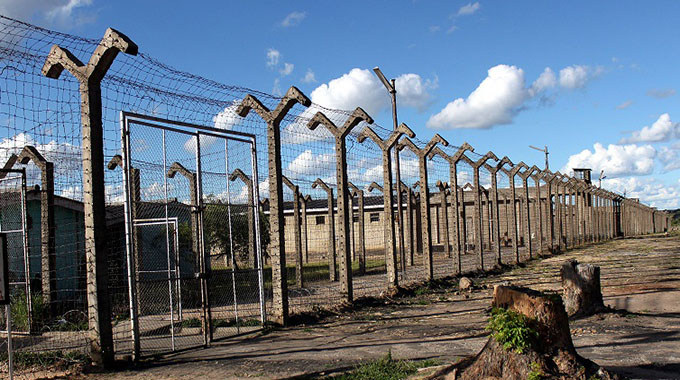
Pathisa Nyathi
ANTAGONISTIC forces fought on many fronts during the liberation struggle. Prisons became battlefields in their own right. Rhodesian forces, nationalists and captured guerrillas tested their wits against each other. Leaders of the independence struggle were incarcerated in prisons for demanding uhuru. Blacks were marginalised on the basis of their colour. Oppressive laws were enacted which the Judicial system used to try both nationalists and captured guerrillas.
This article seeks to give some glimpse into the goings-on at Khami Prison during the struggle for independence. Khami is a name derived from a Kalanga word, Nkami. In full, it is Nkami wepfumba dzisina mhulu, the milker of cows without calves. What is Khami today used to be the capital town for Kalanga King Tjibundule Hhowu. During the colonial period a prison was built and named Khami.
While there are numerous themes that may be identified, this article will concern itself with a few. Khami Prison was an important recruitment site for the antagonistic forces. The Rhodesian Special Branch (SB), in collaboration with sister intelligence organisations in the western world, sought to infiltrate the nationalist body and later the guerrilla forces. The less strongly willed political prisoners succumbed to the advances made by SB operatives. That way the political prisoners abandoned the struggle and were handled by colonial agents bent on reversing the gains of the struggle.
Some of the recruitees remained within Rhodesia as political activists when in actual fact they were working against the struggle. Some of them rose to powerful and influential political positions such as chairmen of political provinces. In order to conceal their identities, they too were hauled to detention camps but would be released in due course to continue with their clandestine activities. However, some of their committee members began questioning why each time they were arrested they, political post-holders, were later released, leaving behind the rest languishing in prison.
Some recruitees were assisted to get skills that would see them get employment outside the country, in particular where there were political and military activities by guerrilla movements. An example is one militarily trained Zapu cadre who was trained as a welder and later a job was secured for him as driver of a transnational transport company that plied the Rhodesia-Botswana route. The recruitee, still serving Zapu, was appointed Party Representative in Botswana. That way, he was well positioned to get crucial information his recruiters wanted. ZPRA had, in 1974, opened the Southern Front (SF). It was imperative for the Rhodesians to maintain a strong presence in Botswana, the springboard into the SF.
ZPRA intelligence cadres used the man’s offices for facilitation of transportation, accommodation and intelligence. He operated a network of spy agents in Botswana, from commercial banks to the post office. Public drinking outlets were heavily infiltrated. Moffat Hadebe’s group that effected escape from Grey Prison was arrested in Botswana. Moffat himself made good his escape and crossed into Zambia at Kazungula with the assistance of Peter Mackay.
The capture of Ethan Dube, in charge of intelligence, was easy as he was using the recruited man’s car. Ethan was bungled up by Smith’s agents and taken across the border. He was last seen at Brunapeg. A small group of ZPRA cadres within Rhodesia tried to intercept the white and black officers who had taken Ethan captive, but to no avail. It was the same man recruited at Khami Prison who facilitated the export, through postal services, of a letter bomb to Lusaka in Zambia. The letter bomb would later explode in JZ Moyo’s hands, ripping open his stomach, and killing him instantly. At one time the Smith agents tried to intercept and capture Dumiso Dabengwa but instead captured Mnyamana Sibanda, the Black Swine.
Captured guerrillas were tried under various oppressive laws such as the Law and Order Maintenance Act (LOMA). They were incarcerated at Khami Prison. Nationalists and captured guerrillas were using Khami Prison to recruit non-political prisoners. Zapu sought to infiltrate their own sympathisers into various security organs of the colonial regime. These were going to provide intelligence to political cadres. The police force, army and prison service were some of the security-related establishments that Zapu recruitees infiltrated. These recruitees were at large and maintained contacts with trained guerrillas and their network of support. One good example was Baleni Ndebele who was infiltrated into the police force. Such persons, upon realising the net was closing in, deserted their posts and went to join the liberation struggle.
Khami Prison was home to political prisoners and hard core criminals. “B” Hall was reserved for the hard core political prisoners some of whom had already undergone some military training while others were part of the recruitment network and the underground sabotage campaign. This category included the illustrious Maduma brothers who were among the pioneering cadres of the struggle. Stanley and Israel were among them. Israel Maduma was to participate in the ill-fated attack on Zidube Ranch alongside Moffat Hadebe, the commander, Elliot Ngwabi, Kay Nkala and Rhodes Malaba. There were others such as Misheck Velaphi Ncube, Abel Siwela, Ebeniah Nxumalo, Kenneth Ndlovu, Clark Mpofu, Moffat Ndlovu, Elliot Ngwabi, Kay Nkala, Misheck Makena Whinya Ncube and Willie Musarurwa and Phillip Mhlanga, among several others. The incumbent President Emmerson Mnangagwa was among those incarcerated at Khami Prison from the sixties to the seventies.
There were cadres from the Kezi area who were involved in sabotage activities. Rural communities were bitter against the culling of their cattle which were then subsequently sold for a song. Dip tanks were targeted. Gaping holes were dug across roads and neatly concealed. Police land rovers plunged into these treacherous pits. In response, the Rhodesians rounded up those involved in the sabotage of government installations and sent them to Khami Prison.
Gwanda had its fair share of political prisoners who found themselves incarcerated at Khami Prison. Among these were some activists who already had undergone training such as Moffat Hadebe, Kay Nkala and Elliot Ngwabi. The Gwanda group had threatened some traditional doctor who was accused of ritually turning Lubi into some “umatholwane” who lost the power of speech. Lubi was retrieved and the Zapu activists threatened to blow up some tortoise that belonged to the traditional doctor. The Gwanda cadres were arrested and thrown into Khami Prison.
After serving terms at Khami Prison, political prisoners were sent to the Gweru Prison which served as a detention camp. Many of the former Khami Prisoners ended up either at Gonakudzingwa or Gweru Prison. When Mozambique’s independence was looming, those at Gonakudzingwa were sent either to Gweru or Harare Prisons.
Within high security “B” Hall political prisoners were kept in small numbers per cell. There were solitary confinement facilities and stocks within the “B” Hall. In contrast, “A” Hall housed the hard core criminal prisoners who the prison officials encouraged to molest political prisoners. The former were homosexuals some of whom were “polygamists.” They sought to win political prisoners as their “wives.” However, political prisoners from Marondera, Zvishavane and the Chitokwana family from Mhondoro teamed up with the rest of the political prisoners and waged a serious fight against their molesters of the so-called Mainini Club.
The health delivery system fought on the same corner with the colonial regime. The chemical warfare was already in practice within the Khami Prison. One targeted political in-mate was injected with some lethal substance. Affected flesh rotted almost immediately. The prisons were being run by mercenary elements hired in particular following the defeat of Edgar Whitehead’s government during the 1962 General Elections. Within Khami Prison there was a clinic run by some orderly. In collusion with health facilities for blacks such as Mpilo Hospital, colonial health officers wreaked havoc on political prisoners. Women had their wombs removed. One political activist nearly had her eye removed when the problem with her eye was some mere cataract.


 derick.khumalo