Online Reporter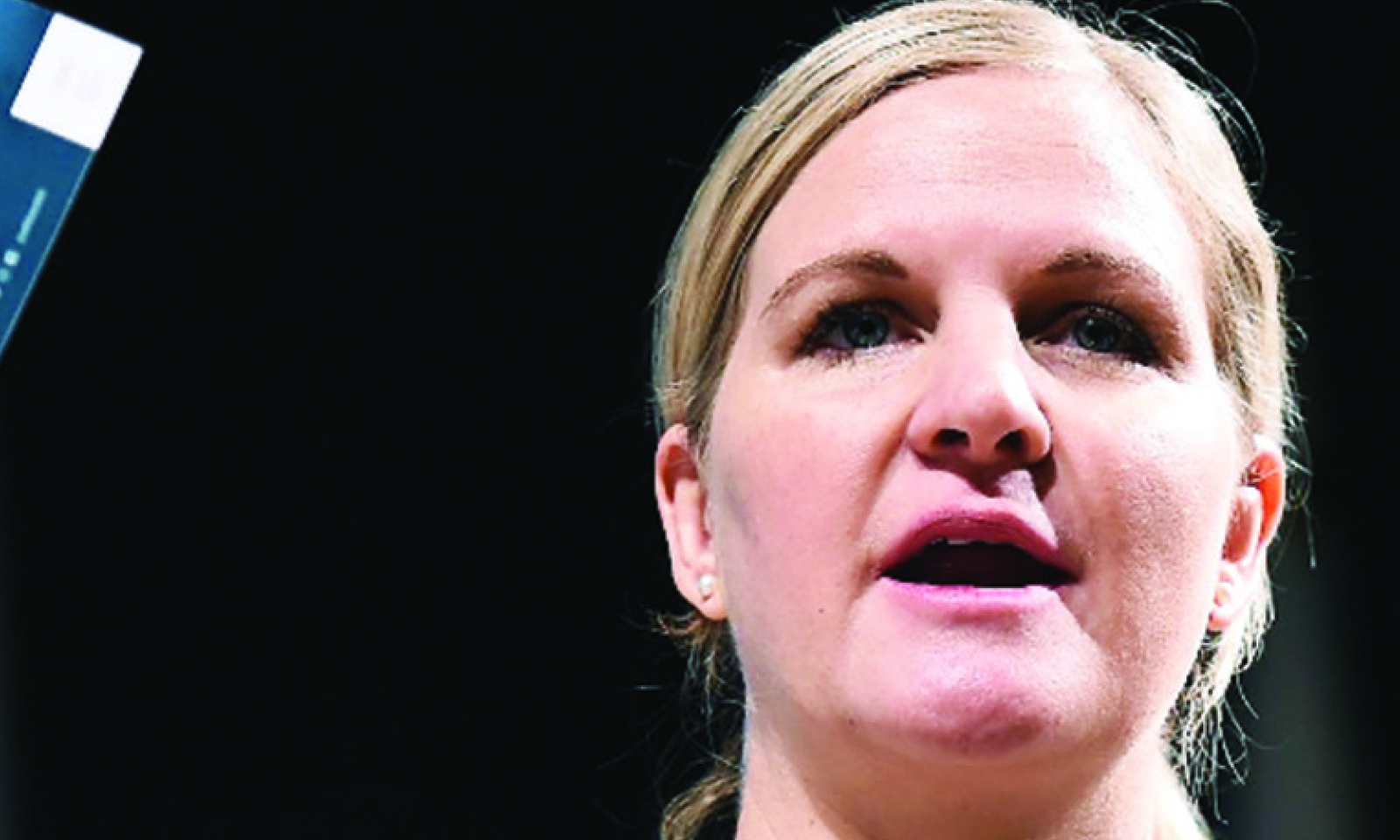
SPORT, Recreation, Arts and Culture Minister Kirsty Coventry once again faced the media in the build-up to the International Olympic Committee’s presidential election, with the legendary former swimmer giving a hint of how she would approach her governance of the global sporting body if elected next month.
“I think we’re two very different people.
“First and foremost, for me, I think the way in which the IOC communicates would need to change.
“We have a completely different leadership style. My manifesto, as most of you have seen, is all based off of the Ubuntu philosophy, which is “I am because we are,” and I know that I have only ever been successful because of the people and the team around me, and that would be how I want to lead,’’ Coventry said.
She was responding to questions about what she sees as the differences between her as a candidate to be the IOC president and current leader Thomas Bach of Germany.
“I would want to ensure that the members are not just being heard but are actually being quite active and sharing their experience and their knowledge.”
Coventry noted that Bach and she both share deep feelings for the Games and the Olympic Movement, but also “just how strong the power of sport is and what it can do in communities around the world.”
She is one of seven candidates for the IOC Presidency, and spoke for more than an hour during an online forum with 98 media from around the world on Monday in a meet-up arranged by the International Sports Journalists Association (AIPS).
At 41, she is the youngest of the candidates and the only woman in the field, but with a long history within the IOC, especially as the head of the IOC Athletes’ Commission.
Asked about how she will approach the presidency if elected, she noted the diverse interests of the main stakeholders of the Olympic Movement, then explained:
“What I feel right now, whenever there’s a new shift, there’s a change in the organisation, it’s time for us to have a little bit of a pause, and I want to just take a pause, evaluate where we are, and see what it is that we — as an organisation — want to continue doing.
“We know that the Olympic Games are our heartbeat, right, and then you have all of our incredible stakeholders, our athletes, and the next layer, of our (National Olympic Committees) and (International Federations).
“How and what are we going to continue to fight for? What is it that we get rid of, and we need to shed? And what is it that we need to change and adapt to be relevant in today’s world? “So that will be a big piece of work, and I would like to start very early on.”
She noted that there is pressure on the IOC now relating to athlete funding, more support for the International Federations (IFs), and a desire for IFs to be more deeply involved in the development of Olympic organising committees, and a need to bridge gaps in capabilities and professionalism between larger and smaller National Olympic Committees.
Coventry noted that these types of challenges are not new for her, as she has faced similar issues as a Cabinet minister since 2018.
“I’ve been able to navigate these last seven years, I believe, really well . . . I’ve been able to do that because I’ve had a solid and strong team who have been willing to take tough decisions because it’s been the right thing to do. “So, we’ve been led by our values, and that’s really what we’ve been trying to change.
“I firmly believe, with the strength of the membership within the IOC, with the strength of the ecosystems from the International Federations, the National Olympic Committees, and hearing directly from the athletes.
“Leaning on all these stakeholders, taking them into account, and giving them the opportunity to be part of the decisions is what is going to strengthen our Movement.
“And I have been fortunate enough in Zimbabwe to have been able to do that. The decisions that you make are not always going to be popular. But generally, when they’re not popular decisions, they’re generally the right decisions.”
She is also firmly fixed on the future and how technology will play a key role to inspiring new generations, as she was, watching the 1992 Barcelona Games on television at age nine:
“Part of my vision is to ensure that we’re reaching nine-year-olds across the globe, not just nine-year-olds that can afford to watch on linear TV . . .
“I know, for example, in Zimbabwe we’re about 15 million in population, and 13 million people have smartphones. So how are we going to give greater access to the Olympic Games to people from new regions across the world, including that of journalists?”
She was asked about many of the hot-button issues in the Olympic Movement today:
l On prize money at the Olympic Games:
“I, personally, am not a fan of prize money. I would rather try and identify new ways of better supporting athletes on their journey to becoming an Olympian.
“For me, as an athlete, that was the hardest time for me. It was hard to find sponsorships; it was hard on my family, and the Olympic Solidarity scholarship that I managed to receive really added a lot of value.
“So, I would rather put more focus on identifying direct funding to athletes before they get to the Olympic Games, and then after the Olympic Games, once they are looking at retirement. How do we help them in that next phase of life?” She also noted the importance of new media for athletes, especially at Paris 2024, pointing out that “We saw a number of athletes leverage their social media platforms, and they have created a more sustainable way of being able to become influencers, promote different products, and make a living for themselves.”
She wants that situation to be followed up on and expanded.
l On transgender participation and regulations:
“What is in place right now is the decision that was left up to the International Federations. And the majority of the International Federations did a lot of work with their medical teams, with medical and scientific research, to come up with rules and regulations that fit their sport.
“What I am saying is that as the IOC, we should bring everyone together to try and understand if there is a way to put out a common framework and take a bit of a leading role.
“That’s going to take sitting down with the International Federations, with their medical teams — I’m not a medical doctor — we need to rely on the facts; we need to rely on medical research and what that is showing us.
“And then come up with a common ground and a common framework that will be able to protect the female category.”
On a future Olympic Games in Africa, she said that dialogue has already started with Egypt and South Africa about 2036 and beyond. Also, more effort needs to be made with the African Union and selection of future hosts for the African Games with an eye towards how that event can be a springboard toward a successful Olympic bid for the future. To that end, the IOC needs to continue its emphasis on making the Olympic Games more sustainable, less costly, and easier to host. Coventry showed her usual poise, listening carefully and reflecting the well-developed points of view set out in her candidate statement. She is considered a leading candidate to be the next IOC president at next month’s 144th IOC Session in Greece.
It was worthwhile to hear that unlike Bach, who immediately began to reform an IOC that had danger signs all around it when he took over in 2013, she feels she would inherit a more stable situation and allow her time to “pause” and create consensus on moving forward.
Different times require different approaches; Coventry sees the future as managing the vast changes that technology is bringing to the 21st century while trying to manage the Olympic Movement and energise youth to get into sport. — Agencies/Sports Reporter.