Online Reporter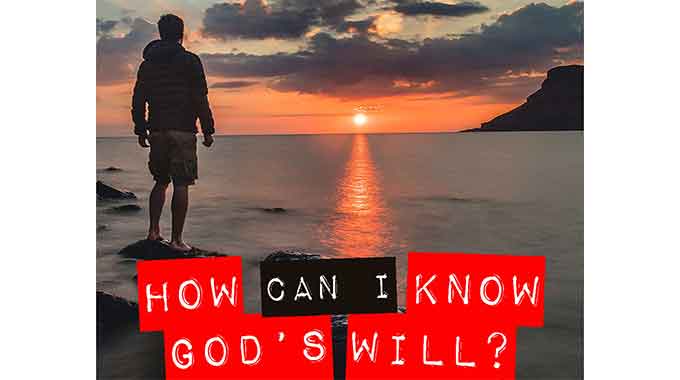
Trevin Wax-Matters of Faith
College students aren’t the only ones who wrestle with big decisions, but there’s something about that season of life that makes the weight of choices feel especially acute.
As a father to a son about to graduate from university and a daughter about to graduate from high school, I feel the weight of the big decisions they’ve made and continue making.
There’s the choice of school. Then the choice of major. Then the choice of a career path. The choice of a church. The choice of whom to marry. The choice of where to live. Every decision can shape the rest of their lives.
Ironically, the more choices we have, the more paralysed we may feel.
My friend Alan Noble puts words to what many young people experience: “The more choices we have and the higher the stakes feel, the harder it is to choose anything at all.”
What’s worse, in today’s world, we don’t just make decisions; we often base our identity in them. As Noble writes, “You aren’t just looking for the right career; you’re looking for a calling that can justify your life.” No wonder we freeze.
So how can God’s Word help us discern the will of God?
Wisdom, Not a Trail of Breadcrumbs
Some Christians come to the Bible expecting semimystical guidance — a verse that will signal to you exactly what job to take, a story that will help you know whether to move, a constellation of circumstances that tell you to lean further into the right romantic relationship. Others wait for a perfect peace, a gut feeling, or a dream. Doesn’t Jesus say our heavenly Father takes note of every sparrow that falls? Surely he cares about our every step.
Yes, he cares. But nowhere does Jesus tell us to expect the Bible to serve as an instruction manual with step-by-step directions. The Scriptures offer something better: wisdom.
Simon Chan, a professor in Singapore, defines discernment this way:
“Discernment is knowing God’s will in particular situations. And knowing God’s will, as we learned earlier, is not just a matter of grasping a piece of information. It has to do with our whole attitude toward God and ourselves, with an ongoing relationship with God and loving him.”
That’s what the wisdom literature of Scripture (especially Proverbs) is designed to give us. Not a decision for every situation, but the wisdom that will form us into the kind of people who can discern what’s best in any situation. The goal isn’t simply to make the right choices. It’s to become the right kind of person, developing, as Chan puts it, “a kind of spiritual sensitivity that comes with long experience.”
Map, Not a GPS
Craig Bartholomew describes wisdom as knowledge of “the paths that lead to life, shalom, and flourishing” — a map that helps us know the landscape so we can live in line with the grain of the created order. A map isn’t a GPS. A GPS dictates every turn. Stay in the second lane. Turn right at the next light. You have arrived at your destination. The Bible doesn’t work that way. It gives you a lay of the land, not step-by-step instructions.
Dallas Willard once compared the world to a playground where the Father tells his children to go enjoy themselves. There are fences, of course — God’s commands that keep us from harming ourselves and others. Love God. Love your neighbour. Don’t lie. Don’t steal. Care for the weak. But within those fences, there’s so much freedom. Go for it. Swing, slide, climb, run.
Now, you can push that analogy too far. The Bible portrays the world as a battlefield, and we’re to live on mission for God’s kingdom. But the picture of the playground captures something true about the Father’s heart. God isn’t waiting to catch you making an unwise choice. He wants you free to act in faith.
What if you make the wrong decision? Well, you might. But that’s when you trust that God’s providence is bigger than your choices. When you get off the right road, that’s when God acts like a GPS. He reroutes you. He can redeem even the unwise choices you make along the way. Here’s what I tell young people fretting over the fear of making a bad call: If you think you have to get everything right the first time, you’ll be afraid to make any decision at all.
Paths to Follow, Paths to Avoid
Proverbs 4 gives two directions at once. The father tells his son to follow in the footsteps of the wise, and to stay off the path of the wicked.
The positive side means you don’t make big decisions alone. You invite older believers, pastors, professors, parents, and friends who know you well to speak into your life. Discernment grows in community, not in isolation. You look up to God and around to others.
The negative side means you pay attention to cautionary examples, not just inspiring ones.
The woman who gossiped her way into friendlessness. The man who lost his family through adultery. The person who chased conspiracy theories until they couldn’t tell fact from fiction. The point isn’t to look down on them but to recognise that none of us is above the same temptations.
The path of the wicked doesn’t just describe where someone ends up. It describes how they got there. Step by step. Small choices that compound over time. – TGCAfrica.org