admin
admin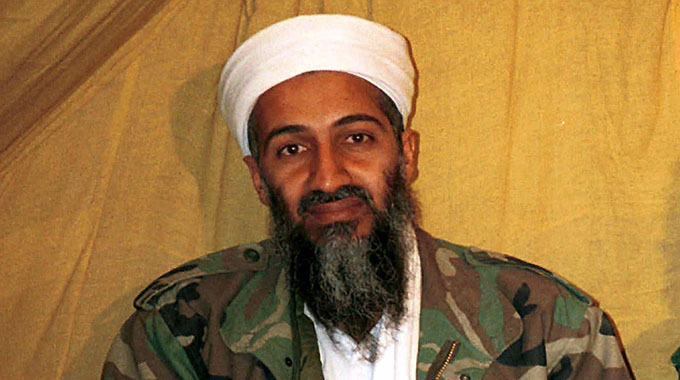
Cetshwayo Zindabazezwe Mabhena
IT is not an exaggeration but a stubborn truism that in a big way our schools and universities are crime scenes where the usual culprits, Truth and her brother Knowledge, are being hidden and not revealed as promised.
What we consider Truth and Knowledge today, in a strong way, is actually a lot of wind and dust that blinds our eyes, hearts and minds to the veracity of what the world is and how it works.
Decoloniality is under attack the world over today for the reason that it is unmasking how what is called knowledge is a carefully constructed structure that is a powerful pillar that fortifies and sustains the modern colonial world system. Decoloniality, by the way, has never claimed to be a new philosophy but it has prided itself with its old age, it boasts of the fact that at long last it is finally achieving currency and purchase the world over and above, like any perspective on social and political reality whose time has truly come.
The experiences of the people and conditions of the present world have much accidentally and unintentionally given relevance and fashionability to decolonial thought and practice, at long last. Things unseen before, unheard of and unsaid are now becoming common sense.
How Empire colonised knowledge and used it for purposes of blinding the world and defending the sin of conquest is a subject and a story that takes the sleep away from the eyes of all decolonial philosophers and activists. Standing on the broad shoulders of the giant, Immanuel Wallerstein, the arch-world-systems philosopher, I will today tell the boring but critical narrative of how what we call knowledge today is a monstrous structure of the luciferic modern colonial world system.
In my view, there are four monstrous pillars of the present World-System, namely the military industrial complex that represents power with a capital P, knowledge that has been kidnapped by Eurocentricism, the modern capitalist system that has turned greed and evil into common sense, and religion that has invented gods and divinities that are used to keep the poor guilty and very much afraid of what they don’t know and they will never know.
The Divorce of Ages
In the beginning, for analytical convenience let us say in the Medieval Ages, the line was straight. Knowledge, it was believed, came from the gods and was professed to populations by prophets, priests, theologians and all sorts of pop-messiahs and deliverers. This was what is called the Middle Ages that stretched from the 5th to the 15th Century when the Renaissance began and pulled until the Enlightenment that supposedly changed the source of knowledge.
Philosophy and science were born and in the beginning they were one. Philosophers were scientists and scientists were philosophers, it was a tight marriage. Late in the Eighteenth Century a tribe of philosophers broke off, and divorced from philosophy and called themselves the Scientists.
They abandoned metaphysics as superstition and elected physics as the true way of knowing. The scientists claimed that truth should be based on empirical evidence not metaphysical speculation of the philosophers that was close to the dreams of the prophets. That is the divorce of all ages that gave birth to university faculties and departments that were run along dangerous tribalisms and discriminations called the disciplines. A big civil war of disciplines, the so called Pure Science and the Humanities came to war. Sometimes I laugh and also cry a little when I remember my days at Cyrene Mission when students that did Maths, Physics and Chemistry (MPC) looked at us who did English, Ndebele/Zulu and Divinity with an eye that Donald Trump would give upon finding his daughter having a pillow fight with Osama Bin Laden.
We in turn treated them with the suspicion good society treats citizens of the mental asylum with. We did not know, in our childish but clever arrogance that we were small victims of the big way in which Empire was dividing knowledge into small pieces the way it divided people and countries in order to rule them. The French Revolution of 1789 is one point at which decoloniality showed itself.
People came to know that political change is a common constant that is normal. It was understood that sovereignty did not belong to any kings or queens but to the people that are the only subjects that can legitimate any form of rule. But power was not going to be unmasked so easily and lose its powerfulness; it had to invent new ways of creating myths and legends of itself. The most important subject became the study of history which ruling regimes tried to manipulate to keep power. It was history as the study of the past, rulers and ruling regimes were uncomfortable with scholars studying the present and scrutinising them.
History was the first child of sin, a social science that was born out of the rape between Pure Sciences and Humanities. Social Sciences claimed to be humanistic and also scientific, using quantitative data analysis alongside philosophical interpretation.
The French Revolution gave birth to three important social and political spheres, that is the market, the state, and civil society. Powerful people and their organisations urgently needed to understand these spheres or else they would lose power and perish.
New social science disciplines had to be invented. Economics was created to study the market, Political Science to understand the state and Sociology to decipher and articulate on the civil society. Power always creates means and ways of knowing in order to secure itself by blinding populations using science and philosophy in separated but systemic ways.
Thanks to Empire and its hunger to manipulate, divide and rule through knowledge, the university became a war zone. Intellectuals worked through different warring pockets and closets. Historians thought the problems of the world were historical; economists believed that Economicism will save the world while physicists thought physics will stop the apocalypse.
Every discipline became an arrogantism of an ideology that thought the world began and will end with itself. As thinkers became divided Empire grew in strength and remained out of the full radar as thinkers thought and saw the world and how it worked in narrow and very shallow terms.
Every discipline can only see a part of the world and not the whole. Divided, the thinkers of the world were neutralised.
I remember an arrogant and also very silly friend of mine that was reading law at the University of Zimbabwe. Whenever I walloped the fellow in a political argument or quarrel, he suddenly went disciplinary on me, “Ayikhona Zindaba, what you are saying might be true in literature there, not at Law!” and saw did he close the show. In a rage one day I went and invaded my other lawyer friend, Sindiso Mazibisa’s library and drank deep into the canonical arguments of the philosophy of law. In our next encounter I warned the legal bully “bring it on, let us delve into the jurisprudentials of the matter!” he looked at me like one eyes the evidence of witchcraft itself, but from then he learnt to live my sorry self alone.
Disciplines were meant to feed egos; fuel quarrels and not discover truth, they became the refuge of intellectual and political bullies. My fear of the bullies of legal theory forced me to be a true refugee in the libraries of Mazibisa, Robert Ndlovu and Lucas Nkomo at UZ.
Knowing the Colonial Other
Back to the old and wild world, the disciplines that existed became impoverished when imperialism and colonialism expanded. Europe needed to understand the colonised blacks and the marginalised Asians or else lose power in the world. Orientalism was invented to study Asians and Anthropology to research on black Africans that were considered primitive peoples.
White participant observers and their interpreters the black ethnographers came to Africa in droves to study the native and write passionate racist treatises.
When the USA assumed world hegemony in 1945 universities and the education system in the whole world became americanised. America found itself leading the war against communism and its encroachment into Africa. Area Studies became relevant in studying the lives and ideas of people in areas that were not Western.
Because communism had a strong economic proposition for Africa, America had to invent a specific discipline to produce anti-communist propaganda. That is how Development Studies was born.
Almost all disciplines were born out of the colonial and imperialist sin, and the evil of Empire. Some western educated African politicians and also intellectuals emerged in the 1930s, 1940s and 1950’s to question the world regime of knowledge and its disciplines. Cheik Anta Diop wrote of the African origins of civilisation, totally dismissing Europe as the source of civilisation.
Then came the dependency theorists and centre-periphery philosophers that meditated and protested “how Europe underdeveloped Africa.” Some questioned both capitalism and communism as Eurocentric ideologies that were up to no good in Africa. Decoloniality was at large. Empire and its colonial modes of knowing and knowledge came under suspicion.
– Cetshwayo Zindabazezwe Mabhena is a Founder Member of Africa Decolonial Research Network, he writes from Braamfontein in Johannesburg:[email protected]



 Online Reporter