Chronicle Editor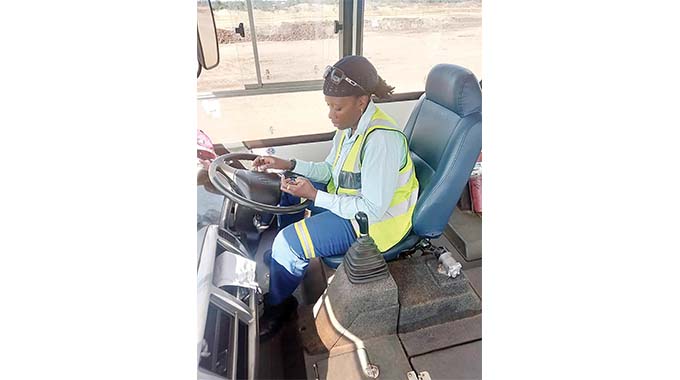
Michael Magoronga, Midlands Correspondent
From commuter omnibuses, long-distance trucks and now buses, she has seen it all in the transport industry.
For Ms Emilly Sibbs (34), her life revolves around driving and she has defied societal norms which classify driving as a job designed for men.
It all started when she was married to her then husband who was a truck driver himself and would take her for road trips even across the border. It was during the trips that she learnt how to drive a truck even before she got a licence.
She said all was well with her husband during the first years of their marriage but love began to fade with time.
Her husband was no longer spoiling her although he could afford to do so.
He was no longer sending food and the last straw was when he just disappeared into thin air in 2016 and reality dawned on her that she was to take care of their two children alone.
“My husband and I were having problems at that time. He was based in Harare and was no longer sending money for food. I was left with no option but to fend for our two children. The only thing I knew was driving. I had not finished my education and things were tough for me. My family was not welcoming also as I had left unceremoniously,” Ms Sibbs narrated.
She had to sell some of her property to acquire a driver’s licence.
“I went straight for Class 2 as I had experience already and it was not a problem. But getting a job was a challenge because my licence was relatively new and more importantly, I am a woman. Getting a job ahead of men, experienced for that matter, was tough,” she said.
Ms Sibbs was, however, surprised when a commuter omnibus owner in the capital offered her a job after testing her and being impressed.
“That was my first job and I became a kombi driver. It was challenging as I was among the first women to drive a kombi in Harare among a host of other men. But I had no option, the desperation of my situation forced me to endure and get used to the torturous exertion of working in a vulgar environment that is controlled by touts,” she said.
Besides initially failing to get used to the not-so-mannered language synonymous with kombi touts, she faced a barrage of other challenges.
“We would share the same toilet with men as the men would abandon theirs after messing them and start using ours. This did not give us enough privacy that we require as women. Besides, every man would be making love proposals to you and everyone would be looking down upon you as a woman. But I am happy because I later inspired others and saw other women joining in,” she said.
After working for some time, Ms Sibbs left the kombi driving business and went for the more lucrative long-distance trucks.
“This was the most challenging part of my career. Yes, it was paying more than the kombis but I had challenges. Firstly, I was away from my children for a long time and as a single parent, you wouldn’t know what would befall them,” she said.
Besides that, she would suffer abdominal pains during her menstrual period forcing her to abandon work for some days, a situation her employer would not take lightly.
“When you are going through that process, there are a lot of challenges that you face and if you are travelling long distances, you have to stop many times cleaning yourself up or doing this and that and mostly you endanger yourself as you can be a robbery target,” she said.
After working for five months, she couldn’t cope. Ms Sibbs had to quit and went back to Harare where she remained jobless for some time.
She is now a bus driver at a company in Harare where among other errands, she picks up and drops off employees.
“The company I work for has people who understand and accept me as I am. I operate buses where I ferry employees to and from work and also other errands as assigned. The job allows me to have time with my children and be there for them,” she said.
After shrugging off the negativity and overcoming the gender barrier, Ms Sibbs is able to take care of her daughter (14) and son (9) single-handedly.
Her story is inspirational to girls who had lost hope after making the “wrong” decision in life. There are a lot of young girls who are getting married under different circumstances and turn to prostitution when the marriages collapse as they try to find ways to fend for the children.
Zimbabwe Gender Commission Chief Executive Officer, Mrs Virginia Muwanigwa spoke strongly against child marriages.
She said in the event that it had happened, those girls should not be rejected by society.
Mrs Muwanigwa however, said that the country had made significant strides in ensuring gender equality.
“As a country, we have done very well in terms of making the legislative framework clear on gender equality and non-discrimination.
“We have set up gender machinery whose mandate is to explain different gender issues to achieve gender equality and make sure that it becomes a reality,” said Mrs Muwanigwa.
She however, said despite these efforts, more still needs to be done.
“Gender equality remains a challenge in terms of practice. There are men who believe that if we talk of gender equality, we will be fighting them yet we are only saying let us give women equal opportunities and equal space to express their capabilities,” she said.



 Online Reporter