Online Reporter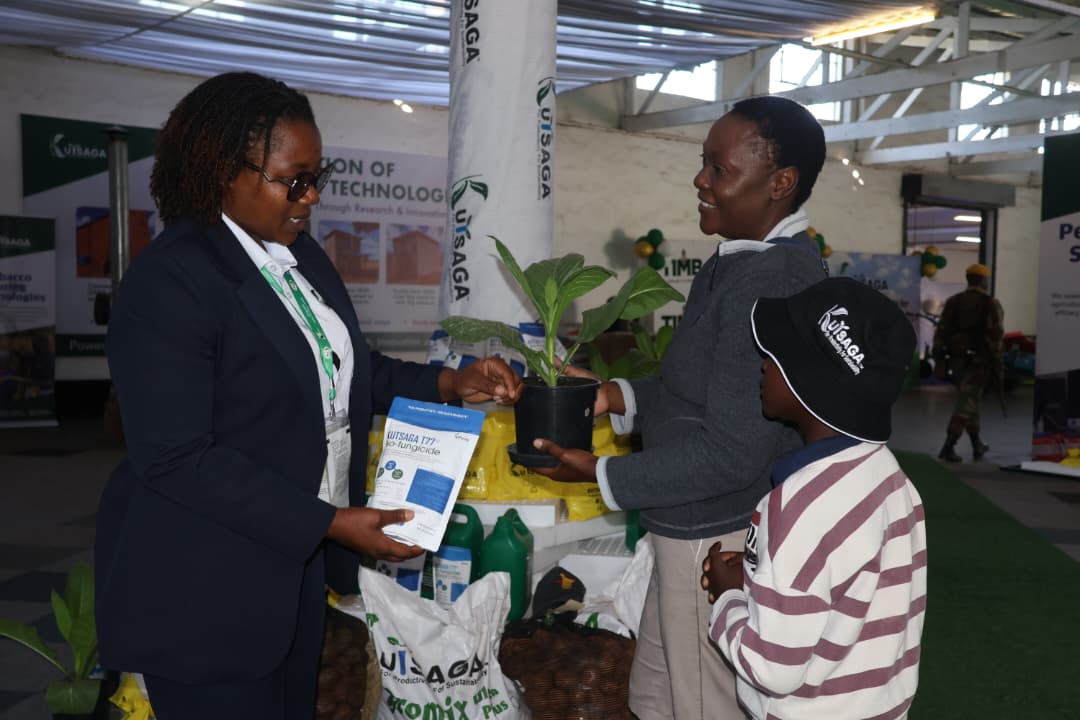
Theseus Mauruki Shambare
KUTSAGA Research is promoting drought-tolerant and fast-maturing tobacco varieties as Zimbabwe steps up preparations for an El Niño-induced drought after regional climate experts confirmed the weather phenomenon is established and expected to strengthen.
The warning was issued at the 33rd Southern African Climate Outlook Forum (SARCOF-33) in Swakopmund, Namibia, where climate experts from SADC national meteorological and hydrological services and the region’s Climate Services Centre developed the consensus outlook for the 2026/27 rainfall season.
The outlook indicates that most of Southern Africa is likely to receive below-normal rainfall between October 2026 and March 2027, with above-normal temperatures also expected across much of the region.
Speaking at the Kutsaga exhibition stand during the just-ended Zimbabwe Agricultural Show in Harare on Saturday, Kutsaga Public Information Officer Ms Melody Mudzi said the institution was placing climate resilience at the centre of tobacco production.
“Climate-smart agriculture is taking centre stage at the Zimbabwe Agricultural Show 2026, with Kutsaga Research showcasing technologies and products designed to help farmers withstand climate shocks while improving productivity, efficiency and profitability,” Ms Mudzi said.
Kutsaga’s climate-smart portfolio includes KRK71 and KRK75, which have vigorous, deep-rooting characteristics that enable plants to access moisture deeper in the soil.
The research institution has also developed T78, T79, T80 and T81, which have a drought-escape mechanism allowing them to establish rapidly and mature before severe late-season moisture stress.
Ms Mudzi said the varieties were designed to give farmers genetic options suited to increasingly variable climatic conditions.
“The research institution has developed and evaluated tobacco varieties designed to perform under challenging growing conditions, including drought-prone environments,” she said.
She said the climate-smart interventions extended beyond the choice of seed to seedling production, with Kutsaga promoting float seedbed technologies to improve seedling quality and establishment.
“The institution is also taking climate-smart agriculture into the seedling production stage through its float seedbed technologies and products,” Ms Mudzi said.
Kutsaga is also promoting T77, a biological solution based on Trichoderma harzianum, which supports healthier root development and helps suppress harmful soil-borne pathogens.
At the curing stage, the institution is testing LPG- and biogas-fuelled tobacco curing systems as alternatives to conventional energy sources.
“A key area of ongoing research is the testing of LPG- and biogas-fuelled tobacco curing systems, providing potential alternatives to conventional fuel sources,” Ms Mudzi said.
She said the trials were intended to reduce pressure on traditional energy resources while maintaining the conditions required to produce quality cured tobacco.
“The trials are part of Kutsaga’s efforts to explore technologies that can reduce pressure on traditional energy resources while maintaining the controlled conditions required to produce quality cured tobacco,” she said.
The developments come as Government intensifies preparations for the expected drought through climate-smart agriculture, water harvesting, soil conservation and irrigation expansion.
Ms Mudzi said Kutsaga’s approach was not limited to a single intervention.
“Kutsaga’s presence at ZAS 2026 is intended to demonstrate that climate-smart agriculture is not a single technology but an integrated production approach,” she said.
“For tobacco farmers, this means combining appropriate varieties, quality seedlings, efficient water management, sound agronomy, improved barn technology and alternative energy solutions.”
She said the institution was seeking to shift farmers from reacting to climate shocks to planning for them.
“The institution’s research, therefore, seeks to move climate adaptation from a reactive response to a planned production strategy,” Ms Mudzi said.