

 Online Reporter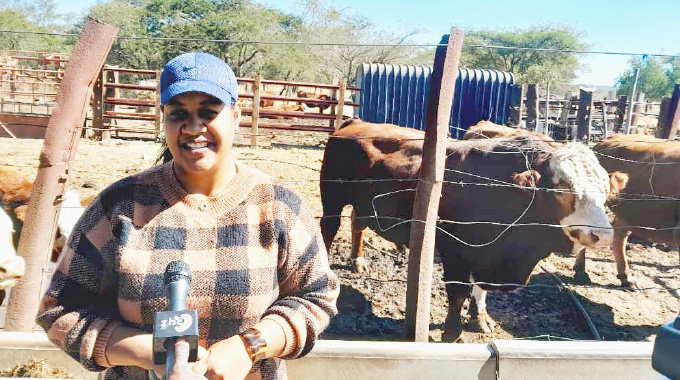
Patrick Chitumba, Midlands Bureau
KWEKWE’S dairy sector has a new hero: Delan Coetzee. He’s a farmer driving Zimbabwe’s agricultural revolution one gallon at a time, producing a remarkable 12 000 litres of milk daily. With his current herd of 500 cows each yielding about 27 litres a day, Coetzee is a force to be reckoned with.
Now, he’s ready to push the limits even further. His next target is a formidable 15 000 litres a day, which he’ll hit by growing his herd to 700 cows and fine-tuning their diet to increase output to 29 litres per cow. It’s a bold move that underscores his vital role in the country’s agrarian transformation.
Initially reliant on imported breeds from South Africa, the farm has since shifted its focus to local breeding strategies, which are now delivering promising results.
Coetzee’s success story aligns with the Second Republic’s economic development agenda under Vision 2030, which aims to transform Zimbabwe into an upper-middle-income economy by the end of the decade. By promoting local agricultural initiatives and boosting productivity, his dairy operation is contributing meaningfully to national food security and economic growth.
Zimbabwe’s milk production has been on an upward trajectory. Last year, the country produced approximately 105 million litres of milk — a 15 percent increase from the previous year’s 90 million litres. While this growth is encouraging, Zimbabwe still relies on imports to meet its annual demand of 120 million litres. However, the gap is narrowing as local production continues to rise.
Coetzee’s achievements, which underscore the potential of Zimbabwe’s dairy sector, came into the spotlight on Wednesday when his farm attracted diplomatic attention. Nicaraguan Ambassador to Zimbabwe, Her Excellency Ms Nadeska Cuthbert Carlson, toured the facility and pledged her country’s support for Zimbabwe’s agricultural development.
Accompanied by the Minister of State for Midlands Provincial Affairs and Devolution, Owen Ncube, Ambassador Carlson described the visit as an important step in fostering bilateral co-operation in the dairy and livestock sectors.
She highlighted the importance of continued collaboration between Zimbabwe and Nicaragua, particularly in the areas of genetic improvement of livestock and knowledge exchange in cold chain management.
“I wish to thank the honourable members and officials for facilitating this visit. Today’s occasion offers us an opportunity to share knowledge and explore avenues for collaboration between our nations, particularly in the dairy and livestock sectors where we face similar challenges and opportunities. Our shared experiences and mutual aspiration to achieve food security and sovereignty provide a strong foundation for South-to-South co-operation,” said Ambassador Carlson.
She noted that Nicaragua has made significant strides in agricultural productivity since 2007.
“Strategically located in Central America, our country benefits from a favourable climate and fertile soils, allowing year-round agricultural activity. These natural advantages, combined with robust public policies and strong community engagement, have driven growth in agro-industrial output.
“Under the leadership of President Daniel Ortega and Vice-President Rosario Murillo, Nicaragua has moved from importing over 50 percent of its agricultural products in 2007 to producing more than 94 percent domestically in 2024,” she said.
Minister Ncube welcomed the Ambassador’s visit as a reflection of deepening bilateral ties and alignment with Zimbabwe’s foreign policy of engagement and re-engagement.
“Your Excellency, this historic understanding aligns with President Emmerson Mnangagwa’s foreign policy of engagement and re-engagement with friendly nations. The Midlands Province is grateful for this tour, which reinforces the new dispensation’s commitment to modernising and industrialising the economy in pursuit of a prosperous and empowered upper-middle-income society by 2030,” he said.
Zimbabwe and Nicaragua signed a Memorandum of Understanding (MoU) in March, following the opening of the Nicaraguan Embassy in Harare in 2024, marking a new chapter in agricultural and economic diplomacy.
Coetzee explained that they currently milk around 500 cows daily, with plans to grow the herd to 700 by year-end, focusing on locally bred stock.
“We imported some breeds from South Africa in 2023. However, we’ve since realised that it was not viable. As a result, we’ve started local breeding, which is yielding positive results. We are currently milking 500 cows and hope to increase that to 700 by the end of the year.
“At the moment, each cow is producing around 27 litres of milk per day, and with the feeding scheme we are using, we aim to increase that to 29 litres per cow daily. On average, we are producing 13 000 litres a day and targeting an increase to 15 000 litres per day,” he said.


