


 admin
admin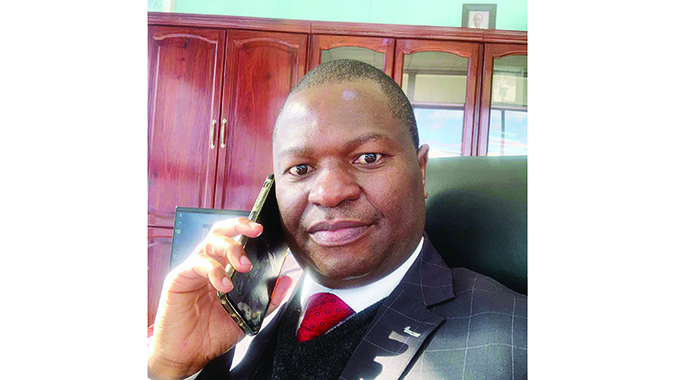
Local sport has been through trying times due to the coronavirus pandemic. Football was particularly affected. For a domestic game largely driven by corporate support, individual benefactors and some little revenue from the gates, it was a refreshing week for the Northern Region Soccer League (NRSL) as it unveiled a US$20 000 Division One top-eight tournament. Northern Region chair Martin Kweza, who took over after Willard Manyengavana’s death in August 2019, has continued with the astuteness that has seen them being the best performing of the country’s four regions. He shared their story with The Sunday Mail last week.
***********************************
Q: You recently struck a deal with Axis Solutions for an eight-team tournament, which, against the background of the challenges being faced by local football, is seen as defying the odds. What has been the secret to your success?
A: Since I assumed the reins at NRSL, I quickly carried a SWOT analysis of the league. This gave me greater insight of the composite facets of each quadrant. I was immediately faced with the challenge to maintain the status quo of the league as my entry point, and whilst at the same time seized with the challenge to take NRSL to the next level, both within the conduct of my executive and the entire league.
As I embarked on this journey, my key focus has been to reposition the region towards the desired path in line with global trends, which focus on football growth. My main pillar and driver has been professionalism. This saw me coming up with a marketing plan and setting up appropriate corporate governance structures. I am mindful that going forward, we need to come up with a holistic strategic plan.
Again, I have had the privilege to attend two Soccerex Conventions in Manchester, England. These visits were an eye-opener as they gave me an opportunity to interact with representatives of some of the most successful leagues in Europe.
The key lesson was that we ought to run our football as business. My management approach has taken a leaf from their models. We have no choice but simply to adapt, and time is not on our side. We simply have to replicate these successful models here in Zimbabwe.
Football must be treated as business and that is what we are doing in our region. The main objective is to create a conducive environment for corporates to come in and win together with football.
Q: How have you managed when other leagues have been struggling to get sponsorship?
A: Football is a team sport and, as such, its management requires team work. There is full engagement at board level, which trickles down to our secretariat. This approach takes into account that my board members have varying strengths and weakness. I have leveraged on their respective strengths and at the same time given the necessary support in their weaker areas.
I am fortunate in the sense that I have a strong and qualified team of executive members, and my role has been to define their roles and responsibilities, and at the same time carry out the necessary oversight for the efficient running of the board. This has made it easy for us to remain ethical in our conduct and at the same time uphold the virtue of integrity in our dealings.
I have again opened vibrant communication channels with my club chairpersons. I communicate all league action and programmes to my chairpersons timeously. I am available and take time to visit our clubs, as we try to understand their concerns.
During the Covid-19 lockdown, I met twice with our clubs at their respective bases. I have taken this opportunity to exchange ideas on how the league can improve the conduct of our teams, which obviously has to lead to the harmony we enjoy in the league.
That approach has made it possible to create opportunities for growth and cooperation with our sponsors. When corporates invest money in sponsorship, they are looking for value and ways on how to grow their brands.
This is exactly what we give them as NRSL. Sponsorship is not easy to come by these days, so when you find a sponsor, you have an obligation to ensure that the sponsor enjoys a positive return on investment.
Sponsors also look for repute.
Transparency and integrity are what we also leverage on to get sponsors.
A sponsor normally wants to associate their brand with transparent leadership, which our board has always strived to offer.
This has gone a long way in attracting sponsors for the league.
When we approach sponsors, we convince them of the benefits that football will bring to their business and how our partnership will help create a competitive advantage and help grow the brand and their market share. We have a template with clear marketing strategies that we are using and sponsors seem to like.
Q: How beneficial have these sponsorships been to clubs and the region at large?
A: NRSL is known for its exciting brand of soccer. This has created huge fan bases within the communities where our teams reside. Our matches provide strategic opportunities for sponsors to utilise on-ground marketing on match days and ensure marketing activities reach viewers through our ZTV deal, our social media platforms and the enormous publicity our teams enjoy in the local press.
In turn, sponsorship helps bring competitiveness in the league. Sponsorship makes the game attractive. Sponsorship energises the clubs and players. In the current case, the sponsorship targets the top eight teams by mid-season, who will then participate in a tournament.
All clubs will now fight tooth and nail to qualify for the tournament. The league has also not been spared the effects of Covid-19. We have been off the pitch since we last played football in 2019 and when sponsors come in with these tournaments, in addition to the ordinary league games, it helps our players recoup considerable game time lost during the lockdown period.
Q: What has been the driving force behind the region’s success?
A: When I took over, l had a clear vision on what I needed to do in order to improve the face of Northern Region. We have to commercialise the league operations and make money like any business.
The first thing was to rebrand the Region and, secondly, to create a strong marketing plan that will help attract business partners. The third thing was to deal with corporate governance issues that will bring investor confidence in football. The next huge step will be to produce the audited accounts.
We have put in place a constitution for the region that we comply with. We are busy putting other standard operating policies and procedures to guide our business processes just like any other business.
We want to create a self-regulating system that will attract investors and help our clubs make money. I am very much against the history of thinking that football is a non-profit making entity. Football institutions must make money, and lots of it.
Q: How challenging has been the process of putting all that together?
A: I must agree that the road was very bumpy. I want to appreciate the unity of purpose within my board and the support that I got from them. Whilst at the same time I acknowledge the support I received from the clubs, it’s never easy to be a change agent.
It is always the responsibility of the leader to take people where they ought to be and not necessarily where they want to be, thus pushing them outside of their comfort zones.
The clubs have since shown greater appreciation of the vision and allowed my board and I to implement our strategies. The experience l acquired in my professional career in the business world is helping me a lot.
We share ideas with my team and I respect all the ideas. We are a team and that team spirit is helping to propel the region forward. It’s still a long journey but we are determined to achieve our vision.
I am in football to leave a legacy and footprints that will forever be remembered and cherished by the football family.
Q: Having spoken about the highlights, what would you say have been the NRSL’s lowest points or moments?
A: The failure by Division One Clubs to realise that they are feeders to the PSL and hence there has to be a total shift in the manner they go about their business.
The need to work on their corporate governance structures and invest a lot in infrastructure development.
There is a strong need and urgency to educate their fans on appropriate behaviour and in the process monetise on all possible revenue streams.
Q: How is the relationship between the region and ZIFA?
A: We are a semi-autonomous body as created under the auspices of ZIFA. We enjoy a cordial working relationship and have always availed our resources where we can to assist the mother body.
Q: Generally, Zimbabwean football has been tainted by a lot of in-fighting, how have you as a region dealt with this challenge?
A: NRSL most importantly has rules and regulations which religiously guide all its operations. This drives for consistency in the manner in which decisions are formulated and applied.
In addition to above, we operate on the basis of sound business values which echo on trust, transparency, integrity, respect, fair play and mutual cooperation amongst relevant stakeholders.
Our vision and mission is very clear to all parties concerned. The roles and responsibilities set for individuals or collective team members are clear and well-articulated. Where there is any conflict, there is a dispute resolution process which is applied without fear and favour.
Above all, the executive committee has a fiduciary responsibility to its members and related stakeholders to safeguard the image and integrity of the game. And as the chairperson, it is my responsibility to ensure that all the parts are working together for the common good of the region.


 Online Reporter